
About Pharmacy Residencies & FAQ

About Pharmacy Residencies
As part of the world-class University of Michigan Health, the Department of Pharmacy Services has high standards for service, education, and research.
University of Michigan Health and the University of Michigan College of Pharmacy are both ranked in the top tier of institutions nationwide, and our residency program is award-winning (ASHP Pharmacy Residency Excellence Award, 2010).
Our Pharmacy Residency program was among the first Accredited Pharmacy Residency Programs in the nation. We continue this legacy by providing residency programs which strive to provide each resident the opportunity to develop practice skills, expand his/her knowledge, and gain experience in an environment that promotes excellence and innovation.
Frequently Asked Questions
PGY1
Our PGY1 residencies include the following programs:
- Pharmacy
- Community-Based
- Community-Based Pharmacy (Specialty), candidate status
- Managed Care - Blue Cross Blue Shield of Michigan (BCBSM)
- Managed Care - University of Michigan Prescription Drug Plan (UM PDP)
PGY2
Our PGY2 specialty residencies include the following programs:
- Ambulatory Care
- Cardiology
- Critical Care
- Emergency Medicine
- Oncology
- Pain Management & Palliative Care
- Pediatrics
- Psychiatry
- Solid Organ Transplant
PGY1 / PGY2 Combined
Our Combined PGY1/PGY2 residencies include the following programs:
The composition of the residency class changes each year. This year, our residency program includes the following:
- PGY1 Pharmacy: 12 residents
- PGY1 Community-Based: 1 resident
- PGY1 Community-Based (Specialty): 1 resident
- PGY1 Managed Care - BCBSM: 1 resident
- PGY1 Managed Care - UMPDP: 1 resident
- PGY1/PGY2 Health-System Pharmacy Administration and Leadership: 4 residents (two PGY1s, two PGY2s)
- PGY1/PGY2 Investigational Drugs and Research: 2 residents (one PGY1, one PGY2)
- PGY2 Ambulatory Care: 2 residents
- PGY2 Cardiology: 1 resident
- PGY2 Critical Care: 1 resident
- PGY2 Emergency Medicine: 1 resident
- PGY2 Oncology: 2 residents
- PGY2 Pain / Palliative Care: 1 resident
- PGY2 Pediatrics: 1 resident
- PGY2 Psychiatry: 1 resident
- PGY2 Solid Organ Transplant: 1 resident
Generally, each pharmacy resident has the opportunity to complete ten different one-month rotations, July is devoted to orientation, and December is reserved for working toward completion of residency projects. Please see the individual program websites for any deviations.
Required PGY1 Pharmacy learning experiences include: orientation, ambulatory care, critical care, internal medicine, medication use policy, pharmacy practice management and research (December), Ambulatory care may be taken longitudinally, allowing for completion of an additional one-month rotation, if desired. Our PGY1 Community-based Pharmacy, PGY1 Managed Care Program with Blue Cross/Blue Shield of Michigan, PGY1 Managed Care Program with University of Michigan Prescription Drug Plan, PGY1/2 Health-System Pharmacy Administration, PGY1/2 Investigational Drug Services/Research Pharmacy and each PGY2 specialty residency program have specific rotation requirements. Applicants are encouraged to visit program specific websites for a more comprehensive list of available learning experiences.
Our residents receive an adjunct clinical instructor appointment with the University of Michigan College of Pharmacy. In this role, residents assist clinicians with precepting PharmD students on clinical rotation and serve as co-instructors for several unique one semester courses in our PharmD curriculum. In addition, some of our PGY2 specialty residents receive additional opportunities to lecture in courses at the College of Pharmacy. We also offer an optional teaching certificate program which provides additional teaching experience and seminar workshops.
Residents are required to complete a research project within the year. An abstract for the project will be presented at the ASHP Midyear Clinical Meeting at the Vizient Poster Session during December. The results of the project will be presented at the Great Lakes Pharmacy Resident Conference in the spring, or alternative meeting as approved by the RPD. Residents are also required to complete a writing project in collaboration with a preceptor. Writing projects are comprehensive reviews (either review articles or case series) that are suitable for publication and often qualify as continuing education programs.
The PGY1 Pharmacy, PGY1 HSPAL and PGY1 IDRP residents will work an average of two weekends per month in a mix of clinical and operational shifts. Operational shifts include cleanroom, product review & checking, and order verification and will be completed in the adult or children & women's hospital. Clinical shifts include anticoagulation, nutrition, and pharmacokinetic coverage.
Each PGY2 resident is required to work 15 weekends per year in an area closely tied to their practice area. The PGY2 Cardiology, Critical Care, Pain & Palliative, Psychiatry and Solid Organ Transplant residents will provide clinical coverage as outlined above. The PGY2 Emergency Medicine provides weekend coverage in the adult and pediatric emergency departments. The Pediatric PGY2 resident provides weekend clinical coverage including anticoagulation, bacteremia, and pharmacokinetic coverage exclusively in Mott Children’s Hospital. The Oncology PGY2 residents provide service in the Cancer Center infusion pharmacy. The PGY2 Ambulatory Care and PGY1 Community Practice residents provide pharmacy services in one of our community pharmacies during the weekends. The PGY1 Managed Care resident has prior authorization responsibilities on weekends. The HSPAL PGY2 residents complete clinical and operational shifts while the The IDRP PGY2 will staff an average of 1 research pharmacist dispensing shift per week.
Please see individual program websites for full details.
Our residents share office space in the pharmacy clinical office area. Each resident has their own personal workspace and laptop. The office space is located in Victor Vaughn House near the Medical School on the hospital campus.
Program Start Dates
- PGY1 Pharmacy, PGY1 IDRP, and PGY1 HSPAL residents start: June 14, 2027
- PGY1 Community, PGY1 Managed Care, and all PGY2 programs start: July 1, 2027
Program End Date
- All programs: June 30, 2028
The annual application deadline for all residency programs is January 2.
All application materials should be submitted via the PhORCAS. web portal.
You can also read more about the process on this website at How Do I Apply?
No. Applicants from all ACPE-accredited programs are welcome and encouraged to apply!
U-M Health pharmacy residency programs are unable to financially support visas or other employment authorization documents.
PGY1 resident salary is annually $50,000 and PGY2 resident salary is annually $52,000. Residents are paid monthly. Residents may also moonlight for pharmacist salary, but are restricted to approval by program directors and preceptors.
Pharmacy residents are eligible to receive the following benefits:
- Medical, prescription, disability, and retirement
- 15 days of paid time off to be used for personal time, sick time or interviews
- Business time is given for ASHP Midyear Clinical Meeting, Great Lakes Pharmacy Resident Conference, Resident Trip, along with one PGY2 specialty conference.
- Financial support for ASHP Midyear, Great Lakes Residency Conference, Resident Trip and PGY2 specialty conference
- Five program wellness days (3 in Fall and 2 in Spring)
- Medical and extended leaves of absences from the program
- Work from home opportunities and remote agreements for non-direct patient care rotations and research month in December
- Embroidered white coat
- Access to free workplace counseling
- Access to free statistician office
- Personalized access and training in SPSS and RedCAP software
- Dedicated laptop computer and desk space
| Create a unique name for this accordion section which, if included in the URL, will open this section and scroll the user to it on page load. | |
How Do I Apply?
Applications will be accepted through PhORCAS, the web-based pharmacy residency application system. The annual application deadline is January 2.
- Biographic Information
- Academic History (pharmacy and non-pharmacy colleges attended)
- Transcripts from College/School of Pharmacy (additional transcripts are not required)
- Letter of Intent - why is this residency program and organization the right one for you?
- Curriculum Vitae - please ensure you address the following areas in your CV when applicable and add to the relevant areas of the PhORCAS application. We want to make sure we have the most accurate information on all your great accomplishments!
- Work experience(s): Please detail any internship, technician, research, or other work experiences you held during pharmacy school. Amount of hours weekly/monthly is extremely valuable to showcase (especially if completed during the academic year) and the types of activities you were expected to complete.
- Leadership: Please include all roles you held in professional organizations, including executive board and chair membership and what activities you completed.
- Volunteer/community enrichment: List any volunteer or community service activities you completed during pharmacy school.
- Presentations: This includes poster and platform presentations at a local, state, or national conference. This can also include presentations given on rotation, like a policy at P&T you developed, a nursing/medical provider in-service, or a presentation given to preceptors/students/class. This doesn't typically include topic discussions or journal clubs completed on rotation.
- Research experience(s): Please list longitudinal and rotation research experiences and what activities you completed. This could be a full research project or a medication/drug use evaluation. Showcasing your role in those projects is helpful- were you the primary investigator? Did you help with data collection? Did you write/submit an IRB? How involved were you with the study design?
- Writing experiences(s): This could include manuscripts and publications. This can also include newsletters, web articles, monographs, policies, procedures, guidelines, and commentaries. Please include any publications with the corresponding references of the journal it was published in or accepted/submitted to.
- Letters of Recommendation - we require three (3) letters of recommendation submitted via the PhORCAS system. There are no specific requirements for letters of recommendations.
Those selected for an interview will receive additional details about the interview process and requirements at that time.
Living In Ann Arbor
Ann Arbor offers its residents the personal and professional advantages of a city many times its size without the disadvantages of big city living. Located in southeastern lower Michigan about 40 miles west of Detroit, Ann Arbor was named one of the ten North American dream towns by Outside Magazine in 1999. Ann Arbor is home to the University of Michigan and offers a tremendous amount of educational and recreational opportunities.
The Arts Theatre is available at many levels including professional theatre in nearby Chelsea, local community theatre and University productions. The University of Michigan Department of Music is among the top five in the country and provides frequent public performances including operas, choral productions, jazz and classical and modern music. The Film Society shows foreign, classical and experimental movies. In addition, Ann Arbor is a regular stop on the touring route of first-rate artists, musicians, dance troupes and theatre companies. For the performer, there are many opportunities to join dance troupes, choirs, musical ensembles, and theatre groups.
The University of Michigan's Athletic Program provides exciting entertainment with almost daily men and women's varsity sporting events.
There are multiple intramural teams and county recreational leagues for those who prefer to participate.
In addition, for a small fee, residents may use university athletic facilities and take classes ranging from yoga to ballroom dancing.
For the outdoor enthusiast, there is a large system of parks with bike paths, hiking and running trails, canoe liveries, swimming pools, lakes, tennis courts, gold courses, cross-country skiing trails, and ice-skating rinks.
- Ann Arbor Bicycle Touring Society
- Ann Arbor Figure Skating Club
- Ann Arbor Ski Club
- Ann Arbor Rowing Club
- Ann Arbor Track Club
- Intramural Sports Program
- Michigan Union Ticket Office
- This is your link to get tickets for all University of Michigan events as well as Ticket Master events.
- Nichols Arboretum
- The "Arb" is a beautiful park located adjacent to the Medical Center.
There are many excellent museums in Ann Arbor including the Museum of Art, the Kelsey Archeology Museum, the Ruthven Natural History Museum, the Clements Rare Documents Library, and the Hands-On Museum for children. The University of Michigan sponsors an assortment of programs including guest lecturers, star-gazing at the observatory and colloquia. Shopping is available in galleries, boutiques, shopping malls and local outlet centers.
- Exhibit Museum of Natural History
- Kelsey Museum of Archaeology
- Kerrytown: Ann Arbor's Historic Market District
- Public Library
- The Gerald R. Ford Library and Museum: The library is located in Ann Arbor and the Museum is housed in Grand Rapids, Michigan.
- The University of Michigan Museum of Anthropology
- The University of Michigan Museum of Art
The downtown area is vigorous and thriving. One can choose from a large number of activities including local theatre, movies and classic films, live concerts, comedy clubs, jazz and blues clubs, dance clubs, bars and brew pubs, and a tremendous variety of restaurants.
- Arbor Food
- The Ark
Special events occur annually including the nationally acclaimed Ann Arbor Street Art Fair which is the largest of over 10,000 art fairs held annually in the US each year, and the Top of the Park Summer Festival. An Antiques Market is held monthly during the summery and the Farmer's Market is open weekly year-round for bountiful fresh produce, flowers and plants.
Ann Arbor provides easy access to the international airport and to popular metropolitan destinations such as Chicago, Detroit and Toronto. Northern Michigan is bountiful and provides excellent skiing, camping, hiking, and dune climbing.
- May 1999 Outside Magazine names Ann Arbor one of ten "North American Dream Towns, 1999" stating, "No matter what moves you, these are the places to move to".
- March 1997: Reader's Digest rates Ann Arbor the nation's 15th best city for raising a family. Poll factors included crime rate, quality of schools, clean air and water, youth activities and health care.
- November 1996: A Money magazine survey rated Ann Arbor among the nation's 15 safest cities.
- July 1996: Readers of the 20-something magazine Swing voted Ann Arbor the nation's third best place to live.
- June 1996: Money magazine ranks Ann Arbor fifth among its list of top cities to live.
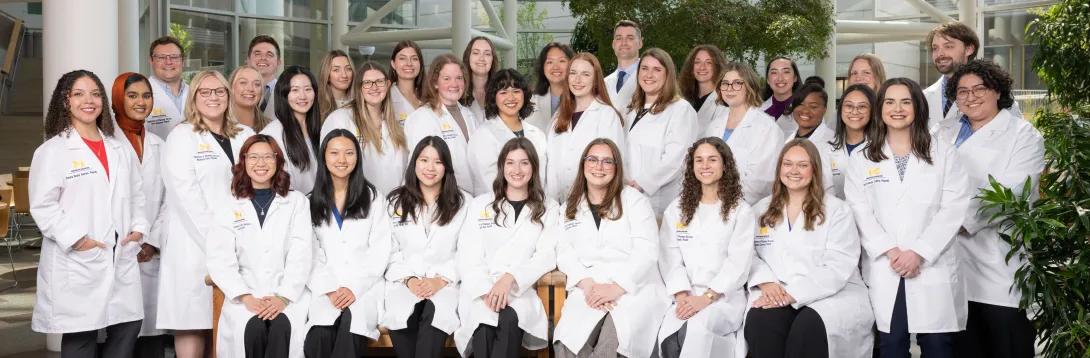
2026–2027 Pharmacy Residency Class.
Please note: This website provides information about the pharmacy residency programs at the University of Michigan Health Academic Medical Center in Ann Arbor. University of Michigan Health also has a pharmacy residency program at the Lansing location. Please see the University of Michigan Health – Sparrow Lansing Pharmacy Residency webpage for more information.
