
Endometrial/Uterine Cancer
Endometrial/Uterine Cancer
What is endometrial/uterine cancer?
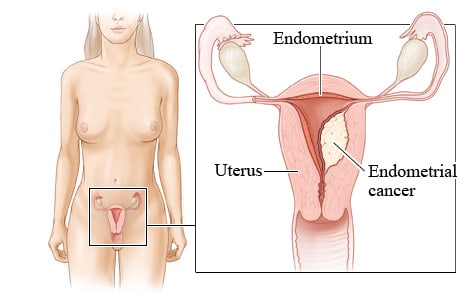
The lining of the uterus is called the endometrium. Sometimes there is abnormal growth of cells in this lining. This abnormal growth is called endometrial cancer. This cancer usually occurs in women older than age 50. It causes heavy or unusual vaginal bleeding.
This cancer is also called uterine cancer.
Appointment Information
The U-M Health Rogel Cancer Center's Gynecologic Oncology Program is a team of fellowship-trained gynecologic oncologists providing comprehensive, personalized cancer care. We follow National Comprehensive Cancer Network (NCCN) guidelines to develop treatment plans tailored to each patient’s diagnosis, stage, and goals. As an NCCN founding member institution, we offer access to the latest evidence-based treatments and the most clinical trials available for each disease.
To get the appointment process started, call 734-647-8902. If you are a referring physician, please contact our M-LINE at 800-962-3555.
If you have questions, please contact our Cancer AnswerLine at 800-865-1125.
What are the types of endometrial/uterine cancer?
Nearly all cancers of the uterus start in the endometrium and are called endometrial carcinomas. Cancers can also start in the muscle layer (myometrium) or supporting connective tissue of the uterus; these cancers are referred to as uterine sarcomas.
There are different types of endometrial carcinomas and uterine sarcomas. The treatment for endometrial carcinoma and uterine sarcoma depends on the type and stage of the cancer.
What are the symptoms of endometrial/uterine cancer?
Unusual vaginal bleeding, spotting, or other discharge
About 90% of patients diagnosed with endometrial cancer have abnormal vaginal bleeding, such as a change in their periods or bleeding between periods or after menopause. This symptom can also occur with some non-cancerous conditions, so if you notice this, be sure to report this to your doctor as soon as possible.
If you have gone through menopause, it is especially important to report any vaginal bleeding, spotting, or abnormal discharge to your doctor.
Non-bloody vaginal discharge
If you notice a change in the frequency or amount of discharge you experience throughout the month, it is important to report this change to your doctor as it may be a sign of endometrial cancer. In about 10% of cases, the discharge associated with endometrial cancer is not bloody. Any abnormal discharge should be evaluated by your doctor.
Pelvic pain and/or mass and weight loss
Pain in the pelvis, feeling a mass or lump in your pelvic area and/or losing weight without trying can also be symptoms of endometrial cancer. These symptoms are more common later if the cancer has spread beyond the uterus.
How is endometrial/uterine cancer diagnosed?
To check your symptoms, your doctor will ask about your medical history and do a physical exam. This will include a pelvic exam.
An endometrial biopsy is needed to confirm a diagnosis of endometrial cancer. A biopsy removes a small sample of the lining of the uterus (endometrium) to be looked at under a microscope.
Other tests may include:
- A transvaginal pelvic ultrasound. This uses sound waves to create images of the uterus. The images can show how thick the endometrium is. A thick endometrium can be a sign of cancer in postmenopausal women. Ultrasound also can help show whether cancer has grown into the uterine muscle.
- A hysteroscopy. This allows your doctor to view the inside of the uterus and get an endometrial tissue sample.
- Dilation and curettage (D&C). This test is done to get a sample of tissue from the inside of the uterus. It may be done at the same time as a hysteroscopy.
Testing for endometrial cancer may show that you have endometrial hyperplasia. This is not cancer but may develop into cancer.
Tests if cancer is found
If cancer is found, surgery is done to find out how much the cancer has grown (stage and grade) and to treat it at the same time.
Before surgery, an imaging test may be done to see if cancer has spread to the abdomen and pelvis. This helps with planning for treatment. Imaging tests may include a CT scan or an MRI.
Other tests done before surgery may include:
- A complete blood count (CBC) to check for anemia and other abnormal blood values.
- A cancer antigen (CA) 125 test. This test helps to identify cancer that has or may spread (metastasize).
- A chest X-ray to check for cancer cells that have spread (metastasized) from the uterus.
How is endometrial/uterine cancer treated?
Treatment for endometrial cancer is based on the stage of the cancer and other things, such as your overall health. The main treatment is:
- Surgery.
-
The most common type removes the uterus (hysterectomy) plus the fallopian tubes and ovaries (salpingo-oophorectomy). The doctor may also remove nearby lymph nodes and check other tissues for cancer.
Other treatment options may include:
- Chemotherapy.
-
These medicines kill fast-growing cells, including cancer cells and some normal cells.
- Radiation therapy.
-
This uses high-dose X-rays to destroy cancer cells and shrink tumors.
- Hormone therapy.
-
These medicines block hormones that cause certain cancers to grow. This helps slow or stop cancer growth.
- Targeted therapy.
-
These medicines target cancer cells and may cause less harm to normal cells. They help keep cancer from growing or spreading.
- Immunotherapy.
-
This treatment helps your immune system fight cancer. It may be given in several ways.
Your doctor will talk with you about your options and then make a treatment plan.

Questions about cancer?
Contact our Cancer AnswerLine™ at 800-865-1125. You'll talk to a nurse with years of experience in cancer care.
