Atrial Fibrillation (Afib)
Atrial Fibrillation (Afib)
What is atrial fibrillation?
Atrial fibrillation, sometimes called "Afib", is the most prevalent type of heart arrhythmia (abnormal heart rhythm) and causes an irregular (and often rapid) heartbeat. With atrial fibrillation, the heart's upper chambers beat irregularly, affecting blood flow to the heart muscle and to the rest of the body. This can cause blood clots, leading to a stroke.
What happens during atrial fibrillation?
During atrial fibrillation, the top chambers of the heart (the atria) lose their normal, organized electrical activity and develop a chaotic, unorganized rhythm that makes the bottom chambers (the ventricles) beat irregularly.
Atrial fibrillation often causes an erratic fluttering sensation in the chest (palpitations) and makes the heart a less efficient pump. This may result in symptoms of weakness, fatigue, dizziness or shortness of breath. However, some patients who have atrial fibrillation are completely unaware of it and have no symptoms at all.
What are the types of atrial fibrillation?
Atrial fibrillation may be paroxysmal or persistent. Paroxysmal atrial fibrillation refers to atrial fibrillation that comes and goes on its own. The episodes may last anywhere from a few minutes to several hours, and sometimes several days. Persistent or chronic atrial fibrillation lasts for more than seven days. In patients with persistent atrial fibrillation, a normal heart rhythm is restored by treatment.
Because of the sluggish movement of blood through the atria during atrial fibrillation, there is a tendency for blood clots to form in some patients. This can lead to complications such as stroke. For this reason, medications that thin the blood, such as aspirin or warfarin, are necessary for some patients with atrial fibrillation.
Atrial flutter
Some patients with paroxysmal atrial fibrillation (the type that comes and goes, as compared to persistent atrial fibrillation, which can stay for more than a week) also have right atrial flutter. Right atrial flutter results from a “short circuit” in the right atrium and causes symptoms that are very similar to the symptoms of atrial fibrillation. Most patients cannot tell the difference between atrial fibrillation and atrial flutter.
Risk factors for atrial fibrillation include:
- Age older than 60 (although afib can affect a younger population as well)
- Being white and male
- Sleep apnea
- Heart failure
- Heart valve disease
- High blood pressure
- Coronary artery disease and heart attack
- Obesity
- Family history of atrial fibrillation
- Surgery on the heart
- History of rheumatic fever
- Infection, such as pneumonia or endocarditis
- Lung disease, such as asthma or chronic obstructive pulmonary disease
- Metabolic conditions, such as hyperthyroidismor diabetes
- Use of alcohol and/or stimulants
- Congenital heart disease and surgical repair of congenital heart disease
How is atrial fibrillation treated?
Some individuals feel fine when they are in atrial fibrillation. This is more often the case in older patients who are not very active than in younger, more active patients. If the atrial fibrillation is not causing any symptoms, sometimes the best course of action is to simply live with it instead of receiving medications or other treatments in an attempt to restore a normal heart rhythm. For those patients, medications may still be needed to prevent a rapid heart rate and to prevent blood clots.
Many people can be treated by medication alone, and a number of treatments for afib are outpatient-based. We offer a variety of treatment options, depending on the condition of the patient, including:
- Drug therapy, such as anticoagulants
- Electrical cardioversion
- Pacemaker
- Catheter ablation
- Implantable cardiac defibrillator (ICD)
- Pulsed field ablation (PFA), a nonthermal ablation with minimal risk of collateral tissue injury that specifically targets abnormal heart cells
- Vein of Marshall ethanol ablation, a targeted approach to persistent and recurrent conditions that eliminates residual mechanisms of afib
- Maze procedure (see below)
- Thoracoscopic surgical ablation (see below)
The Maze procedure is a type of surgical treatment to correct atrial fibrillation and improve the quality of life for patients with the condition. During the procedure, multiple incisions are made in the right and left atria (the upper chambers of the heart) to isolate abnormal electrical signals or impulses that cause atrial fibrillation. The left atrial appendage, an area of the heart where blood clots can form and result in stroke, is removed and the incisions are sewn closed. The resulting scars redirect the abnormal electrical signals that cause atrial fibrillation.
This procedure is the preferred treatment for atrial fibrillation patients when another heart procedure such as valve repair or coronary artery bypass is being performed.
Thoracoscopic surgical ablation is a minimally invasive procedure used to treat atrial fibrillation for patients who may not be a candidate for catheter-directed ablation or as an alternative to catheter-directed ablation. The procedure uses radiofrequency energy to eliminate the triggers and pathways for abnormal heart rhythms.
This helps restore normal signaling within the heart. Additionally, during this procedure an area of the heart known as the left atrial appendage — the most common area for clots to form — is excluded, therefore significantly reducing the risk of stroke.
Appointment Information
Call us at 888-287-1082 to schedule an appointment with a U-M Cardiovascular Center physician, get a prescription refill, or request to speak with your nurse, or visit the Make a Cardiovascular Appointment page.
Patient Resources
Locations
-
Cardiology Clinic | Brighton Center for Specialty Care 7500 Challis Rd
Entrance 1, Level 2
Brighton, MI 48116-9416Get Directions -
Cardiology Clinic | Northville Health Center 39901 Traditions Dr
Floor 2
Northville, MI 48168-9493Get Directions -
Electrophysiology Services | Cardiovascular Center 1425 E Ann St
Floor 3 Reception C
Ann Arbor, MI 48109-5856Get Directions
Doctors

Kelly Arps, MD
Clinical Assistant Professor
Cardiac Electrophysiology, Internal Medicine, Cardiovascular Disease

Apurba Kent Chakrabarti, MD
Clinical Assistant Professor
Cardiovascular Disease, Internal Medicine

Aman Chugh, MD
Professor
Cardiac Electrophysiology, Internal Medicine, Cardiovascular Disease

Thomas Christopher Crawford, MD
Clinical Professor
Cardiac Electrophysiology, Internal Medicine, Cardiovascular Disease

Amrish Deshmukh, MD
Clinical Assistant Professor
Cardiac Electrophysiology, Cardiovascular Disease, Internal Medicine
Hamid Ghanbari, MD
Clinical Associate Professor
Cardiac Electrophysiology, Internal Medicine, Cardiovascular Disease
Michael Ghannam, MD
Clinical Associate Professor
Cardiac Electrophysiology, Internal Medicine, Cardiovascular Disease

Emma Hegwood, DO
Clinical Assistant Professor
Cardiac Electrophysiology, Cardiovascular Disease, Internal Medicine

Krit Jongnarangsin, MD
Clinical Professor
Cardiac Electrophysiology, Internal Medicine, Cardiovascular Disease

Rakesh Latchamsetty, MD
Clinical Professor
Cardiac Electrophysiology, Internal Medicine, Cardiovascular Disease




Providers
Caitlin Sommer Boyak, NP
Advanced Practice Nurse
Nurse Practitioner

Mellissa Katrin Brieger, PA-C
Physician Assistant
Physician Assistant
Erin Christine Judge, NP
Advanced Practice Nurse
Nurse Practitioner
Caroline Michelle Lawson, NP
Advanced Practice Nurse
Nurse Practitioner

Tiffany Lee Luke, NP
Advanced Practice Nurse
Nurse Practitioner

Nimita Mahadev Mehta, NP
Advanced Practice Nurse
Nurse Practitioner
Theresa Maureen Montney-Dowell, NP
Advanced Practice Nurse
Nurse Practitioner

Eryn Kyle Smith, PA-C
Physician Assistant
Physician Assistant
Meredith Victoria Smith, NP
Advanced Practice Nurse
Nurse Practitioner
Patricia Anselmo Sovitch, NP
Advanced Practice Nurse
Nurse Practitioner
News & Stories

Young father survives aortic dissection after delayed diagnosis
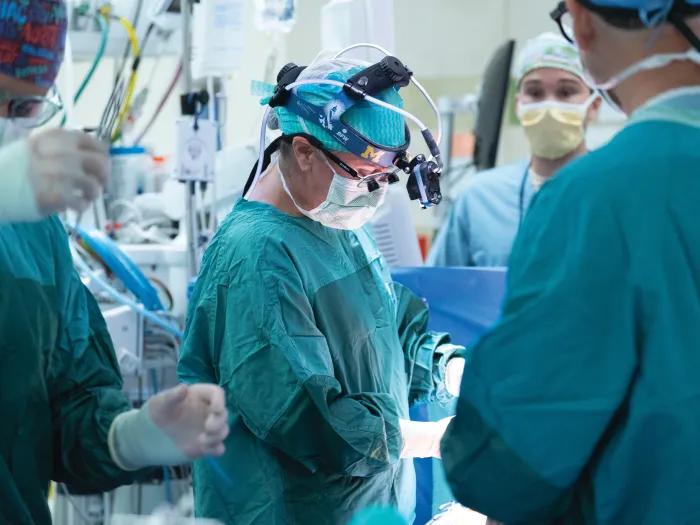
C.S. Mott Children’s Hospital first in country to implant expandable heart valve during FDA review phase
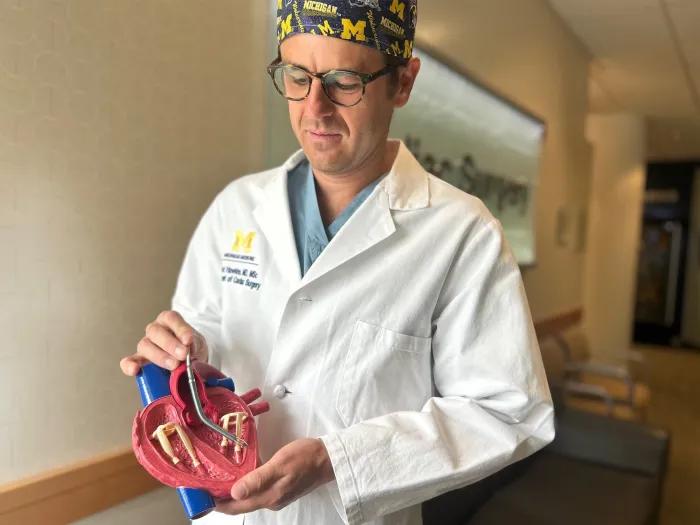
How a temporary heart pump can support high risk cardiac surgery

Treating a rare coronary artery aneurysm without open heart surgery
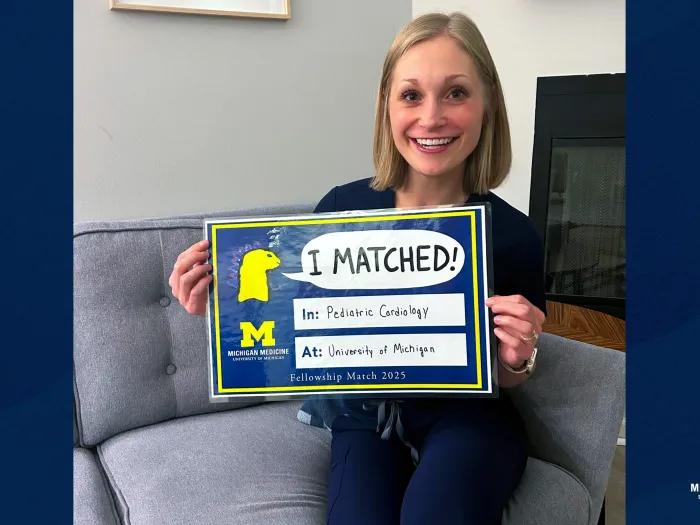
Fontan patient inspires as pediatric cardiology fellow