Heart Failure with Preserved Ejection Fraction (HFpEF)
Heart Failure with Preserved Ejection Fraction (HFpEF)
What is heart failure with preserved ejection fraction (HFpEF)?
Heart failure is a condition in which the heart muscle is unable to pump enough blood to meet the body’s nutrition and oxygen needs. The volume of blood pumped by the heart is determined by:
- The contraction of the heart muscle (how well the heart squeezes)
- The filling of the heart chambers (how well the heart relaxes and fills with blood)
We classify heart failure based on which of these two functions is abnormal. If the heart muscle is too weak, the condition is known as heart failure with a reduced ejection fraction (HFrEF). Ejection fraction is used to assess the pump function of the heart; it represents the percentage of blood pumped from the left ventricle (the main pumping chamber) per beat. A normal ejection fraction is greater than or equal to 50 percent. There are many causes for a weak heart muscle (low ejection fraction). If the heart pumps normally but is too stiff to fill properly, the condition is known as heart failure with preserved ejection fraction (HFpEF).
Heart Failure: What Is It?
Appointment Information
To schedule an evaluation with a Frankel Cardiovascular Center physician, call 888-287-1082. Or visit the Make a Cardiovascular Appointment page to learn what to expect when you call us.
Heart Failure Program
The Heart Failure Program offers expert medical management, access to advanced surgical care, a range of technology and more.
What are the symptoms of HFpEF?
- Shortness of breath with exertion or at rest
- Decreased exercise tolerance
- Fatigue
- Chest discomfort
- Swelling in the lower extremities
- Shortness of breath lying flat
The symptoms of HFpEF can result from the accumulation of blood/fluid in the lungs, veins and tissues of the body. Fluid backs up into these areas because the heart is not filling adequately. The buildup of fluid in the lungs can result in shortness of breath while fluid in the legs causes swelling. Symptoms can also result from the heart not being able to pump enough blood during exercise. This can lead to fatigue and a reduction in an individual’s exercise capacity.
What causes HFpEF?
Current research suggests that HFpEF occurs when chronic medical conditions damage the heart and the other organ systems of the body. The following medical conditions can contribute to HFpEF:
- Obesity
- Hypertension (high blood pressure)
- Diabetes mellitus (type 1 and type 2)
- Coronary artery disease
- Atrial fibrillation
- Chronic kidney disease
- Chronic obstructive pulmonary disease (COPD)
- Obstructive sleep apnea
- Anemia
While not always the case, patients with HFpEF often have one or more of the above diseases. These diseases are thought to gradually change the structure and function of the heart over time. These changes stiffen the heart, making it more difficult for it to fill appropriately. Inadequate filling of the heart during exercise (or even at rest) limits the amount of blood pumped with each beat. This can result in symptoms.
How is HFpEF treated?
The U-M Health Heart Failure Program at the Frankel Cardiovascular Center offers highly specialized care for patients with HFpEF. Our HFpEF Clinic is staffed by heart failure specialists, and treatment in our HFpEF program takes the whole person into account, not just their heart. Our treatment often starts with controlling blood pressure and relieving fluid overload that can cause swelling or shortness of breath.
Since there isn’t a “cookbook” of treatments that work for all patients with HFpEF, we use information from diagnostic tests such as echocardiography, heart catheterization, stress testing and cardiac MRI to design the best treatment plan for each patient’s particular situation. We also think carefully about how to diagnose and/or improve the management of other conditions that might contribute to a patient’s HFpEF.
Research
Our HFpEF program also provides the opportunity to participate in cutting-edge research studies. Our team has a strong desire to improve medical care and quality of life for patients who have HFpEF, and a passion to understand more about why people develop HFpEF in the first place. Our research spans the spectrum from studies investigating the effects of diet and exercise to clinical trials of medications and devices implanted in the heart.
Locations
-
Cardiology Clinic | Frankel Cardiovascular Center 1425 E Ann St
Floor 3 Reception C
Ann Arbor, MI 48109-5856Get Directions -
Cardiology Clinic | Northville Health Center 39901 Traditions Dr
Floor 2
Northville, MI 48168-9493Get Directions -
Cardiology Clinic | Ypsilanti Health Center 300 W Michigan Ave Ste 5000
Ypsilanti, MI 48197-5443Get Directions
Doctors

Scott Lowell Hummel, MD, MS
Professor
Advanced Heart Failure & Transplant Cardiology, Cardiovascular Disease, Internal Medicine

Matthew Christopher Konerman, MD
Clinical Assistant Professor
Advanced Heart Failure & Transplant Cardiology, Cardiovascular Disease, Internal Medicine

Robert Alex Solomon, MD
Clinical Assistant Professor
Cardiovascular Disease, Internal Medicine

Stacy Jean Willner, DO
Clinical Assistant Professor
Cardiovascular Disease, Internal Medicine
Providers

Rachel Elizabeth Bowers, NP
Advanced Practice Nurse
Nurse Practitioner

Brandon Michael Dec, PA-C
Physician Assistant
Physician Assistant

Rachel Elizabeth Key, PA-C
Physician Assistant
Physician Assistant
News & Stories

The Questions That Shape the Future of Medicine

Medicare's New GLP-1 Bridge Program
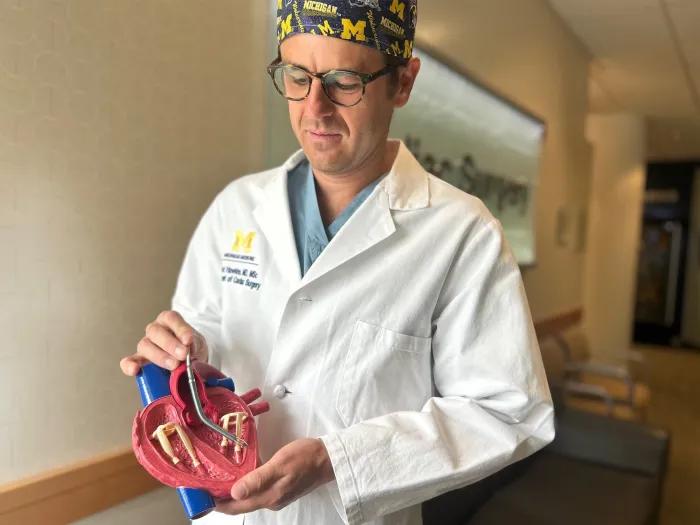
How a temporary heart pump can support high risk cardiac surgery
Could preeclampsia become a thing of the past?

2 heartbeats, 1 future: Why pregnancy is a critical window for women’s heart health