Prostheses (Lower Extremities)
Prostheses (Lower Extremities)
A prosthesis is a replacement for a lost limb. There are many levels of lower extremity amputation, and many types of prostheses, depending on your needs, lifestyle, goals and insurance/finances. At the University of Michigan Health Orthotics & Prosthetics Center, we offer the full range of lower extremity prostheses along with complete, compassionate care, to get you back to daily living. We listen to you and provide you a thorough education and prosthetic plan which best suits your needs. We offer the most cutting-edge prostheses available.
The Orthotics & Prosthetics Center has been awarded the maximum three-year accreditation by the American Board for Certification in Orthotics, Prosthetics & Pedorthics, Inc., and is among the few University based facilities in the country that offer comprehensive orthotic and prosthetic services.
Our Approach
We ensure your lower extremity prosthesis is:
- Comfortable
- Durable
- Well functioning
- Cosmetically pleasing
- Easy to put on and take off
- The best choice for you
Our team includes prosthetists, physicians, and most importantly you the patient. As a team, we will evaluate your needs and discuss options to help you make an informed decision on which prosthesis is best for you. We welcome the opportunity to utilize creative solutions to meet our patient’s needs for a single amputation or multiple amputations. Our goal is to help you achieve your goals.
We custom design prosthetic devices to fit each patient’s individual needs, and utilize several techniques including plaster casting, 3-D imaging, and CAD/CAM (computer-aided design/computer-aided manufacturing) to quickly and efficiently design and fabricate the devices.
Recommended For
Prostheses can range from a more cosmetic device to a highly functional device with state-of-the-art design and cutting-edge componentry and many options in between. Our team works with patients to create prostheses for patients with amputations from partial feet to a complete absence of the lower limb (hip disarticulation or hemipelvectomy).
Most patients are ready to be fit with their provisional prostheses once their surgical site is healed. This can vary from 4 to 8 weeks after surgery if there are no healing complications. Typically, physical therapy is recommended to help you regain your strength and learn how to use your prosthesis.
Appointment Information
Schedule an appointment by calling us at 734-973-2400.
Physician prescriptions are required for orthotics and prosthetics services. Some walk-in services are available for urgent repair issues. Please call ahead.
What can I expect with a lower extremity prosthesis?
After an initial evaluation, our team of experts will create the initial mold for the socket or interface of the prosthesis, design the prosthesis, and custom-fabricate the prosthesis. Once the socket fits well, the team will assess your gait, or the way you walk, and will make adjustments as necessary.
Your first prosthesis is called a provisional prosthesis because your limb will still be healing and changing. In this initial stage, you can expect to see a change in limb shape and size as you begin training on how to use your prosthesis. Once your limb has healed, your strength has increased, and the volume of your limb becomes more stable, you will be fit with a second prosthesis called a definitive prosthesis.
- During the initial visit: You will be seen by a physician and prosthetist for an evaluation. At this visit you will be able to ask questions and the physician will ask questions about you. We will want to know your lifestyle, goals, daily activities, needs as well as your overall health to determine the best prosthetic device for you. Prosthetic options will be discussed.
- At the second visit: You will be measured for a provisional prosthesis and the unique shape of your limb will be captured either by casting or use of CAD/CAM (computer-aided design/computer-aided manufacturing) technology. Casting involves being wrapped with a plaster bandage to capture an accurate impression of your limb. CAD/CAM uses a scanner to capture the shape of your limb to build a 3-D model of the limb using computer software.
- At the third visit: You will be fit with a test socket. The socket is made from a clear plastic so that adjustments can be easily made. If the socket fits well, the prosthesis will be assembled and you will begin training with your Occupational Therapist.
Once you begin wearing a compression sock or the prosthesis, it is normal to see changes occurring to your limb shape and size. Using the provisional prosthesis allows for changes to easily be made to the socket before beginning to wear a more definitive device. Once training has occurred and your limb shape and size stabilizes, a definitive prosthesis will be made.
Locations
-
Physical Medicine & Rehabilitation Clinic | Eisenhower Corporate Park 2850 S Industrial Hwy Ste 400
Ann Arbor, MI 48104-6796Get Directions
Doctors

Alex Clayton Donaghy, MD
Clinical Assistant Professor
Physical Medicine & Rehabilitation

Brian Kelly, DO
Clinical Professor
Physical Medicine & Rehabilitation, Spinal Cord Injury Medicine

Emine Poyraz, MD
Clinical Assistant Professor
Physical Medicine & Rehabilitation
News & Stories
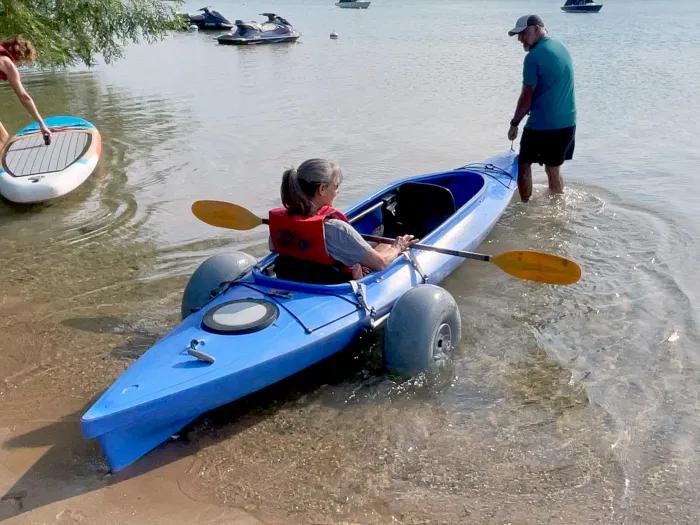
Expanding camp adventure for all
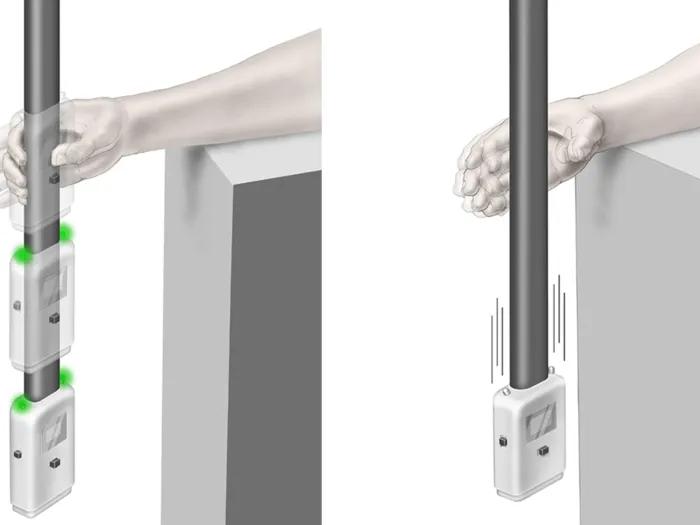
A method to prevent falls before they happen
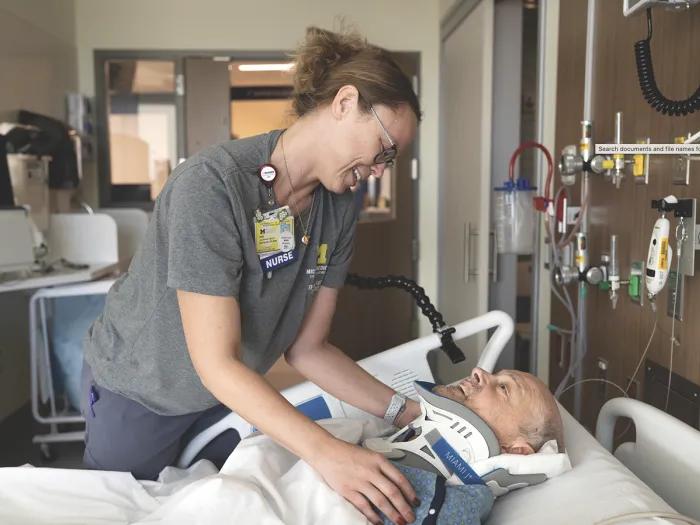
Giving with gratitude: planned gifts support nursing, research, and patient care
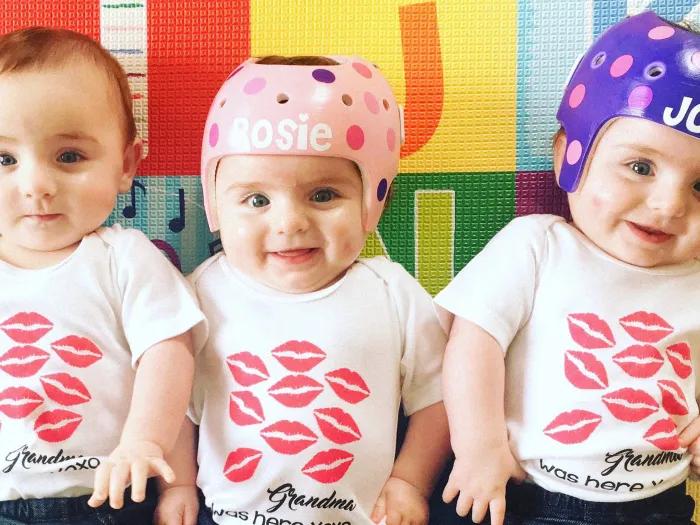
A smarter helmet for the smallest patients
To reduce chronic pain, a new digital program could help