Ductal Carcinoma In Situ (DCIS)
Ductal Carcinoma In Situ (DCIS)
What is DCIS?
Ductal Carcinoma In Situ (DCIS), is an early form of breast cancer that has not spread beyond the breast milk ducts. Because these cells have not spread to surrounding breast tissue, this makes DCIS highly treatable and nearly always curable. It is often labeled as stage 0, non-invasive breast cancer.
DCIS is non-invasive, meaning it hasn't spread to other parts of the breast or body, but if left untreated, it can develop into invasive breast cancer.
Our Approach
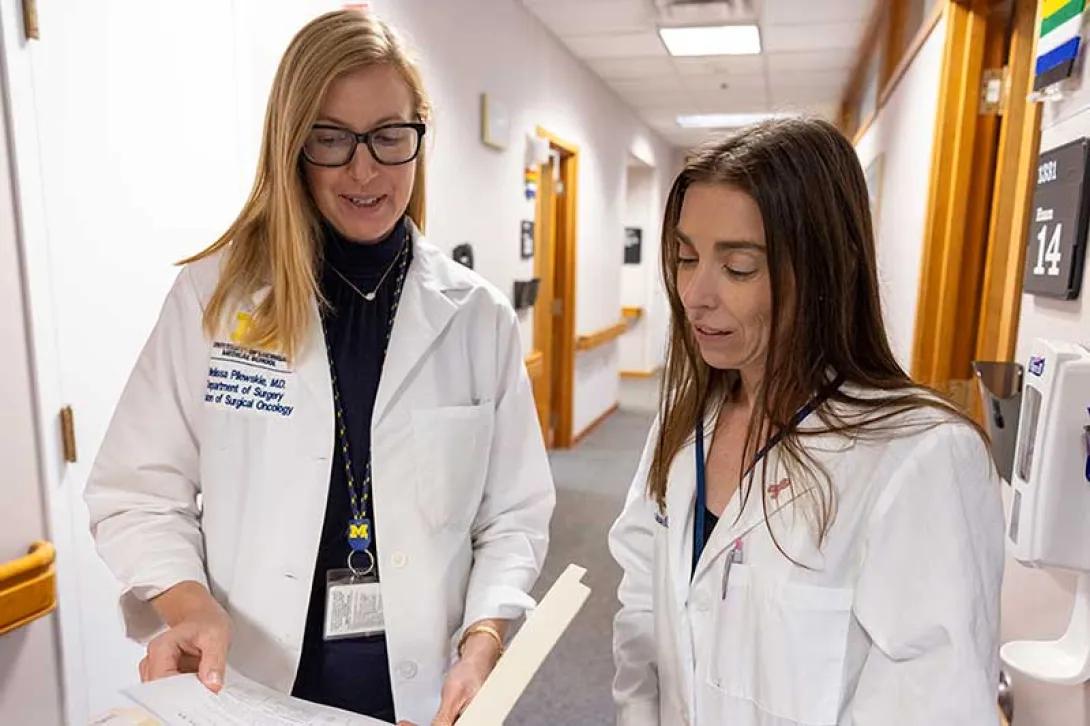
The Weiser Family Center for Breast Cancer is dedicated to providing compassionate, cutting-edge care for individuals affected by breast cancer. We enhance lives through early detection, personalized treatment, and survivorship support, while advancing research, education, and advocacy. Our unwavering commitment is to make a meaningful difference, improving breast cancer outcomes for all.
Appointment Information
If you're a patient interested in making an appointment, please call 734-647-8902.
Healthcare providers looking to refer a patient, please contact M-LINE: 800-962-3555.
For those with questions, please contact our Cancer AnswerLine at 800-865-1125.
What are the symptoms of DCIS?
Most women with DCIS do not experience symptoms. It's usually found through screening mammograms. In some cases, there may be a breast lump or nipple discharge, but these are less common.
Risk Factors
A risk factor is something that increases the chance of developing a disease. The following are potential risk factors for breast cancer:
- Age: Most common in women over 40.
- Family History: Having a family history of breast cancer increases the risk.
- Genetic Mutations: Certain genetic mutations, such as BRCA1 and BRCA2, heighten the risk.
- Hormonal Factors: Postmenopausal hormone replacement therapy and early menstruation may increase risk.
How is DCIS diagnosed?
DCIS is most frequently detected through routine mammograms as it often presents with microcalcifications (tiny calcium deposits) that can be seen on the imaging.
Once DCIS is suspected based on a mammogram, a biopsy is performed to confirm the diagnosis and determine the extent of the abnormal cells.
How is DCIS treated?
Treatment for DCIS aims to remove the DCIS and reduce the risk of it developing into invasive cancer. Options include:
Surgery
- Lumpectomy: Removal of the abnormal cells and a margin of surrounding normal tissue. Often followed by radiation therapy.
- Mastectomy: Removal of the breast; may be recommended if the extent of DCIS is larger.
Radiation Therapy
This treatment may be recommended after lumpectomy to reduce the risk of recurrence. Learn more about this type of treatment on our Radiation Treatment for Breast Cancer webpage. There's also information on the U-M Health's Radiation Therapy webpage.
Hormonal Therapy
For hormone receptor-positive DCIS, medications like tamoxifen or aromatase inhibitors may be recommended to reduce the risk of recurrence.
Prognosis
The prognosis for DCIS is very good, with high survival rates.
Follow-Up Care
Regular follow-up care and monitoring, including mammograms, are essential to ensure the DCIS has not recurred and to monitor overall breast health.
Early detection and treatment of DCIS can significantly reduce the risk of developing invasive breast cancer.
Patient Resources
The psychosocial impacts of breast cancer are profound and multifaceted, necessitating a comprehensive approach to care that addresses emotional, psychological, and social needs. At the Weiser Family Center for Breast Cancer, we understand by leveraging a range of support services and resources, breast cancer patients can better cope with their diagnosis, treatment, and post-treatment phases, enhancing their overall quality of life.
For more specific information on symptoms, diagnosis and treatment information, please visit the following pages on the different types of breast cancer:
- Hereditary Breast Cancer
- Inflammatory Breast Cancer
- Invasive Ductal Carcinoma (IDC)
- Invasive Lobular Carcinoma (ILC)
- Male Breast Cancer
- Metastatic Breast Cancer
- Tumor Receptors & Breast Cancer
- Aromatase Inhibitors Musculoskeletal Symptoms (AIMSS)
- Breast Cancer & Sexual Health
- Breast Cancer & Young Women
- Breast Cancer & Older Adults
The following links to services and articles providing additional information and support for breast cancer patients and their families:
Lumpectomy & Axillary Surgery: A Patient Care Guide for Before and After Surgery
Lumpectomy & Sentinel Lymph Node Biopsy: A Patient Care Guide for Before and After Surgery
Mastectomy: A Patient Care Guide for Before and After Surgery
Mastectomy & Axillary Surgery: A Patient Care Guide for Before and After Surgery
Axillary Surgery: A Patient Care Guide for Before and After Surgery
Related services offered by U-M Health:
Locations
-
Breast Care Clinic | Brighton Center for Specialty Care 7500 Challis Rd
Entrance 1, Level 1
Brighton, MI 48116-9416Get Directions -
Breast Oncology Clinic | Rogel Cancer Center 1500 E Medical Center Dr
Floor 1
Ann Arbor, MI 48109-5916Get Directions
Doctors

Monika Leigh Burness, MD
Assistant Professor
Medical Oncology, Internal Medicine

Erin Frances Cobain, MD
Associate Professor
Medical Oncology, Internal Medicine

Norah Lynn Henry, MD, PhD
Professor
Medical Oncology, Internal Medicine

Tasha Michelle Hughes, MD
Clinical Associate Professor
Surgical Oncology, Surgery

Jacqueline Sara Jeruss, MD, PhD
Professor
Surgery

Kathleen Anne Kemmer, MD
Clinical Assistant Professor
Medical Oncology, Hematology, Internal Medicine

Aki Morikawa, MD, PhD
Clinical Associate Professor
Medical Oncology, Hematology, Internal Medicine

Lauren Michelle Perry, MD
Clinical Assistant Professor
Surgical Oncology, Surgery

Melissa Louise Pilewskie, MD
Clinical Associate Professor
Surgery

Michael Scott Sabel, MD
Professor
Surgery


Providers

Joan Marie Armstrong, NP
Advanced Practice Nurse
Nurse Practitioner - Family, Nurse Practitioner

Susan Marie Egner, NP
Advanced Practice Nurse
Nurse Practitioner
Tamara Mangan Ghormley, NP
Advanced Practice Nurse
Nurse Practitioner, Nurse Practitioner - Community Health
Kimberly Ann Hoskins, NP
Advanced Practice Nurse
Nurse Practitioner - Adult Health
Mary-Jo Marie Julin, NP
Advanced Practice Nurse
Nurse Practitioner
Margaret Anne Miodonski, NP
Advanced Practice Nurse
Nurse Practitioner-Women's Health, Nurse Practitioner
Megan Ann Williams-Morad, PA-C
Physician Assistant
Physician Assistant

Questions about cancer?
Contact our Cancer AnswerLine™ at 800-865-1125. You'll talk to a nurse with years of experience in cancer care.
News & Stories

5-year survival rate has increased for all cancers, according to American Cancer Society

Breast cancer patient encourages women to commit to their health
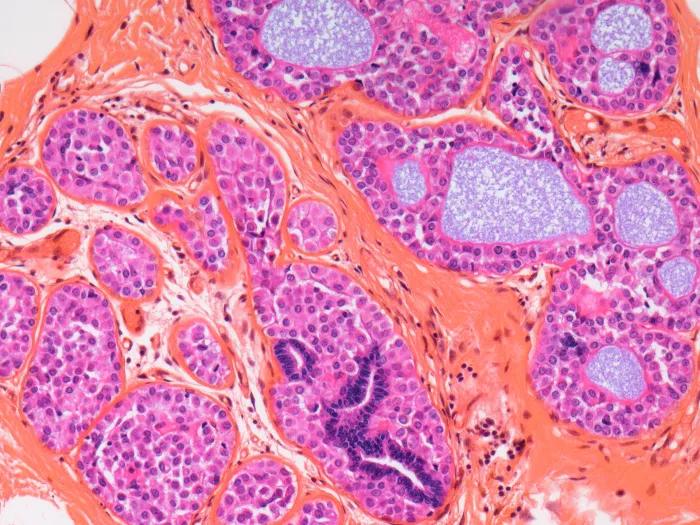
What is ductal carcinoma in situ breast cancer?

Patients are opting in for 10 years of breast cancer treatment

Drug combination reduces breast cancer risk and improves metabolic health in rats