Gallbladder Cancer
Gallbladder Cancer
What is gallbladder cancer?
Your gallbladder plays an important role in digesting food. This organ stores digestive fluids made in the liver (bile). During digestion, your gallbladder releases bile to help your small intestine break down foods.
Tumors can form when cells that line the gallbladder grow in ways that aren’t normal. Most gallbladder cancers are tumors in gland-like cells (adenocarcinomas). Rarely, tumors may form in skin-like cells that line the gallbladder (squamous cell carcinomas).
Appointment Information
The Liver Cancer Program evaluates and treats patients with known or suspected gallbladder cancer. If you've been diagnosed with gallbladder cancer, or suspect you may have it, please call 734-647-8902.
If you're referring a patient, please contact M-Line 800-962-3555.
For people with questions, please call our Cancer AnswerLine at 800-865-1125.
What are the symptoms of gallbladder cancer?
You might not have any symptoms of gallbladder cancer until large tumors develop or cancer spreads (metastasizes). Our experts begin by asking you about your medical history and any symptoms you have. Gallbladder cancer symptoms include:
- Fever
- Pain, lumps or swelling in your abdomen
- Nausea and vomiting
- Yellow skin or eyes (jaundice)
How is gallbladder cancer diagnosed?
Our experts may recommend a blood test (liver function test) to measure the amount of certain chemicals produced by your liver. High levels may mean cancer is present.
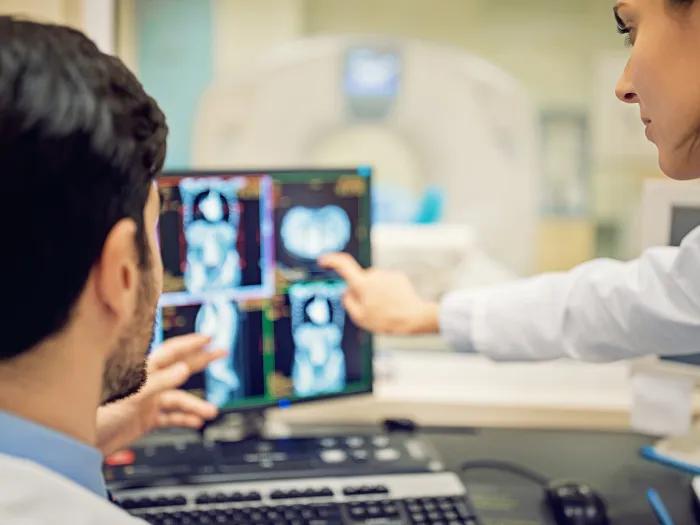
Specialists also use imaging tests to see detailed images of your bile ducts, liver and gallbladder. We use:
- Angiography: Specialists inject dye that makes your blood vessels visible. Then, we take X-rays to see how blood flows through your gallbladder and liver. We also look at blood vessels that don’t seem typical.
- Cholangiography: We use this test to check for blockages or changes to blood vessels in the bile ducts, gallbladder and liver. Specialists use these images to see if tumors are blocking bile ducts.
- Computed tomography (CT) scan: We use this special X-ray test to create detailed images of your bile ducts, gallbladder and liver. We can see whether tumors are growing in certain areas of your abdomen.
- Magnetic resonance imaging (MRI): Experts perform this test, which uses a computer, radio waves and magnets, to see images of your gallbladder. Our radiology experts interpret these images to determine if tumors are present. We also look for blocked blood vessels around your liver.
- Ultrasound: We use a probe (transducer) to create pictures using sound waves. These images show experts the detail of your bile ducts, gallbladder and liver. You may have:
- Abdominal ultrasound: We move the probe over the skin of your abdomen.
- Endoscopic ultrasound: Doctors use a thin lighted instrument with a camera (endoscope) to see inside your body. We insert the endoscope through your mouth into your stomach or through a small incision in your abdomen (laparoscopic ultrasound).
Doctors may take a small sample of tissue (biopsy) from the tumor. Our pathology specialists examine the tissue under a microscope to confirm if cancer cells are present.
How is gallbladder cancer treated?
Our liver cancer experts treat gallbladder cancer with surgery, radiation and systemic therapy. We work together – and with you – to create a tailored treatment plan that meets your treatment goals. We offer:
Surgery for gallbladder cancer
Not all gallbladder tumors are removable. Our surgeons evaluate tumor images to develop individualized surgery plans. We may perform:
- Simple cholecystectomy: Experts remove the gallbladder completely. We may do this with:
- Laparoscopic cholecystectomy: We make tiny incisions in the abdomen to insert a thin tube with a light and camera (laparoscope). We use surgical tools to remove the gallbladder through these tiny incisions.
- Open cholecystectomy: We make a large incision in the abdomen to remove the gallbladder.
- Radical cholecystectomy: Surgeons remove the gallbladder, part of the liver next to the gallbladder and nearby lymph nodes. They may also decide to remove additional tissue if there’s a risk of cancer spreading.
Palliative surgery for gallbladder cancer
When surgeons can’t remove gallbladder tumors, they may perform palliative surgery. These surgeries help manage some of the symptoms that tumors cause. Experts may perform:
- Biliary bypass: Surgeons create a new path around a bile duct blocked by a tumor.
- Percutaneous transhepatic biliary drainage: Surgeons place a metal or plastic tube (stent) into the liver when bile ducts are blocked. The stent may drain bile into the small intestine or to a bag outside the body.
- Stent placement: We insert a stent to help keep a blocked bile duct open.
Radiation therapy for gallbladder cancer
Radiation oncologists at Rogel Cancer Center treat gallbladder cancer with radiation therapies. We offer:
- External beam radiation therapy: We take precise measurements to map the gallbladder tumor location. We then use a machine to aim energy beams at these locations to destroy cancer cells.
- Intensity-modulated radiation therapy (IMRT): Experts use a computerized system to deliver a precise dose of radiation to gallbladder tumors. Our specialists adjust the angles and dosing of the radiation beams to spare healthy tissue while targeting cancer.
Systemic therapy for gallbladder cancer
Our experts may recommend treatment with medications, known as systemic therapy, as part of gallbladder cancer treatment. We may use:
- Chemotherapy: Drugs that travel through your bloodstream to kill cancer cells throughout the body. Experts may recommend chemotherapy:
- When gallbladder cancer can’t be removed with surgery
- After gallbladder cancer surgery to help destroy any remaining cancer
- To reduce tumor size and help manage symptoms (known as palliative care)
- Immunotherapy: Drugs that help your immune system recognize and fight cancer. Your doctor may recommend that you join an immunotherapy clinical trial if you are eligible.
- Targeted therapy: Drugs that destroy cancer cells while leaving healthy cells intact. You may be eligible to access these drugs through a clinical trial.

Questions about cancer?
Contact our Cancer AnswerLine™ at 800-865-1125. You'll talk to a nurse with years of experience in cancer care.
Locations
-
Multidisciplinary Liver Clinic | Rogel Cancer Center 1500 E Medical Center Dr
Floor B1 Reception E
Ann Arbor, MI 48109-5912Get Directions
Doctors

OXANA V Crysler, MD
Clinical Assistant Professor
Medical Oncology, Internal Medicine

Kyle Clifford Cuneo, MD
Clinical Professor
Radiation Oncology

Benjamin David Ferguson, MD PhD
Clinical Assistant Professor
Surgical Oncology, Surgery
Borislav Hristov, MD
Clinical Assistant Professor
Radiation Oncology
Theodore S Lawrence, MD, PhD
Professor
Radiation Oncology, Medical Oncology, Internal Medicine

Alisa Likhitsup, MD, MPH
Clinical Associate Professor
Gastroenterology, Internal Medicine, Transplant Hepatology
Neehar Parikh, MD, MS
Associate Professor
Gastroenterology, Internal Medicine, Transplant Hepatology

Nataliya Razumilava, MD
Associate Professor
Gastroenterology, Internal Medicine, Transplant Hepatology

Vaibhav Sahai, MBBS, MS
Associate Professor
Medical Oncology, Hematology, Internal Medicine
Providers
Ashleigh Nora Gamalski, PA-C
Physician Assistant
Physician Assistant
News & Stories
Diagnosed with pancreatic cancer: Now what?
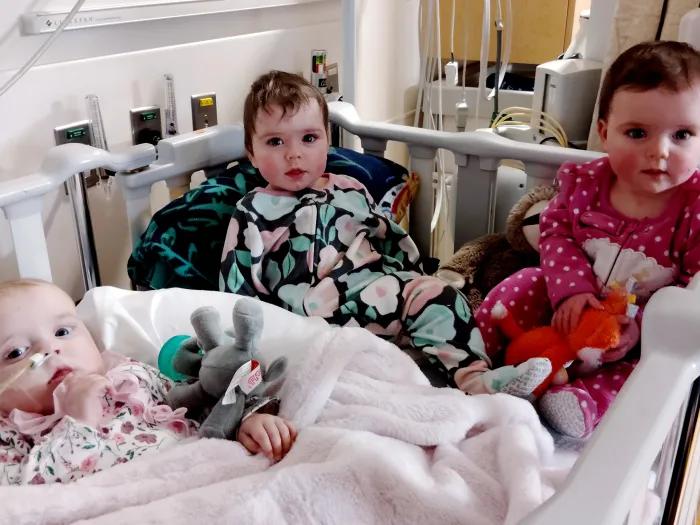
Rare infant triplet overcomes one-in-a-million type of liver cancer
Understanding Prostate Biopsy
Focal therapy for prostate cancer

Histotripsy stimulates the immune system to attack cancer cells outside the liver