About the Kellogg Eye Center


About the Kellogg Eye Center
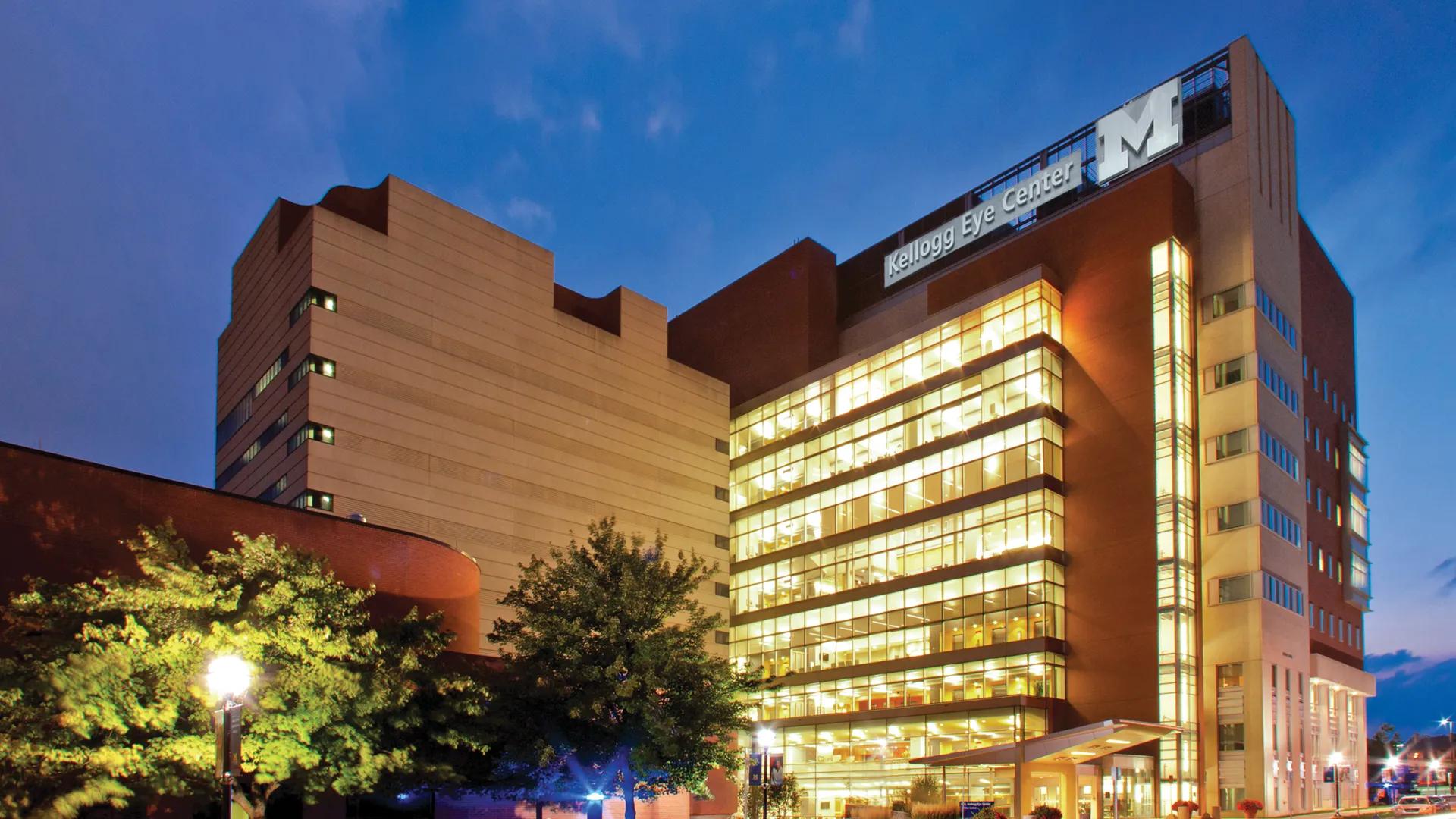
The University of Michigan Health W.K. Kellogg Eye Center is a nationally recognized center for vision care and research.
U-M Health Kellogg Eye Center has built a solid reputation for providing quality patient care and treating even the most challenging eye conditions.
Since its establishment in 1872, U-M Kellogg Eye Center has continued to employ excellent ophthalmologists and vision researchers who are committed to offering quality care to their patients.
At Kellogg Eye Center, more than 227,000 patient visits are conducted annually, with a comprehensive ophthalmology clinic and eight subspecialty clinics available at the primary facility in Ann Arbor. Additionally, Kellogg provides genetic counseling, ocular prosthetics, and ophthalmic photography services to its patients.
Our scientists have developed a strong vision research program that explores the genetic, molecular, and biochemical underpinnings of sight. Their varied and innovative scientific perspectives place Kellogg in a leadership position for developing new treatments and therapies for blinding eye disease.
As the teaching arm of the U-M Medical School, the Department of Ophthalmology and Visual Sciences has continued to attract talented residents and fellows who will eventually practice ophthalmology globally.
U-M Health Kellogg Eye Center is proud to be a part of Michigan Medicine, one of the country's largest and most prestigious medical, research, and educational institutions.
Kellogg Eye Center by the Numbers
Vision & Guiding Principles
Understanding, Curing, Preventing, and Treating Eye Disease
The Kellogg Eye Center has always upheld the values of exemplary patient care and dedication to our patients and their families. Kellogg faculty and staff together have developed a statement of purpose, a longterm vision, and a set of guiding principles that reaffirm these values.
- Purpose: Improve lives through curing, preventing, and treating eye disease
- Vision: We seek to improve lives around the world by enhancing vision
Guiding Principles
- Innovation: Our curiosity drives innovation and the quest for knowledge
- Teamwork: We are a collegial, productive, and collaborative community
- Inclusivity: We value engagement with all communities we serve
- Caring: We are respectful and compassionate
- Integrity: Our ethics are built on openness, honesty, and trust
News & Stories

Nerf gun accident causes retinal detachment in pediatric patient

Mediterranean diet can slow progression of age-related macular degeneration

Patient with retinitis pigmentosa receives new hope at Kellogg’s low vision clinic

Rare genetic eye disease treated with gene therapy helps 2 children see again

A new clue for aging eyes