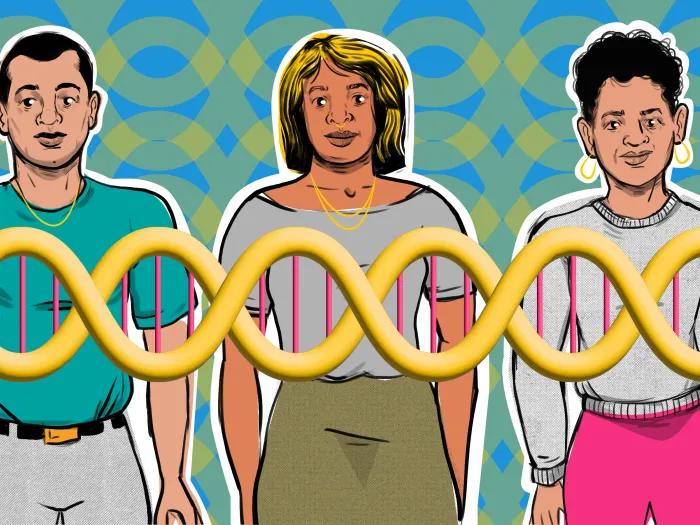
Breast and Ovarian Cancer Risk Evaluation Clinic
More than 190,000 women will be diagnosed with breast cancer this year. But only 5-10% of those breast cancers are caused by an inherited genetic mutation. BRCA1 and BRCA2 are two genes that belong to a class of genes known as tumor suppressors. Mutations (changes) in these genes have been linked to a higher risk of developing breast cancer and ovarian cancer.
The Breast and Ovarian Cancer Risk Evaluation Clinic provides an accurate assessment of personal risk for developing breast and other related cancers, education regarding availability of genetic testing and current research programs, and a plan for follow-up and preventive care.
Genetic counseling for inherited susceptibility to cancer BRCA1 and BRCA2 mutations can may be able to tell a woman whether she is at increased risk for these and other cancers. The test does not guarantee who will or will not get breast cancer or ovarian cancer.
Our Approach
The U-M Rogel Cancer Center's Breast and Ovarian Cancer Risk Evaluation Clinic provides screening and counseling services for members of families that have a history of breast or ovarian cancer.
Those most appropriate for genetic counseling have:
- High numbers of family members with cancer diagnoses (especially breast and ovarian) throughout several generations, either maternal or paternal
- Family member diagnosed with cancer before age 50
- Family members who have been diagnosed with multiple cancers (for example, breast and ovarian)
- Male breast cancers, or clusterings of other cancers such as colon, prostate, stomach or pancreatic
This clinic is part of the U-M Health's Rogel Cancer Center and works in cooperation with the Weiser Family Center for Breast Cancer.
Services
Before the initial clinic visit, the patient completes questionnaires either on paper or through a HIPAA complaint website to assess health history, breast and gynecologic care practices, family history and other risk factors. In addition, she or he is asked to indicate areas of greatest concern, so the session will meet personal needs.
The clinic session generally consists of:
- Presentation and review of family history, highlighting cancer occurrence
- Education in basic genetic principles as applied to breast and ovarian cancer
- Presentation of known cancer risk factors
- Frank discussion of individualized risk based on family history and other factors
- Discussion of behaviors thought to diminish and increase risk of various cancers
- Education regarding availability of genetic testing and current research programs
- Presentation of an individualized plan of follow-up care
- Recommendations with respect to lifestyle issues
Following the clinic visit
A confidential summary letter that reviews personal risk factors, an estimation of lifetime risk, guidelines for follow-up care and an overview of factors thought to minimize or accentuate the risk of developing cancer is sent to the patient. If the patient was referred by their healthcare provider, that person is also informed by letter that the consultation has taken place and provided with the recommendations for continuing care.
Appointment Information
If you're a patient interested in making an appointment, please call 734-647-8902. Healthcare providers looking to refer a patient, please contact M-LINE: 800-962-3555.
For those with questions, please contact our Cancer AnswerLine at 800-865-1125.
Locations
-
Breast Oncology Clinic | Rogel Cancer Center 1500 E Medical Center Dr
Floor 1
Ann Arbor, MI 48109-5916Get Directions
Doctors
Erin Frances Cobain, MD
Associate Professor
Medical Oncology, Internal Medicine

Sofia Diana Merajver, MD, PhD
Professor
Medical Oncology, Internal Medicine
News and Stories
Why are more young people being diagnosed with cancer?

Jill Martin’s breast cancer journey

Many breast cancer survivors don't receive genetic testing, despite being eligible
Family Health History as Cancer Prevention

Early findings suggest this cancer drug may be effective against advanced tumors caused by genetic mutations