Urinary Incontinence
Urinary Incontinence
What is urinary incontinence?
Urinary incontinence is a condition women experience when they are unable to control voiding urine. It can be embarrassing and debilitating and is often the result of pelvic floor damage. The University of Michigan Health Urogynecology Program provides comprehensive surgical and non-surgical services for women suffering from urinary incontinence.
There are different types of urinary incontinence:
- Stress incontinence – when coughing, laughing, sneezing, jumping, lifting or exercising increases the pressure in your abdomen enough that it pushes urine past the urethra
- Urge incontinence (overactive bladder) – not able to wait until it is convenient to empty your bladder
- Overflow – a rare condition in which small amounts of urine leak frequently because the bladder is constantly full
- Mixed incontinence – a combination of stress and urge incontinence
Appointment Information
To schedule an appointment or learn more about the Urogynecology Program, please call 734-763-6295.
How is urinary incontinence diagnosed?
Many tests are available to help diagnose the different forms of urinary incontinence with the most common being a pelvic exam. A post-void residual test determines how much urine is left behind after you urinate. A urinalysis determines if you have had an infection. And cystometry (urodynamics) shows how your bladder reacts when filled with sterile water.
How is urinary incontinence treated?
Treatment options depend on type of incontinence and severity. They can be as simple as decreasing intake of fluids or certain types of fluids. You may learn how to train your bladder to improve symptoms. You can do pelvic muscle rehabilitation, also known as Kegel exercises. You may be prescribed one of several medications. There are also vaginal surgeries and devices for stress incontinence symptoms.
Pelvic Exercises for Urinary Incontinence
Locations
-
Obstetrics & Gynecology Clinic | Chelsea Professional Office Building Floor 1 Ste 101
Chelsea Multispecialty Clinic
Chelsea, MI 48118-1801Get Directions -
Obstetrics & Gynecology Specialty Clinic | Brighton Center for Specialty Care 7500 Challis Rd
Entrance 1, Level 2
Brighton, MI 48116-9416Get Directions -
Obstetrics & Gynecology Specialty Clinic | Northville Health Center 39901 Traditions Dr
Floor 2
Northville, MI 48168-9493Get Directions -
Obstetrics & Gynecology Specialty Clinic | West Ann Arbor Health Center-Parkland Plaza 380 Parkland Plaza Ste 210
Floor 2
Ann Arbor, MI 48103-6201Get Directions -
Women's Clinic | Von Voigtlander Women's Hospital 1540 E Hospital Dr
Floor 9
Ann Arbor, MI 48109-4276Get Directions
Doctors
Mary Fleming Ackenbom, MD
Clinical Associate Professor
Obstetrics & Gynecology, Female Pelvic Medicine & Reconstructive Surgery

John O De Lancey, MD
Professor
Female Pelvic Medicine & Reconstructive Surgery, Obstetrics & Gynecology
Pamela Susan Fairchild, MD
Clinical Associate Professor
Female Pelvic Medicine & Reconstructive Surgery, Obstetrics & Gynecology

Dee Ellen Fenner, MD
Professor
Female Pelvic Medicine & Reconstructive Surgery, Obstetrics & Gynecology
Christopher Hong, MD
Clinical Assistant Professor
Obstetrics & Gynecology, Female Pelvic Medicine & Reconstructive Surgery

Daniel McBurney Morgan, MD
Clinical Professor
Female Pelvic Medicine & Reconstructive Surgery, Obstetrics & Gynecology

Megan O'Brien Schimpf, MD, MHSA
Clinical Professor
Female Pelvic Medicine & Reconstructive Surgery, Obstetrics & Gynecology

Payton Claire Schmidt, MD
Clinical Associate Professor
Female Pelvic Medicine & Reconstructive Surgery, Obstetrics & Gynecology
News & Stories

Depression in OBGYN residents needs more attention, study suggests
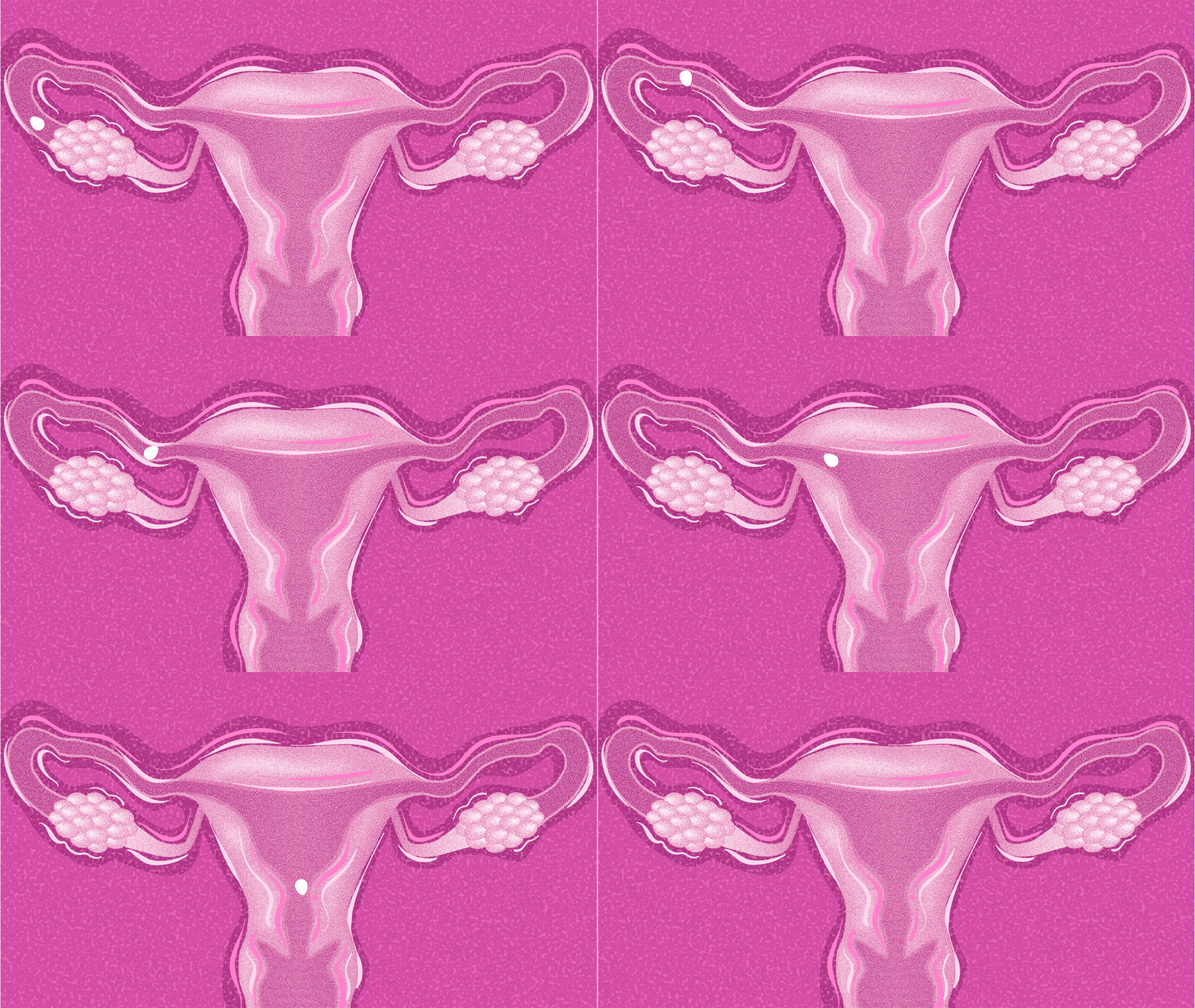
PCOS has a new name

Who’s at risk for painful periods?

What to know about perimenopause and menopause

What causes infertility? A doctor answers common questions and clears up misconceptions