Computed Tomography - CT Scan (Pediatric)
Computed Tomography - CT Scan (Pediatric)
What is a CT scan?
CT scanning, also called computed or computerized tomography, is a test using X-rays and powerful computers for diagnosis. X-rays are taken from a series of different angles around the body. CT detectors report the results of these X-rays to a powerful computer that uses the data to compute cross-sectional views of organs in the body. The C.S. Mott Children's Hospital Pediatric Radiology Department offers standard CT studies as well as state-of-the-art high resolution and 3D CT angiography (to see inside the blood vessels), all supervised and interpreted by board-certified pediatric experts.
CT can be utilized to evaluate:
- Abdomen – evaluation for neoplasm, inflammatory conditions, traumatic injury
- Chest
- Cardiovascular – heart and large blood vessel
- Musculoskeletal – bone and joints
- Neuroradiology – spine, neck and head
Appointment Information
Schedule an appointment by calling us at 734-936-4500.
What to Expect
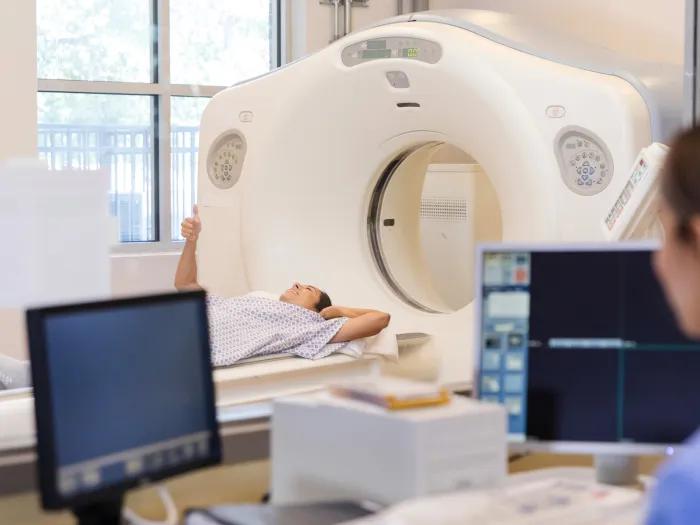
Our CT equipment - which looks like a large donut with a table that moves in and out - has been specifically developed and chosen for use for pediatric patients. On all of our studies we use CT parameters appropriate for patient size and therefore utilizing the minimum amount of radiation necessary to assure diagnostic CT images. We use equipment that provides up to a 50 percent lower dose of radiation for our patients, along with high-definition image quality for any part of the body.
We have specialists in pediatric radiology and pediatric neuroradiology with advanced training and years of experience in protocolling and interpreting pediatric CT examinations. We also offer 3D CT angiography (to view major blood vessels) through our 3D Imaging Laboratory. We can use 3D technology to detect anomalies and blockages of blood vessels and vascular diseases. These studies aid in pre-operative analysis and planning.
Providing proper CT imaging for a child can be challenging. As today’s CT scanners are much faster than a few years ago, sedation or general anesthesia is needed less often. Nonetheless, in smaller children, we work with the Pediatric Anesthesia department to provide appropriate sedation for children to stay still during the study. Some children are afraid to be separated from their parents during the test, while others are nervous and fidget when they need to be still. Our experienced and compassionate staff understands how to work with children and put them at ease.
Doctors
Michael Anthony Di Pietro, MD
Professor Emeritus
Pediatric Radiology, Pediatrics, Diagnostic Radiology

Kathleen M S Gebarski, MD
Clinical Assistant Professor
Pediatric Radiology, Diagnostic Radiology

Ramiro Hernandez, MD
Professor Emeritus
Pediatric Radiology, Diagnostic Radiology

Maria Fernanda Ladino Torres, MD
Clinical Associate Professor
Pediatric Radiology, Diagnostic Radiology

Gary Dean Luker, MD
Professor
Diagnostic Radiology, Pediatric Radiology

Peter Jackson Strouse, MD
Professor
Diagnostic Radiology, Pediatric Radiology
News & Stories
New mouse model for liposarcoma can help uncover new therapies

An AI model that can read and diagnose a brain MRI in seconds
Hospital partnership improves follow up scans, decreases long term risk after aortic repair
AI model helps diagnose often undetected heart disease from simple EKG

Understanding Prostate Biopsy