Seasonal Allergic Conjunctivitis (Hayfever)
Seasonal Allergic Conjunctivitis (Hayfever)
What is seasonal allergic conjunctivitis (Hayfever)?
Seasonal allergic conjunctivitis, or hay fever, is the most common type of ocular allergy. As its name suggests, it is related to specific pollens that release spores during specific seasons: May and June (grass pollen) and August and September (ragweed pollen). Itching is a dominant symptom in seasonal allergic conjunctivitis diagnosis, as well as watery/mucus discharge, burning, and redness. If you are affected by hay fever and other seasonal allergies, you may also experience symptoms involving the nose and throat.
Perennial allergic conjunctivitis is a year-round allergic condition. These allergic responses are often related to animal dander, dust, or other allergens present in the environment year round. Symptoms are similar to seasonal allergic conjunctivitis but tend to be milder.
Appointment Information
To schedule an appointment, please call 734-764-4190.
What are the symptoms of seasonal allergic conjunctivitis?
- Swelling or puffiness of the eyes
- Redness
- Itching
- Tearing
- Mucous discharge
The symptoms described above may not necessarily mean that you have seasonal allergic conjunctivitis. However, if you experience one or more of these symptoms, contact your ophthalmologist for a complete exam.
How is seasonal allergic conjunctivitis diagnosed?
Seasonal allergic conjunctivitis usually is diagnosed with a thorough clinical exam and careful history. Skin testing by an allergist may help identify the inciting allergens.
How is seasonal allergic conjunctivitis treated?
Before the advent of modern medications, treatment for seasonal allergic conjunctivitis was limited to eye washes that would cleanse the allergen from the eye and provide short-term relief. Today, many treatments are available for seasonal allergic conjunctivitis. They include:
- Lubricants
- Decongestants
- Antihistamines
- Decongestant/antihistamine combinations
- Mast cell stabilizers
- Non-steroidal anti-inflammatory agents (NSAIDs)
- Steroids
Your choice of therapy will depend on the intensity of the allergic response. Since histamines cause most of the common symptoms associated with seasonal allergic conjunctivitis, antihistamines or histamine blockers can be effective.
Locations
-
Comprehensive Ophthalmology & Cataract Surgery Clinic | Kellogg Eye Center 1000 Wall St
Floor 1
Ann Arbor, MI 48105-1912Get Directions -
Ophthalmology Clinic | Brighton Center for Specialty Care 7500 Challis Rd
Entrance 1, Level 2
Brighton, MI 48116-9416Get Directions -
Ophthalmology Clinic | Canton Health Center 1051 N Canton Center Rd
Canton, MI 48187-5097Get Directions -
Ophthalmology Clinic | Chelsea Health Center 14700 E Old US Highway 12
Floor 1
Chelsea, MI 48118-1185Get Directions -
Ophthalmology Clinic | Northville Health Center 39901 Traditions Dr
Floor 2
Northville, MI 48168-9493Get Directions -
Ophthalmology Clinic | River Place Office Building 1974 N Huron River Dr
River Place Offices
Ypsilanti, MI 48197-1654Get Directions
Doctors

Jill Elizabeth Bixler, MD
Clinical Assistant Professor
Ophthalmology

Theresa M Cooney, MD
Clinical Associate Professor
Ophthalmology

Julia Dalia, MD
Clinical Assistant Professor
Ophthalmology

Joshua Robert Ehrlich, MD, MPH
Associate Professor
Ophthalmology

Angela Renee Elam, MD, MPH
Assistant Professor
Ophthalmology, Oculoplastics Ophthalmology

Charles Ross Frank, MD
Clinical Assistant Professor
Ophthalmology

Sarah Jayne Garnai, MD
Clinical Assistant Professor
Ophthalmology

Sean Owen Hansen, MD
Clinical Assistant Professor
Ophthalmology

Vanitha Isaac Jeyaraj, MD
Clinical Assistant Professor
Ophthalmology

Ariane Dev Kaplan, MD
Clinical Associate Professor
Ophthalmology













News & Stories
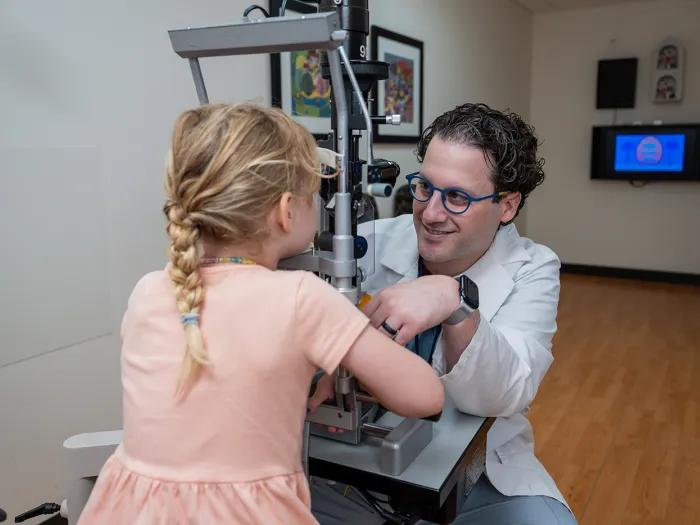
Innovative children’s vision research gets a boost from the Knights Templar Eye Foundation

Nerf gun accident causes retinal detachment in pediatric patient

Kellogg care inspires gift to vision research

Mediterranean diet can slow progression of age-related macular degeneration

Patient with retinitis pigmentosa receives new hope at Kellogg’s low vision clinic