Cerebral Palsy (Pediatric)
Cerebral Palsy (Pediatric)
What is cerebral palsy (CP)?
Cerebral palsy (CP) is a general term used for the group of disorders caused by an injury to the developing brain (either during pregnancy or the first few years of life) and can affect multiple organ systems in the body. Cerebral palsy can present on a wide spectrum from mild motor impairments to significant cognitive and motor delays. The effect of CP on the musculoskeletal system can be mild (such as tightness in the ankles) to severe (such as scoliosis). Children can have high tone, low tone, or mixed tone. Tone is the body’s nervous system baseline that controls our ability to perform smooth and intentional movements. Children with high tone are often “tight” while those with low tone are “loose”.
The abnormal tone present in children with cerebral palsy results in difficulties with movement. Some children with CP can walk, run, and jump on their own but others may be need things to help them move such as a walker or a wheelchair. The most severely involved kids need assistance for others for all of their care. In addition, CP can affect all limbs (quadriplegia), the right or left half the body (hemiplegia), the lower extremities (diplegia), or a combination of the above (triplegia).
Although CP is not a reversible condition, management is guided by the organ systems affected and their severity. Some children with mild impairments can be treated by their primary care physician while others may have multiple specialists working together and overseeing their care. It is important to realize that children with cerebral palsy can live well into adulthood so early diagnosis and timely intervention is key to improving their quality of life.
Our Approach
Our orthopaedic surgeons are dedicated to improving the lives of children with cerebral palsy. Our team includes multiple fellowship-trained pediatric orthopaedic surgeons committed to providing quality care for our patients. We partner closely with our Physical Medicine and Rehabilitation (PM&R) colleagues in the management of our patients’ orthopaedic concerns.
We also work in tandem with both our PM&R and Neurosurgery colleagues to provide a personalized approach to orthopaedic interventions before and after tone management through our Surgical Tone Intervention & Rehabilitation (STIR) Clinic. We are also committed to advancing research to improve the lives of children with cerebral palsy through the Cerebral Palsy Research Network (CPRN). Our goal is to provide a compassionate, personalized, multidisciplinary approach to treating our patients.
Appointment Information
If you are interested in an appointment, please reach out to our team to schedule with one of our pediatric orthopaedic surgeons. At your first appointment we will start with a comprehensive history and physical exam as well as screening diagnostic imaging (if indicated).
What are the symptoms of cerebral palsy?
Since cerebral palsy can present on a spectrum, the signs that prompt diagnosis are variable. The hallmark feature of cerebral palsy is a delay in the development of a child’s normal milestones such as sitting up (3-4 months), rolling (5-6 months), crawling (9 months), and walking (up to 18 months). For children who are more severely affected, prenatal screening ultrasounds may have identified abnormalities in the developing baby. For less severely affected children, families may notice that the child may have learning disabilities or speech delays; they may prefer using one side of the body more than the other, they may not keep up with their peers, or they have difficulties going up and down stairs. If you notice any of these signs it may be best to bring it to the attention of your child’s pediatrician.
Early diagnosis is key to getting children the appropriate resources and therapies. With early interventions, some of the milder forms of cerebral palsy can have improvements in their motor function due to the amazing capability of the developing infant brain to adapt and change in response to external stimuli – this is called neuroplasticity.
How is cerebral palsy diagnosed?
The diagnosis of cerebral palsy oftentimes is clinical and can be identified by delays in the development of gross and fine motor milestones. For children with prenatally identified congenital malformations, they may present at birth with abnormalities in their tone. For children with milder forms and risk factors for cerebral palsy, they may have mild delays in milestones but not be able to keep up with their peers. If a clinical diagnosis of cerebral palsy is suspected but there are no risk factors identified an MRI can be obtained to look for periventricular leukomalacia (i.e. “soft” spots in the brain) or a structurally abnormal brain (i.e. congenital anomaly). If your child is suspected of having cerebral palsy, referral to a Neurodevelopmental Pediatrician or a Physical Medicine and Rehabilitation doctor may be indicated.
Once diagnosed, your child will be followed through their growth to identify musculoskeletal manifestations of their cerebral palsy. This could include tightness in the joints (contractures), abnormal hip development (neuromuscular hip dysplasia), and curvature of the spine (scoliosis). Contractures can be identified by physical exam. Hip dysplasia screening often requires a physical exam with x-rays performed at specific intervals depending on the severity of your child’s diagnosis. Scoliosis oftentimes can be identified on physical exam and requires routine surveillance once diagnosed to check for any increase in the size of the curve as the children grow.
How is cerebral palsy treated?
Specific treatment will depend on the manifestations and how they are impacting the child’s quality of life. For young children with problems affecting their hips, knees and ankles, treatment usually starts conservatively with physical therapy and bracing. Physical therapy is helpful to stretch the tight muscles and teach children how to use their arms and legs more effectively. If physical therapy is not successful in regaining the motion in the joint applying a series of stretching casts on a weekly or biweekly interval (either with a physical therapist or their orthopaedic surgeon) may be recommended. As children get older or if the previously mentioned conservative treatments are not effective, surgery can be considered. The choice of surgery is personalized to the patient, the family, and their specific goals.
For children with hip dysplasia that is progressively worsening, treatment can vary depending on the age and severity of the dysplasia. For young children with mild dysplasia surgery to lengthen the tight muscles may be performed. This can be done in conjunction with a surgery that targets the way that the growth plate at the top of the femur grows (guided growth). Guided growth involves placing a screw across the lower half of the growth plate at the top of the thigh bone. This can help to prevent worsening dysplasia over time. For older children with more severe dysplasia, we may recommend a hip reconstruction which consists of both lengthening the tight muscles and reshaping of the bones around the hip to better contain and stabilize the ball in the socket. These are called osteotomies and can be performed on the femur (thigh bone) and/or the pelvis. If the hip joint cannot be maintained (e.g. the ball is no longer round, the socket is very flat, or there is arthritis) and the children have pain and severely limited motion then a procedure to remove the painful joint may be recommended – these are considered salvage procedures.
For children with a curve (scoliosis) that is increasing in size, surgery may be recommended as it provides spinal balance (allows the head and trunk to be directly over the pelvis), prevents the curve from getting bigger over time, and – for children who use a wheelchair for their mobility – can improve their ability to sit in their wheelchairs. Spine surgery for younger children with scoliosis can be done in a manner to maintain their growth while surgery fold older children often involves a fusion of the spine that is performed from the back. Bracing oftentimes is not successful in preventing the curve from increasing in size in children with cerebral palsy but can be used for patients who are very weak in their core to aid with sitting upright and participating in therapies and daily activities.
Research
Our team has cared for many children with cerebral palsy. We have specialized expertise in both the non-surgical and surgical management of these complex patients and take a multidisciplinary approach to both treatment and research projects. We are committed to providing appropriate screening for hip dysplasia to decrease the amount of salvage procedures performed in this patient population.
News & Stories
Giving with gratitude: planned gifts support nursing, research, and patient care
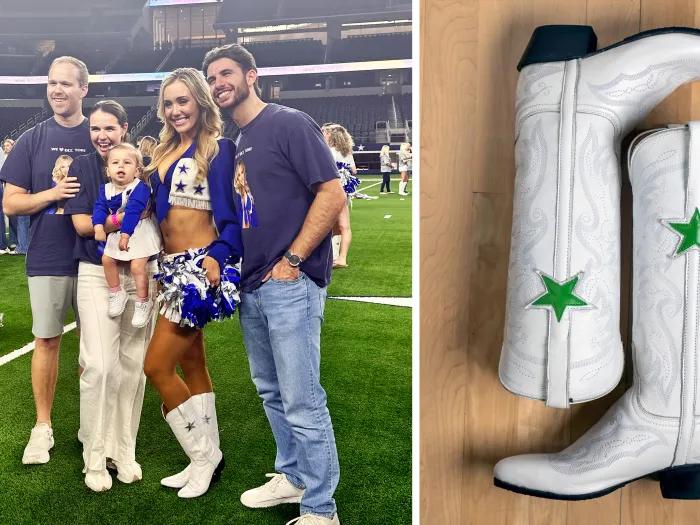
Bringing awareness to cerebral palsy through Dallas Cowboys Cheerleader boots
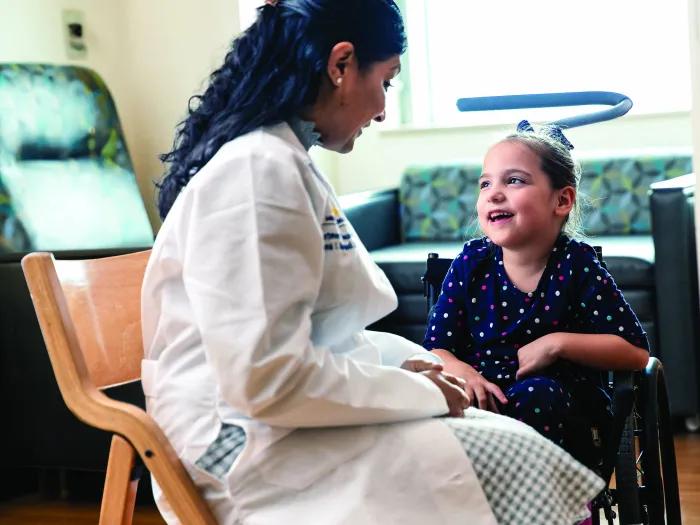
Unique approach to selective dorsal rhizotomy surgery transforms lives for kids with cerebral palsy

Cerebral palsy medications given to adults may not match needs
Changing the definition of cerebral palsy