Floaters & Flashes
Floaters & Flashes
What are floaters?
Floaters are small specks or clouds moving in your field of vision. You may see them more clearly when looking at a plain background, such as a blank wall. Floaters are actually tiny clumps of gel or cells inside the vitreous, the clear jelly-like fluid that fills the inside of your eye. Floaters can have different shapes, such as little dots, circles, lines, clouds or cobwebs. Though these objects look like they are in front of your eye, they are actually floating inside of it. What you see are the shadows they cast on the retina, the nerve layer at the back of the eye that senses light and allows you to see.
When people reach middle age, the vitreous gel may start to thicken or shrink, forming clumps or strands inside the eye. Floaters often occur when the vitreous gel pulls away from the back wall of the eye, causing a posterior vitreous detachment. In some cases, the retina can tear as the shrinking vitreous gel pulls away from the wall of the eye. A torn retina is always a serious problem, since it can lead to a retinal detachment. The appearance of floaters may be alarming, especially if they develop suddenly. You should see an ophthalmologist right away if you suddenly develop new floaters.
What are flashes?
When the vitreous gel inside your eye rubs or pulls on the retina, you may see what looks like flashing lights or lightning streaks. You may have experienced this sensation if you have ever been hit in the eye and see "stars."
These flashes of light can appear off and on for several weeks or months. As we grow older, it is more common to experience flashes. If you notice the sudden appearance of flashes, you should visit your ophthalmologist immediately because it could mean that the retina has been torn.
Appointment Information
For more information or to make an appointment with an eye doctor, call 734-764-4190.
What are the symptoms of floaters & flashes?
You should see your ophthalmologist as soon as possible if:
- One new, large floater or "showers" of floaters appear suddenly
- You see sudden flashes of light, especially if these flashes are persistent
- You notice other symptoms, such as the loss of side vision or if it looks as if a shade or curtain is being drawn over your field of vision
Floaters and flashes become more common as we grow older. While not all floaters and flashes are serious, you should always have a medical eye examination by an ophthalmologist to make sure there has been no damage to your retina.
What causes eye floaters?
Floaters can be caused by normal aging of the eye when the vitreous jelly begins to shrink. Other causes of floaters include the sudden release of blood cells from the retinal blood vessels or pigmented cells from underneath the retina into the vitreous jelly. This can occur with the tearing of the retina. It is not always possible to distinguish between the causes of new floaters in the eye, which is why it is essential to have an immediate ophthalmologic examination to look for retinal holes or tears.
Aging is a large risk factor for new floaters. People who are very nearsighted (high myopes) are at greater risk of developing floaters earlier in life and are also at a greater risk of a retinal tear or detachment. Inflammation inside the eye (uveitis) and recent intraocular surgery are also risk factors for developing floaters in the eye.
How are floaters & flashes diagnosed?
Most causes of new floaters and flashes can be determined through a clinical exam by an ophthalmologist. If the cause of the symptoms is not seen during a clinical exam, your ophthalmologist may order additional testing, such as an ultrasound of the eye.
How are floaters & flashes treated?
The treatment for floaters and flashes depends on the underlying condition. While not all floaters and flashes are serious, you should always have a medical eye examination by an ophthalmologist to make sure there has been no damage to your retina.
While some floaters may remain in your vision, many of them will fade over time and become less bothersome. Even if you have had some floaters for years, you should have an eye examination immediately if you notice new ones.
There is no specific treatment for separation of the vitreous gel from the retina although laser or freezing therapy or surgery may be required for retinal tears.
Locations
-
Comprehensive Ophthalmology & Cataract Surgery Clinic | Kellogg Eye Center 1000 Wall St
Floor 1
Ann Arbor, MI 48105-1912Get Directions -
Ophthalmology Clinic | Brighton Center for Specialty Care 7500 Challis Rd
Entrance 1, Level 2
Brighton, MI 48116-9416Get Directions -
Ophthalmology Clinic | Canton Health Center 1051 N Canton Center Rd
Canton, MI 48187-5097Get Directions -
Ophthalmology Clinic | Chelsea Health Center 14700 E Old US Highway 12
Floor 1
Chelsea, MI 48118-1185Get Directions -
Ophthalmology Clinic | Northville Health Center 39901 Traditions Dr
Floor 2
Northville, MI 48168-9493Get Directions -
Ophthalmology Clinic | River Place Office Building 1974 N Huron River Dr
River Place Offices
Ypsilanti, MI 48197-1654Get Directions
Doctors

Jill Elizabeth Bixler, MD
Clinical Assistant Professor
Ophthalmology

Theresa M Cooney, MD
Clinical Associate Professor
Ophthalmology

Julia Dalia, MD
Clinical Assistant Professor
Ophthalmology

Joshua Robert Ehrlich, MD, MPH
Associate Professor
Ophthalmology

Angela Renee Elam, MD, MPH
Assistant Professor
Ophthalmology, Oculoplastics Ophthalmology

Charles Ross Frank, MD
Clinical Assistant Professor
Ophthalmology

Sarah Jayne Garnai, MD
Clinical Assistant Professor
Ophthalmology

Sean Owen Hansen, MD
Clinical Assistant Professor
Ophthalmology

Vanitha Isaac Jeyaraj, MD
Clinical Assistant Professor
Ophthalmology

Ariane Dev Kaplan, MD
Clinical Associate Professor
Ophthalmology














News & Stories
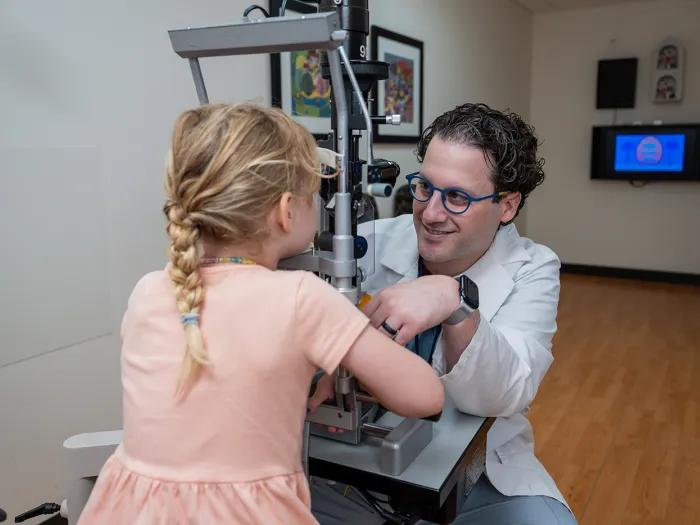
Innovative children’s vision research gets a boost from the Knights Templar Eye Foundation

Nerf gun accident causes retinal detachment in pediatric patient

Kellogg care inspires gift to vision research

Mediterranean diet can slow progression of age-related macular degeneration

Patient with retinitis pigmentosa receives new hope at Kellogg’s low vision clinic