Bone & Soft Tissue Cancers
Bone & Soft Tissue Cancers
What is sarcoma?
Adult soft tissue sarcoma is a disease in which malignant (cancer) cells form in the soft tissues of the body. The soft tissues of the body include the muscles, tendons (bands of fiber that connect muscles to bones), fat, blood vessels, lymph vessels, nerves, and tissues around joints. Adult soft tissue sarcomas can form almost anywhere in the body, but are most common in the head, neck, arms, legs, trunk, abdomen, and retroperitoneum.
Learning that you have a bone tumor or sarcoma can be frightening. The U-M Health Department of Orthopaedics leads the way in treatment options through our multidisciplinary Sarcoma Program. We see nearly 250 patients with these types of tumors each year.
- The Adult Sarcoma Clinic is located in the University of Michigan Rogel Cancer Center. We are proud to be one of 47 designated Comprehensive Centers by the National Cancer Institute.
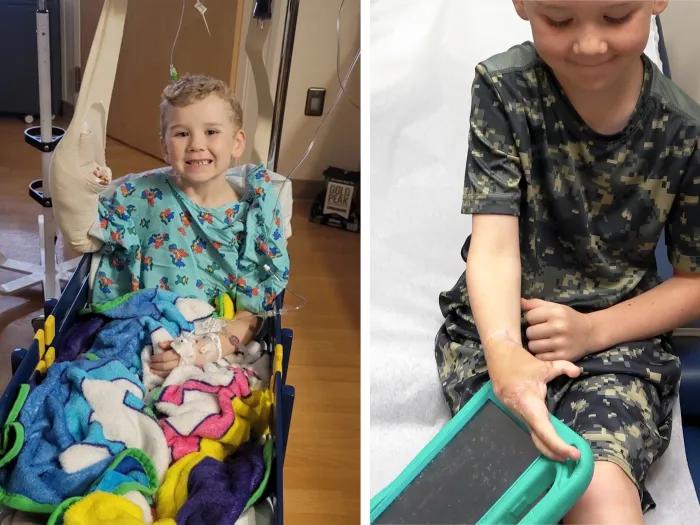
- The Children's Sarcoma Clinic is located in the C.S. Mott Children’s Hospital. Mott treats children with nonossifying fibroma and sarcomas such as Ewings, among others which are more prevalent in children.
Appointment Information
To learn more about sarcomas, treatments and dedicated specialists, call the U-M Rogel Cancer Center’s Cancer AnswerLine nurses at 800-865-1125.
What are the types of sarcoma?
Sarcoma is broken down into two types: soft tissue tumors and bone tumors
Soft tissue sarcomas come in many forms:
- angiosarcoma (blood vessels)
- fibrosarcoma (connective tissue)
- gastrointestinal stromal tumor (digestive system)
- Kaposi's sarcoma (skin)
- liposarcoma (fat)
- leiomyosarcoma (smooth muscle)
- malignant fibrous histiocytoma (connective tissue)
- neurofibrosarcoma (nerves)
- rhabdomyosarcoma (skeletal muscle) and
- synovial sarcoma (often near joints, but can occur anywhere).
Bone sarcomas are rare types of cancer that mainly affect children and young adults. There are several types of bone sarcomas that typically affect different parts of bones and joints. The cancerous tumors can grow in any bone in the body; however, most occur in the arms or legs.
The most common bone sarcomas include:
- Osteosarcoma (tumor usually develops in the ends of long bones where new bone tissue forms),
- Ewing's sarcoma (tumor usually develops in the middle of large bones such as pelvis, thigh, upper arms and ribs), and
- Chondrosarcoma (found mainly in adults, this type of tumor forms in the cartilage that cushions joints).
How is sarcoma diagnosed?
A physician will do a complete examination of the painful area to evaluate the surrounding skin, blood vessels, nerves or bone and any surrounding lymph nodes. Imaging and biopsy are also an option for diagnostics.
- Plain X-ray Films: Standard x-rays are taken to evaluate the bone. They can show tumor location. Usually more detailed imaging such as a MRI or CT scan is needed to further evaluate. Chest x-rays are also useful to evaluate for metastatic tumors in the lung.
- Magnetic Resonance Imaging (MRI): This is one of the most useful methods to image tumors in the extremities. It provides the physician with a detailed view of the tumor and its surroundings.
- Computed Tomography (CT scan): This is another way to image a tumor. Especially useful in tumors which are in the abdomen and pelvis. CT scan of the chest is also frequently recommended to assess for metastases of sarcoma, or disease which might have traveled to the lungs.
- Positron Emission Tomography (PET scan): This is a newer study done in Nuclear Medicine, which looks at the metabolic activity of cells in the body. Tumor cells often have very active metabolism and therefore can be seen on a PET scan. However, other conditions involving increased metabolism (including healing scars) sometimes show up on PET scans as well. PET scans are occasionally used for sarcoma patients, but usually are not as useful as CT and MRI scans.
- Bone Scan: This study is done in nuclear medicine, which uses radioactive dye to highlight the bones. This scan is sometimes used to look for cancer in other parts of the bone that has metastasized.
A biopsy is the only way to tell for sure if you have a malignant tumor and, if so, what kind of cancer it is. Because sarcomas are rare, a specialist in sarcoma pathology generally reviews the results of the biopsy before any treatment starts. Tumor location determines what type of biopsy will be used.
Generally two types of biopsies can be used:
- Core needle biopsy: This procedure is less invasive than the other method described next. It can be done in the office by your surgeon using local anesthesia. The surgeon will numb the area around the tumor and extract a small amount of tissue from the tumor with a special biopsy needle for the pathologist to examine.
- Incisional biopsy: A small incision (about an inch) is made, and tissue is removed for examination. This is a more invasive procedure and is most often done in the operating room under either local or general anesthesia. The advantage of this procedure is that is provides more tissue for the pathologist to review.
How is sarcoma treated?
Sarcoma can be treated with surgery, radiation and/or chemotherapy.
Surgery is considered to be the primary treatment for bone sarcomas, and for some, is the only treatment. The first goal of the orthopedic surgeon is to remove the tumor, along with some healthy tissue around it. This ensures that no cancer cells remain.
The second goal is to retain as much function as possible to the operative site. Sometimes man-made material is used to replace bone, artificial joints and devices are inserted and sometimes amputation is needed. The involvement of the surrounding tissue, muscle, nerves and blood vessels determine the extent to which that is possible.
Prior to your surgery, your orthopedic oncologist will discuss all your options. A thoracic surgeon performs surgery for sarcomas inside the chest or lungs (usually metastatic tumors).
Radiation usually is administered after surgery, and is given to patients who are at risk for local tumor reoccurrence if only surgery was used for control of the tumor locally. The goal of radiation therapy is to direct additional therapy at the tumor site to kill any remaining cancer cells that could remain after surgery.
The radiation oncologist uses your preoperative x-rays, information from your surgeon and their own treatment plan to determine the region that needs to be treated.
Radiation treatment is given daily Monday through Friday for 5-7 weeks depending on the plan discussed by your radiation oncologist.
Learn more about this kind of treatment on the Radiation Therapy webpage.
Chemotherapy
Many factors influence the use of chemotherapy or drug treatment of sarcoma. These factors include:
- Aggressiveness of the tumor or grade
- Size of the tumor
- If the tumor has already spread to other areas in the body
There are many cases in which chemotherapy is given prior to surgery to help shrink down the primary tumor so the surgeon can fully remove the tumor and maintain function of the affected area. It is also used after surgery to destroy any stray cancer cells and to prevent cancer from recurring.
Locations
-
Bone Marrow Transplant & Leukemia Clinic | C. S. Mott Children's Hospital 1540 E Hospital Dr
Floor 7 Reception B
Ann Arbor, MI 48109-4257Get Directions -
Oncology Clinic | Rogel Cancer Center 1500 E Medical Center Dr
Floor B1 Reception E
Ann Arbor, MI 48109-5912Get Directions -
Sarcoma Clinic | Rogel Cancer Center 1500 E Medical Center Dr
Floor B1 Reception E
Ann Arbor, MI 48109-5912Get Directions
Doctors

Janet Sybil Biermann, MD
Professor
Orthopedic Surgery

Geoffrey Siegel, MD
Clinical Associate Professor
Orthopedic Surgery
Sean Robinson Smith, MD
Clinical Associate Professor
Physical Medicine & Rehabilitation
News & Stories
Specialized care helps patient navigate rare liposarcoma diagnosis
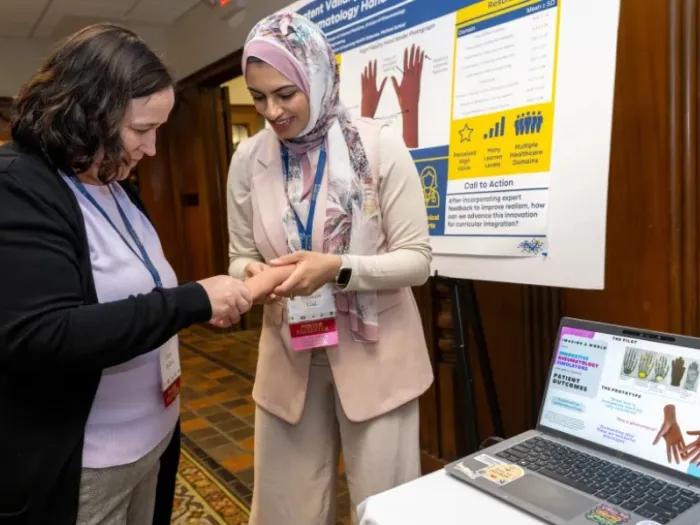
Rethinking how clinicians learn to feel disease

Stopping Ewing sarcoma relapses where they start
Treating arthritis of the hands
Two pediatric cancer patients become close friends during treatment