
Chemotherapy
Chemotherapy
What is chemotherapy?
Chemotherapy (chemo) is a medication or a combination of medications prescribed to kill cancer cells which may also kill healthy cells. These medications are often called "anti-cancer" drugs.
What are the types of chemotherapy?
Chemotherapy treatments may be given in many ways:
- Intravenous (IV): through a catheter tube in the vein, typically placed in the arm. Sometimes, your doctor may recommend having an IV infusion device. The two most common are PICC (peripherally inserted central catheter) lines and Ports. Both of these devices stay in longer than an IV catheter placed in your vein at the time of your infusion visit. Talk to your healthcare team for further information about what's best for you.
- Continuous Home Infusion Chemotherapy: Chemotherapy given slowly over one or more days is called continuous infusion chemotherapy. This type of treatment is given with an infusion device that is attached to your intravenous catheter or port. The device will make sure that the chemotherapy is given at the proper speed and that the right amount is received. Typically, a nurse will verify and connect you to the continuous infusion treatment in the infusion area. Most patients carry their device, hidden in a pouch, wherever they go while the chemotherapy is infusing.
- Orally: taken by mouth as pills, capsules or liquids that you swallow.
- Intracavitary: given directly into a body area.
- Topically: placed on the skin where it is absorbed.
- Intra-arterial (IA): given directly into an artery.
The following video series provides information on what to expect from intravenous chemotherapy
What is biotherapy?
Biotherapy (biological therapy or targeted therapy) is treatment that uses the body's own immune system to stop or slow the growth of cancer cells. Some biotherapies work by stopping the blood supply to a tumor or by interrupting signals within the cancer cell.
Types of biotherapy include monoclonal antibodies, cancer vaccines and growth factors.
- Monoclonal antibodies kill cancer cells. These drugs do not cause harm to healthy cells..
- Cancer vaccines help the body fight to keep cancer from coming back..
- Growth factors help your own body renew and make blood cells.
Your oncology doctor will decide which medication(s) to give you and how they will be given. Information about your treatment will be given to you by your oncology team.
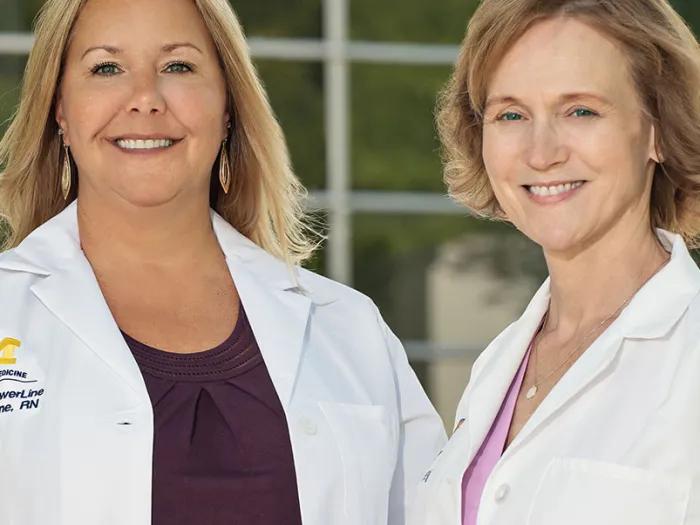
Questions about cancer?
Contact our Cancer AnswerLine™ at 800-865-1125. You'll talk to a nurse with years of experience in cancer care.
Locations
-
Brighton Center for Specialty Care 7500 Challis Road
Brighton, MI 48116Get Directions -
East Ann Arbor Health & Geriatrics Center 4260 Plymouth Rd
Ann Arbor, MI 48109Get Directions -
Infusion Area | C. S. Mott Children's Hospital 1540 E Hospital Dr
Floor 7 Reception B
Ann Arbor, MI 48109-4257Get Directions -
Infusion Area | Rogel Cancer Center 1500 E Medical Center Dr
Floor B1 Reception A
Ann Arbor, MI 48109-5917Get Directions -
Northville Health Center 39901 Traditions Drive
Northville, MI 48168Get Directions -
West Ann Arbor Health Center 380 Parkland Plaza
Ann Arbor, MI 48103Get Directions
