Ventricular Assist Devices (VADs)
Ventricular Assist Devices (VADs)
What is a ventricular assist device (VAD)?
Ventricular Assist Devices, or VADs, are a type of mechanical circulatory support device used to treat advanced stages of heart failure. VADs work by assisting the heart in pumping blood to the rest of your body, improving circulation to vital organs. Your doctor may recommend a VAD when conventional methods such as lifestyle changes and medication are not effective. These devices improve survival and quality of life for patients with advanced heart failure.
What are the types of VADs?
Abbott HeartMate 3® Left Ventricular Assist Device
The HeartMate 3™ is designed with Full MagLev™ flow technology, which helps protect the blood as it flows through the pump to minimize adverse events. The HeartMate 3 consists of wearable components that support and monitor system performance. The HeartMate 3 is FDA approved for short- and long-term use in patients with advanced stages of heart failure.
*Notice for Patients with the Medtronic HeartWare™ HVAD™ system
Medtronic stopped the sale and distribution of the HeartWare™ HVAD™ system in 2021 because of an increased risk of neurological events and a potential for the internal pump to stop.
For more information, see:
Who is a good fit for VADs?
Patients with cardiac disorders resulting in end-stage heart failure or cardiogenic shock (when the heart is unable to pump as much blood as the body needs).
- Heart failure
- Cardiogenic shock
Our Approach
The U-M Health VAD Program has been at the forefront of VAD technology since it was first introduced over 30 years ago. It is one of only a few programs worldwide that has participated in the majority of VAD-related investigational and FDA-approved clinical trials.
We are currently leading the groundbreaking INNOVATE trial, which will assess effectiveness of the latest VAD technology, the BrioVAD™ Left Ventricular Assist System (LVAS), compared to the only device currently used to treat end-stage heart failure, the HeartMate 3™ Left Ventricular Assist System.
What To Expect
LVADs work by pumping blood from the left ventricle (lower part of the heart) and moving it forward into the aorta, the main blood vessel that carries blood from the heart to the rest of the body. These pumps (LVAD and RVAD) assist the weakened heart muscle; they do not replace the heart muscle. The pump is implanted inside your body. A driveline connects to the pump and exits through a small site in your abdomen. This driveline is connected to a small computer, called the controller, which runs the pump.
How are VADs used?
VADs are used in patients with advanced heart failure who meet certain medical criteria. They can be used as a bridge to transplant (BTT) for patients who are waiting for a heart transplant. If an organ has not become available, this device can be implanted temporarily until a heart does become available. A VAD can also be used as destination therapy (DT) in patients who may not be eligible for a heart transplant, but have advanced heart failure. For destination therapy patients, these pumps are implanted permanently as long-term support to extend and improve the patient’s quality of life. Patients implanted with a VAD as destination therapy have survived for 8-10 years on the device.
Appointment Information
Patients can schedule an appointment by calling us at 888-287-1082.
Patient Resources
- Heart Failure Guide
- LVAD Online Decision Guide
- Mechanical Circulatory Assist Devices
- VAD Driveline - Dressing Kit Contents - Daily Kit
- VAD Driveline - Dressing Kit Contents - Weekly Kit
- Ventricular Assist Device (VAD) Patient Education
- Video: Changing Your HeartMate Pocket Controller
- Video: Changing your HeartWare Controller
Heart Transplant & LVAD Support Group
The Adult Heart Transplant & LVAD Support Group is open to pre- and post-heart transplant patients and their families, as well as those who have LVADs or who are considering getting one. The group offers social and emotional support as well as educational information.
Locations
-
Cardiac Surgery Clinic | Frankel Cardiovascular Center 1425 E Ann St
Floor 3 Reception C
Ann Arbor, MI 48109-5856Get Directions -
Cardiology Clinic | Frankel Cardiovascular Center 1425 E Ann St
Floor 3 Reception C
Ann Arbor, MI 48109-5856Get Directions -
Ventricular Assistance Device Clinic | Frankel Cardiovascular Center 1425 E Ann St
Floor 3 Reception C
Ann Arbor, MI 48109-5856Get Directions
Doctors
Keith David Aaronson, MD, PhD, MS
Professor
Advanced Heart Failure & Transplant Cardiology, Cardiovascular Disease, Internal Medicine, Cardiology
Abbas Bitar, MD
Clinical Assistant Professor
Advanced Heart Failure & Transplant Cardiology, Cardiovascular Disease, Internal Medicine

Thomas Matthew Cascino, MD, M.Sc.
Clinical Instructor
Advanced Heart Failure & Transplant Cardiology, Cardiovascular Disease, Internal Medicine
Monica Mechele Colvin, MD, MS
Clinical Professor
Advanced Heart Failure & Transplant Cardiology, Cardiovascular Disease
Jessica Rachel Golbus, MD
Assistant Professor
Cardiovascular Disease, Internal Medicine
Jonathan William Haft, MD
Professor
Thoracic Surgery, Surgical Critical Care, Surgery
Reema Hasan, MD
Clinical Associate Professor
Advanced Heart Failure & Transplant Cardiology, Cardiovascular Disease, Internal Medicine
Robert Bruce Hawkins, MD, MSc
Assistant Professor
Thoracic Surgery
Todd Michael Koelling, MD
Professor
Advanced Heart Failure & Transplant Cardiology, Cardiovascular Disease, Internal Medicine
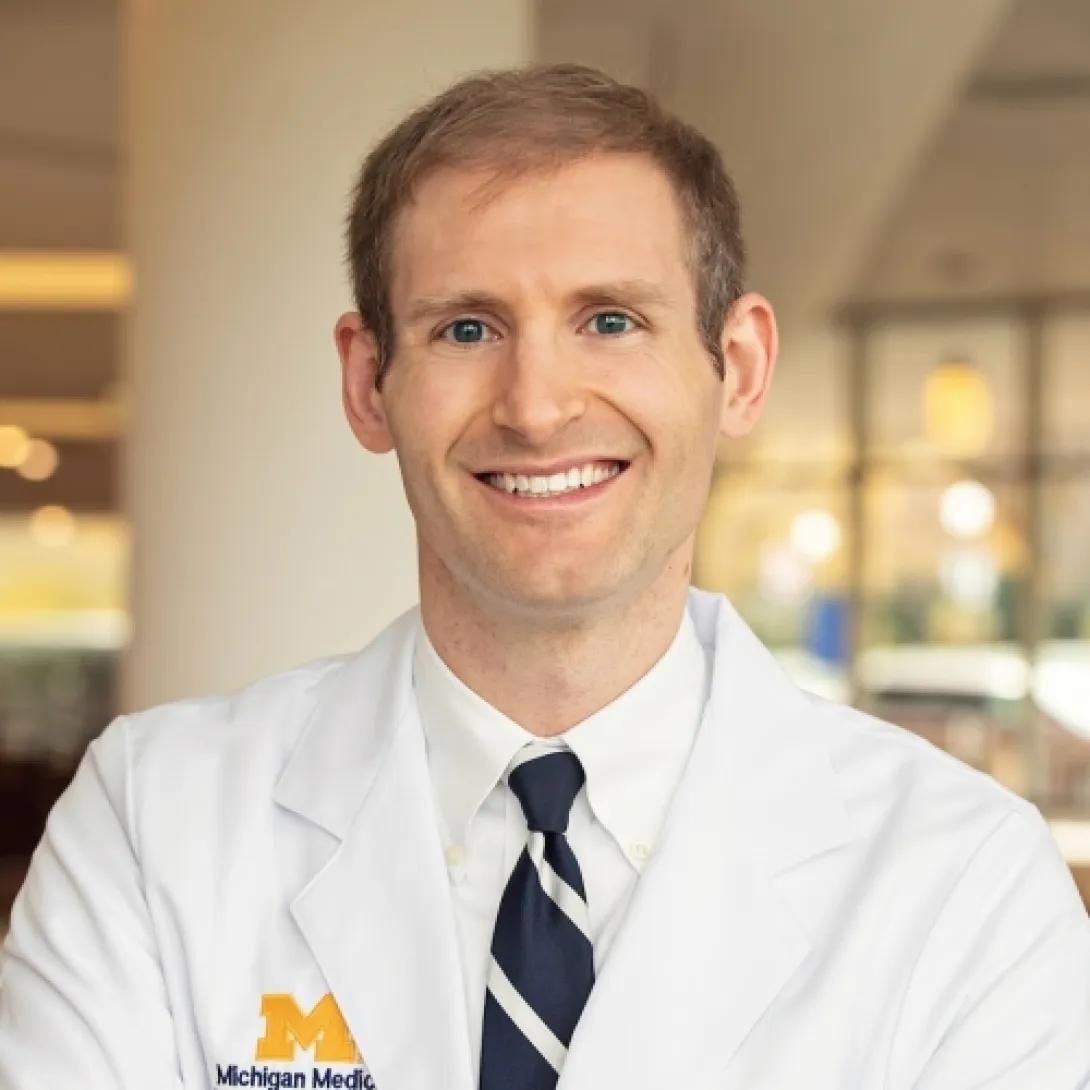
Taylor Alexander Lebeis, MD
Clinical Assistant Professor
Advanced Heart Failure & Transplant Cardiology, Internal Medicine, Cardiovascular Disease


Providers
Kevin Andrew Knott, PA-C
Physician Assistant
Physician Assistant
Angela Marie Rose, PA-C
Physician Assistant
Physician Assistant
Support Groups
Find support and encouragement from others like you.
Heart Transplant & LVAD Support Group
Heart Transplant & LVAD Support Group
Heart Transplant & LVAD Support Group
Heart Transplant & LVAD Support Group
Heart Transplant & LVAD Support Group
Heart Transplant & LVAD Support Group
Heart Transplant & LVAD Support Group
Heart Transplant & LVAD Support Group
Heart Transplant & LVAD Support Group
News & Stories
Gene editing is coming for common diseases. Are we ready?

Young father survives aortic dissection after delayed diagnosis
C.S. Mott Children’s Hospital first in country to implant expandable heart valve during FDA review phase

Born with half a heart, headed to college with a full life

Treating a rare coronary artery aneurysm without open heart surgery