Early Onset Scoliosis
Early Onset Scoliosis
What is early onset scoliosis?
Early onset scoliosis (EOS) is when a spinal curvature (scoliosis) is diagnosed in a child under 10 years of age. Most children with scoliosis are diagnosed in adolescence. Unlike the adolescent form of scoliosis, early onset scoliosis is often associated with other health issues, such as chest or rib cage abnormalities and abnormal nerve or muscle conditions. Some children are healthy and there is no known cause of their early onset scoliosis.
Early onset scoliosis can be treated with non-operative methods when the spinal curvature is small. For larger spinal curvatures, surgery may be needed to prevent the scoliosis from getting worse.
What are the types of early onset scoliosis?
Idiopathic EOS is when there is no known cause
Congenital EOS is when a child is born with spine, chest or rib cage abnormalities that cause the spinal curvature
Neuromuscular EOS is when a child has an abnormal nerve or muscle condition that causes the spinal curvature
Syndromic EOS is when a child has an underlying syndrome that is associated with scoliosis
Our Approach
Early onset scoliosis is a rare disorder. Since many children with early onset scoliosis have complex health issues, our approach at C.S. Mott Children’s Hospital is to utilize a multidisciplinary team of clinicians with significant experience treating this condition. Our team will partner with your family to provide your child with individualized, patient-centered care.
Our spine team includes experts with specialized training in both non-surgical and surgical treatments for early onset scoliosis, including casting, bracing, and growing rods. We have a long-standing history of advancing research on early onset scoliosis treatment and are recognized internationally for our experience. Our goal is to help children with spine problems live longer, better lives.
Appointment Information
If you are interested in an appointment, please reach out to our team to schedule with one of our early onset scoliosis experts. At your first appointment, we will start with a comprehensive history and physical exam, as well as an x-ray of your child’s spine.
What are the symptoms of early onset scoliosis?
The most common symptom of early onset scoliosis is an asymmetric appearance of the child’s back, including:
Uneven shoulders
Shoulder blade or ribs protrude more on one side
Uneven waist
Leaning to one side
Most children with early onset scoliosis do not have back pain and remain active.
How is early onset scoliosis diagnosed?
Early onset scoliosis is diagnosed on an x-ray of the spine. The degree of spinal curvature can be measured on the X-ray, and the spine and ribs can be examined for abnormalities. At University of Michigan Health C.S. Mott Children’s Hospital, we have an EOS imaging machine, which takes spine x-rays with an ultra-low dose of radiation.
Depending on the findings on the x-ray, additional imaging may need to be ordered, such as a MRI or CT scan.
How is early onset scoliosis treated?
Unlike the more common adolescent form of scoliosis, untreated early onset scoliosis can have a much more significant impact on a child’s overall health, such as lung development. As such, prompt diagnosis and treatment are important. Our team will consider factors such as the size of the spinal curvature, the age of your child, and other health issues when discussing treatment options with your family.
Nonoperative treatment
Observation: Children with mild scoliosis may not require any treatment, as their curve may not get worse or may even improve as they grow. If your child has mild scoliosis, we will monitor them regularly by physical exam and X-rays.
Bracing: Children with moderate scoliosis may be prescribed a back brace. Recent research has shown that bracing can prevent worsening of the spinal curvature as your child grows. A brace needs to be worn for most of the day and night for the best results.
Casting: Serial body casting may also be recommended for younger children with moderate scoliosis. Unlike bracing, research has shown that casting can improve the spinal curvature or even completely straighten the spine in some children. In children whose spinal curvature cannot be straightened with casting, casting can delay the need for surgery. Our early onset scoliosis experts apply casts using the elongation-derotation-flexion technique, more commonly known as Mehta casting. Learning to apply these casts requires specialized training and equipment, and only a limited number of children’s hospitals in the U.S. offer this treatment.
Operative treatment
Growing rods
For children with more severe scoliosis and many years of growth ahead, our team may recommend growing rods. These are expandable rods that control the spinal curvature while allowing your child’s spine to grow. The rods attach to the spine above and below the curve but do not make contact with the rest of the spine. This allows the rest of the spine to grow.
There are different types of growing rods. Magnetically controlled growing rods can be lengthened every 3-4 months in the clinic without need for surgery or anesthesia. We prefer to use these rods but sometimes, they will not fit in some patients. If a patient’s anatomy is not amenable to the magnetically controlled growing rods, then we use traditional growing rods. Traditional growing rods need to be lengthened every 6 months with an outpatient surgery. A small number of patients with chest or rib cage abnormalities may benefit from a VEPTR (Vertical Expandable Prosthetic Titanium Rib), which also needs to be lengthened every 6 months with surgery.
Spinal fusion
For older children with less growth remaining, spinal fusion may be recommended. Spinal fusion involves placing screws and rods to correct the spinal curvature and permanently fuse the bones in place. This will stop the growth of that part of the spine and is not recommended as the initial treatment for younger children with early onset scoliosis.
Research
Members of our team are nationally and internationally recognized for their clinical and research expertise on early onset scoliosis. We participate in an international spine study group that manages the largest registry of patients with early onset scoliosis in the world. We have published numerous research articles on treatment outcomes and health-related quality of life in children with early onset scoliosis. Our experts are regularly invited to present our research and share our expertise at major national and international scoliosis conferences, and have also been involved in planning some of these meetings.
Patient Resources
Locations
-
Pediatric Orthopaedic Surgery Clinic | C. S. Mott Children's Hospital 1540 E Hospital Dr
Floor 3 Reception C
Ann Arbor, MI 48109-4213Get Directions
Doctors
Michelle Sugiyama Caird, MD
Professor
Orthopedic Surgery
Gertrude YingYu LI, MD
Clinical Professor
Orthopedic Surgery
News & Stories
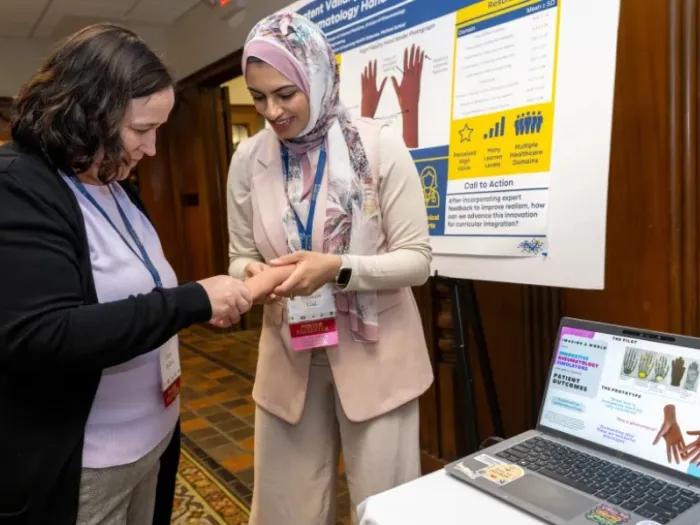
Rethinking how clinicians learn to feel disease
Treating arthritis of the hands
Two pediatric cancer patients become close friends during treatment
Using a toe for a thumb: Lawn mower accident results in 6-year-old's new digit
A lifelong bond between a patient and surgeon