Diplopia (Double Vision)
Diplopia (Double Vision)
What is diplopia?
Diplopia, or double vision, is a condition where a single object is seen in duplicate. Double and blurred vision are often thought to be the same, but they are not. In blurred vision, a single image seen by one eye appears unclear.
Appointment Information
To make an appointment, call 734-764-4190.
What are the symptoms of diplopia?
- Eyes wander or appear "crossed" or misaligned
- Double vision
The symptoms described above may not necessarily mean that you have diplopia. However, if you experience one or more of these symptoms, contact your ophthalmologist for a complete exam.
What can cause diplopia?
Diplopia may be the result of a refractive error, where light from an object is split into two images by a defect in your eye's optical system. Cataracts might, for example, cause such a defect.
Diplopia also may result from failure of both eyes to point at the object being viewed, a condition referred to as ocular misalignment. In normal vision, both eyes look at the same object. The images seen by both eyes are fused into a single picture by the brain. If your eyes do not point at the same object, the image seen by each eye is different and cannot be fused. This results in double vision.
There are many causes of diplopia and risk factors depend on the underlying cause.
How is diplopia diagnosed?
A complete eye exam is necessary to determine the cause of diplopia. This includes a complete medical history, assessment of visual acuity, eye motility and evaluation for ocular misalignment. Additional testing, such as MRI or CT scan and blood tests, may be necessary depending on the cause of diplopia.
How is diplopia treated?
Treatment of double vision depends on the underlying cause and may consist of eye patching, prisms, eye exercises, surgical straightening of the eye, or a combination of these options. Therapy is aimed at realigning the misaligned eye where possible without surgery and restimulating the part of the visual pathway to the brain that is not working correctly.
Certain rare causes of diplopia may be treated with medication. Your ophthalmologist will decide if your type of diplopia is likely to respond to medicine.
Patient Resources
Locations
-
Neuro-Ophthalmology Clinic | Kellogg Eye Center 1000 Wall St
Elevator B Floor 3
Ann Arbor, MI 48105-1912Get Directions
Doctors

Wayne Todd Cornblath, MD
Clinical Professor
Ophthalmology, Neurology

Lindsey Blake Delott, MD, MS
Associate Professor
Ophthalmology, Neurology

Tatiana Deveney, MD
Clinical Assistant Professor
Ophthalmology

Sangeeta Khanna, MD
Clinical Professor
Ophthalmology

Letitia Pirau, MD
Clinical Assistant Professor
Neuro-Ophthalmology, Neurology
News & Stories
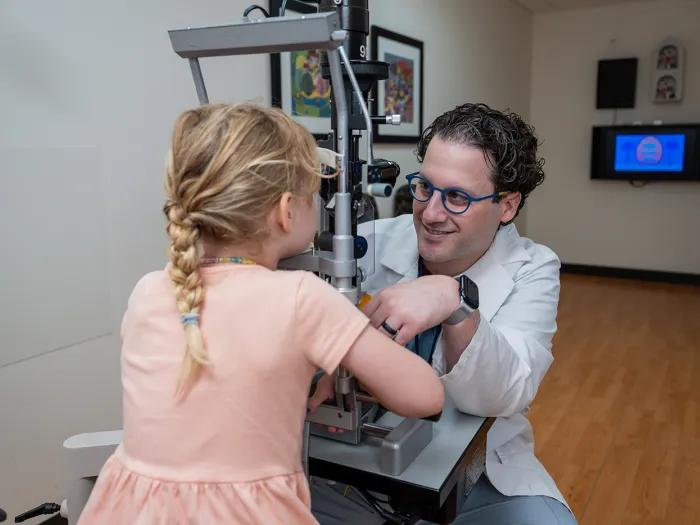
Innovative children’s vision research gets a boost from the Knights Templar Eye Foundation

Nerf gun accident causes retinal detachment in pediatric patient

Kellogg care inspires gift to vision research

Mediterranean diet can slow progression of age-related macular degeneration

Patient with retinitis pigmentosa receives new hope at Kellogg’s low vision clinic