Bile Duct Cancer
Bile Duct Cancer
What is bile duct cancer?
The digestive system’s network of connecting bile ducts begins in the liver. Smaller ducts join to form the liver’s right and left hepatic ducts. These hepatic ducts then join just outside the liver to form the common hepatic duct. Another duct (cystic duct) connects the common hepatic duct to the gallbladder.
Cancer can form in the cells that line any of these ducts.
Appointment Information
The Liver Cancer Program at U-M Health Rogel Cancer Center evaluates and treats patients with known or suspected liver and bile duct cancer. If you've been diagnosed with bile duct cancer, or suspect you may have it, please call 734-647-8902.
If you're referring a patient, please contact M-Line 800-962-3555.
For people with questions, please call our Cancer AnswerLine at 800-865-1125.
What are the types of bile duct cancer?
Our liver cancer experts diagnose and treat:
- Extrahepatic bile duct cancer: Cancers that form in the ducts outside the liver. Depending on where cancer is located, these cancers are called:
- Distal bile duct cancer: Cancer that forms where the common bile duct goes through the pancreas and meets the small intestine
- Perihilar bile duct cancer: Cancer that forms where the right and left bile ducts form the common hepatic duct
- Intrahepatic bile duct cancer: Cancers that form in the ducts inside the liver. These cancers are less common than extrahepatic bile duct cancers.
What are the symptoms of bile duct cancer?
Bile duct cancer symptoms include:
- Dark urine
- Fever
- Itching
- Light (clay colored) stool
- Nausea and vomiting
- Yellow skin or eyes (jaundice)
How is bile duct cancer diagnosed?
Depending on your symptoms, our specialists may recommend a liver function test. This blood test measures certain chemicals produced by your liver. Elevated levels of these chemicals may indicate that cancer is present. We may use other blood tests to look for tumor markers — chemicals your body releases when cancer grows.
Our experts also use imaging tests to see detailed images of your bile ducts, liver and gallbladder. We may use:
- Computed tomography (CT) scan: This special X-ray test creates detailed images of your abdomen and internal organs.
- Magnetic resonance imaging (MRI): We use a computer, radio waves and magnets to create images of your bile ducts and liver. Our radiology experts interpret these images to determine if tumors are present. We also look for blocked blood vessels around your liver.
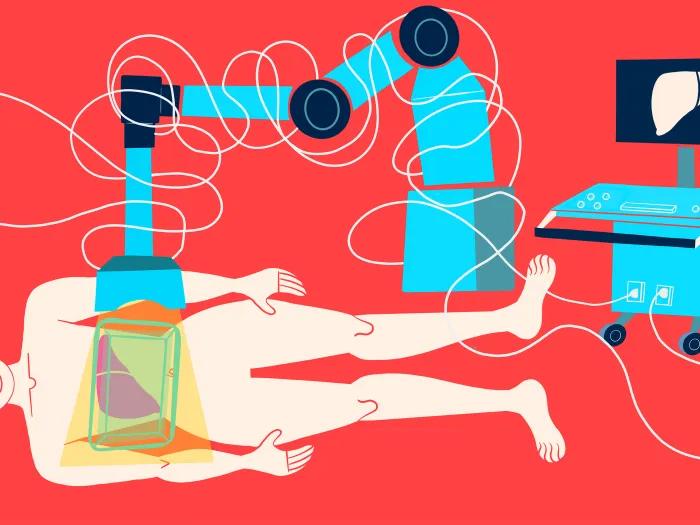
- Ultrasound: We move a probe (transducer) over the skin of your abdomen. This probe uses sound waves to create pictures of your bile ducts and liver.
If imaging tests show that a tumor is growing, our experts may take a small sample of tissue (biopsy). Our expert pathologists look at the tissue sample under a microscope to confirm cancer.

Questions about cancer?
Contact our Cancer AnswerLine™ at 800-865-1125. You'll talk to a nurse with years of experience in cancer care.
How is bile duct cancer treated?
Our liver cancer experts use different options to treat bile duct cancer. We talk with you to understand your goals for treatment and recommend a personalized care plan for your specific needs. We offer:
Bile duct cancer surgery
Many people with bile duct cancer are treated with surgery. Our expert team reviews your test results and recommends surgery if it’s the right option for you. You may have:
- Bile duct removal: Specialists remove part of the bile duct if tumors are small and have not grown outside the duct.
- Partial hepatectomy: We remove part of the liver containing the cancerous bile duct.
- Whipple procedure: Experts remove part of the pancreas, the gallbladder, part of the stomach and small intestine, as well as the bile duct.
You may have chemotherapy or radiation after surgery to help make sure cancer doesn’t return. Other surgical procedures, known as palliative surgery, may help relieve symptoms of bile duct cancer when tumors can’t be removed.
Interventional oncology for bile duct cancer
Interventional oncologists use advanced techniques to deliver cancer-fighting medication directly to tumors. In chemoembolization, experts insert a thin flexible tube (catheter) into the bile duct. They inject tiny beads, seeds or pellets containing chemotherapy drugs to deliver chemotherapy to the tumor site.
Radiation therapy for bile duct cancer
Our radiation oncology experts use radiation therapies to destroy cholangiocarcinoma. We may also use ablation techniques to shrink tumors. We offer:
- External beam radiation therapy: Experts use a machine to target bile duct tumors with energy beams that destroy cancer cells.
- Image-guided ablation: We use imaging such as computed tomography (CT) or ultrasound to guide insertion of a thin probe into the tumor. We deliver energy to the tumor to destroy cancerous tissue.
- Internal radiation therapy: Specialists place tiny radioactive beads, seeds or pellets into the bile duct near the tumor to deliver radiation. This therapy is also called radioembolization.
- Stereotactic body radiotherapy (SBRT): We use an image-guided computer system to deliver potent radiation doses directly to bile duct tumors.
Systemic therapy for bile duct cancer
When surgery isn’t possible, our experts use powerful medications to destroy tumors. We use chemotherapy drugs to help kill cancer cells. We place a thin flexible tube in your vein (IV) to infuse chemotherapy drugs into your bloodstream.
Our specialists may also recommend:
- Immunotherapy: Drugs that help your immune system recognize and attack cancer cells
- Targeted therapy: Drugs that destroy cancer cells while leaving healthy cells alone

Learn about clinical trials
Discover how clinical trials at the Rogel Cancer Center are driving the future of cancer care. Our researchers work every day to find better ways to detect, treat, prevent cancer, and clinical trials are a key part of that progress.
Locations
-
Multidisciplinary Liver Clinic | Rogel Cancer Center 1500 E Medical Center Dr
Floor B1 Reception E
Ann Arbor, MI 48109-5912Get Directions
Doctors

OXANA V Crysler, MD
Clinical Assistant Professor
Medical Oncology, Internal Medicine

Kyle Clifford Cuneo, MD
Clinical Professor
Radiation Oncology

Thomas M Enzler, MD, PhD
Clinical Assistant Professor
Medical Oncology, Internal Medicine

Benjamin David Ferguson, MD PhD
Clinical Assistant Professor
Surgical Oncology, Surgery

Evan Scott Glazer, MD
Clinical Professor
Surgery, Complex General Surgical Oncology

Theodore S Lawrence, MD, PhD
Professor
Radiation Oncology, Medical Oncology, Internal Medicine

Alisa Likhitsup, MD, MPH
Clinical Associate Professor
Gastroenterology, Internal Medicine, Transplant Hepatology

Neehar Parikh, MD, MS
Associate Professor
Gastroenterology, Internal Medicine, Transplant Hepatology

Nataliya Razumilava, MD
Associate Professor
Gastroenterology, Internal Medicine, Transplant Hepatology

Vaibhav Sahai, MBBS, MS
Associate Professor
Medical Oncology, Hematology, Internal Medicine
Providers
Ashleigh Nora Gamalski, PA-C
Physician Assistant
Physician Assistant
Taleen Anoush Long, PA-C
Physician Assistant
Physician Assistant
News & Stories

Exceptional response to immunotherapy gives patient with liver cancer more milestones to celebrate
Diagnosed with pancreatic cancer: Now what?
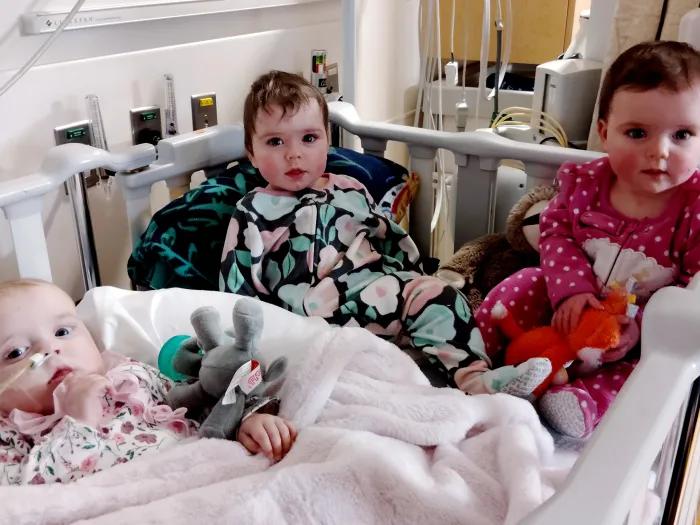
Rare infant triplet overcomes one-in-a-million type of liver cancer
Understanding Prostate Biopsy
Focal therapy for prostate cancer