
Stroke Patient Resources
Stroke Patient Resources
Learn about stroke in a wealth of materials approved by U-M Health experts:
- U-M Health Patient Education Library Handouts (Stroke)
- U-M Health Patient Education Library Handouts (Spot a Stroke F.A.S.T.)
- U-M Health Patient Education Library Handouts (Glossary of Stroke Terms)
- U-M Health Patient Education Library Handouts (Medications & Stroke)
- U-M Health Patient Education Library Handouts (Stroke Prevention, Treatment, & Recovery)
Michigan Health & Lab Blogs
- Stroke Q&A: Be Prepared & Save A Life
- Timing Is Everything at the First Signs of Stroke
- Why You Shouldn’t Delay Emergency Care During COVID-19
- Young Woman’s Brain Aneurysm Leads to Remarkable Outcomes
- Acting ‘F.A.S.T.’ at the First Sign of a Stroke Could Save a Life
Adaptive Activities
- UMAISE: University of Michigan Adaptive & Inclusive Sports Experience (through U-M Physical Medicine and Rehabilitation). Send an email to [email protected] for more information.
- Climbing: Through Bear Lake Camp in Lapeer, Michigan.
- Riding: Through CHUM Therapeutic Riding in Dansville, Michigan.
- Rowing: Through the Ann Arbor Rowing Club
- Scuba Diving: Through Mt. Brighton Adaptive Sports Send an email to [email protected] or call 810-229-9581 for more information.
- Sled Hockey: Through Michigan Sled Dogs.
Appointment Information
For Patients: If you think you or a loved one might be having a stroke, call 911. If you have had a stroke in the past or think you might be at risk for one call us at 1-888-287-1082.
For Physicians: If you are a physician and want to refer a patient, call M-LINE at 800-962-3555.
Stroke Program
To discover our expert services and personalized care, explore the Stroke Program for comprehensive care, support, and resources.
Events
Stroke Support Group
A virtual support group for stroke survivors, their families and caregivers.
Event runs September 09, 2025 - October 12, 2027
Stroke Support Group
A virtual support group for stroke survivors, their families and caregivers.
Event runs September 09, 2025 - October 12, 2027
Stroke Support Group
A virtual support group for stroke survivors, their families and caregivers.
Event runs September 09, 2025 - October 12, 2027
Stroke Support Group
A virtual support group for stroke survivors, their families and caregivers.
Event runs September 09, 2025 - October 12, 2027
Stroke Support Group
A virtual support group for stroke survivors, their families and caregivers.
Event runs September 09, 2025 - October 12, 2027
Stroke Support Group
A virtual support group for stroke survivors, their families and caregivers.
Event runs September 09, 2025 - October 12, 2027
Stroke Support Group
A virtual support group for stroke survivors, their families and caregivers.
Event runs September 09, 2025 - October 12, 2027
Stroke Support Group
A virtual support group for stroke survivors, their families and caregivers.
Event runs September 09, 2025 - October 12, 2027
Stroke Support Group
A virtual support group for stroke survivors, their families and caregivers.
Event runs September 09, 2025 - October 12, 2027
News & Stories

The Fundamentals
The Questions That Shape the Future of Medicine
On this episode of The Fundamentals, we talked to Dr. Thomas J. Wang, dean of the University of Michigan Medical School, about the fundamental questions that have shaped his career and continue to drive biomedical research.
Dean Wang discusses his work in cardiovascular research, the enduring impact of the Framingham Heart Study, the potential of AI and emerging health data, and the importance of collaboration between academia and industry. He also shares advice for the next generation of scientists and physicians and explains why sustained investment in biomedical research is essential to improving human health.
Health Lab
More than half of U.S. adults now qualify for statins under new guidelines
Cholesterol-lowering medicines called statins can reduce heart attack and stroke risk decades later; a study finds millions more people should be taking them.
Health Lab
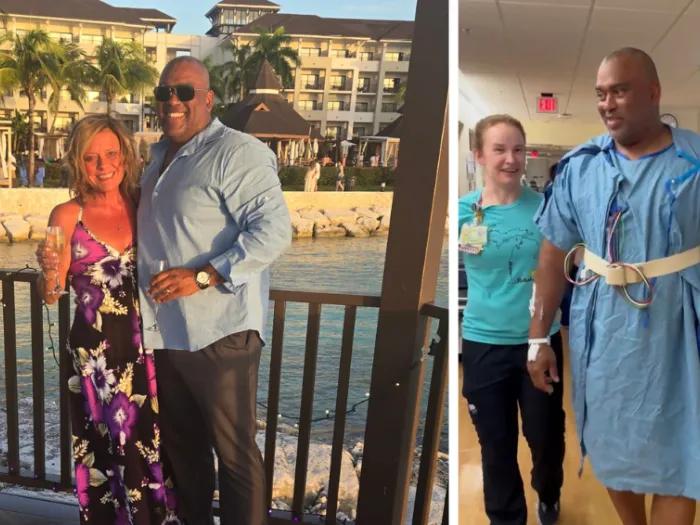
Timely treatment helps former baseball pro survive on-field stroke with no complications
Two days after his players recognized stroke symptoms at practice, a baseball and softball coach left the hospital with zero complications or lingering effects thanks to timely treatment.
Health Lab
Stroke survivors miss critical treatment, face greater disability due to systemic transfer delays
Problems with the United States stroke transfer system are drastically reducing survivors’ chances of receiving critical treatment and increasing the likelihood that they will leave the hospital with a disability, a study suggests.
Health Lab Podcast
Better health benefits linked to better job numbers
The recent study shows the biggest job gains were seen among low income adults with serious health problems whose health improved over time.
Health Lab
Telestroke patients more likely to receive treatment, but with greater delays
Stroke patients evaluated using telemedicine (telestroke) have higher odds of receiving essential treatment, yet it takes longer for them to be treated — potentially limiting the benefits, finds a Michigan Medicine.
