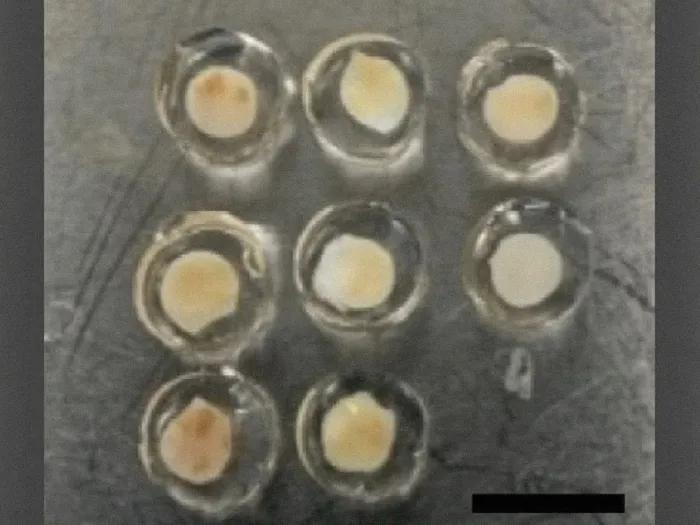
Eye Cancer | Retinoblastoma (Pediatric)
Eye Cancer | Retinoblastoma (Pediatric)
What is eye cancer/retinoblastoma?
Retinoblastoma is a malignant tumor in the retina of the eye. While it’s not common to find hospitals that specialize in this rare cancer, pediatric ophthalmologists at University of Michigan Health Kellogg Eye Center and pediatric oncologists at C.S. Mott Children’s Hospital do. The teams work together to diagnose and treat retinoblastoma using the latest treatment options, as well as discover new treatments to comprehensively care for our patients. These doctors work in tandem with Kellogg Eye Center’s orbital and ocular oncology service and, when applicable, physicians from pediatric neurointerventional radiology (NIR) for the delivery of intra-arterial (IA) chemotherapy.
Our Approach
Our team-based approach to care combines the efforts of pediatric ophthalmology, ocular oncology, radiation oncology, pediatric neurointerventional radiology (NIR), pediatric anesthesia, pediatric oncology, pediatric nursing and cancer genetics. The team works seamlessly to provide one stop assessment of the diagnosed retinoblastoma with examination under anesthesia (EUA), MRI orbits, and brain and lumbar puncture tests all performed under the same general anesthesia.
Once a decision for intra-arterial (IA) treatment has been made the patient and family are seen in a combined clinic with pediatric oncology and pediatric NIR to gain consent for IA chemosurgery. Typically, the survival rate for a child with retinoblastoma is greater than 90 percent.
Appointment Information
Schedule an appointment by calling Kellogg Eye Center at 734-764-7558. You may also contact the Pediatric Hematology-Oncology Clinic at C.S. Mott Children’s Hospital at 734-936-9814.
How is retinoblastoma diagnosed?
Most often, retinoblastoma is diagnosed early in life, often by a parent or a pediatrician noting a “white pupil”, known as leukocoria – a white pupil due to reflection of light off of a tumor located behind the lens of the eye. Sometimes a parent notices something is wrong when the white pupil is seen in a flash photograph. Retinoblastoma can occur randomly, or it can be hereditary. When retinoblastoma occurs in only one eye, it is usually not hereditary. When the disease occurs in both eyes, it is always hereditary.
Once the symptom is noticed, your child is referred to a pediatric ophthalmology specialist at the Kellogg Eye Center. The ophthalmologist will perform a fundus examination, which means examining the interior lining of the eyeball that includes the retina.
Once retinoblastoma is diagnosed, the pediatric ophthalmologist, along with a pediatric oncologist, will order tests to determine the size of the tumor and whether it has spread to other parts of the body. Tests may include an MRI or CT scan.
How is retinoblastoma treated?
The type of treatment given depends on the extent of the disease within the eye, whether the disease is in one or both eyes, and whether the disease has spread beyond the eye.
Treatment options focus on both cure and preservation of sight, and include the following:
- Enucleation – surgery to remove the eye when the tumor is very large or when vision is permanently lost
- Cryotherapy – the use of extreme cold to destroy cancer cells
- Laser photocoagulation therapy – the use of laser light to destroy blood vessels that feed the tumor
- Chemotherapy, which can be delivered by three routes:
- Systemic (into a vein) when the tumor is large or has spread beyond the eye, or when the size of the arteries in an infant prevents intra-arterial (IA) administration
- Intra-arterial (into a small artery feeding the eye) for treating tumors for which the prospect of preserving vision remains good
- Intra-vitreal (into the fluid within the back part of the eye) for treating tumor cell clusters which are floating within that fluid. Often intra-arterial and intra-vitreal chemotherapies are administered at the same time.
Patients often receive a combination of therapies to treat the tumor(s). Cutting-edge clinical trials are available to patients who qualify through the Children’s Oncology Group.
Because of the hereditary factor, brothers and sisters of children with retinoblastoma should be examined to find out if they may develop the disease. Retinoblastoma survivors can also pass this form of cancer on to their children. If your child has retinoblastoma - particularly the hereditary type - there is an increased chance that he or she may develop a second cancer in later years. We offer genetic counseling to answer all your questions about inheritance risks and the risk of additional cancers, providing comprehensive evaluation, education and support.
Doctors

Neeraj Chaudhary, MBBS
Professor
Diagnostic Radiology, Neuroradiology
Hakan Demirci, MD
Professor
Ophthalmology

Laura Kimberly Sedig, MD
Clinical Assistant Professor
Pediatric Hematology-Oncology, Pediatrics
Providers
Amy Marie Edmonds, NP
Advanced Practice Nurse
Nurse Practitioner
News & Stories
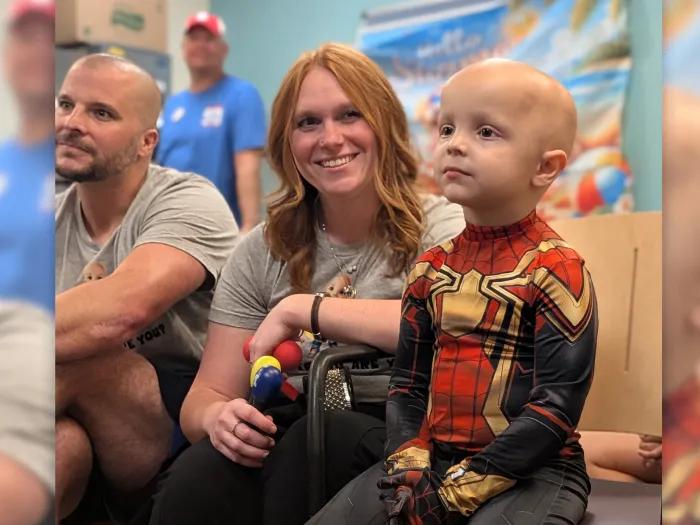
Talent show brings joy to kids at children’s hospital
U-M alumni return from Central Asia to seek treatment for their child at Mott
Block Out Cancer: From a crisis abroad to answers at Mott
Path forward for glioblastoma treatment
U-M researcher receives Cancer Grand Challenges funding to crack the dark proteome of cancer