Ablative Therapy
Ablative Therapy
What is ablative therapy?
Ablative therapy is an alternative treatment when diseased tissue is small or cannot be surgically removed. Ablation means “destroy” and is particularly beneficial for people who cannot undergo surgery due to immune deficiencies or those who have other medical conditions that would make surgery too risky.
Ablation involves inserting and placing a treatment needle through the skin into the tumor using image guidance such as ultrasound (US), computed tomography (CT) or magnetic resonance imaging (MRI). Additional ablative techniques can include delivering chemical therapeutic energy (ethanol) or focused acoustic energy (histotripsy) to the diseased tissue.
For the majority of ablations, a treatment needle is attached to a generator for radiofrequency (RFA), microwave (MWA) or cryoablation. The needle then delivers therapeutic energy (hot or cold) directly to the diseased tissue and that energy destroys the tumor. This process may need to be repeated depending on the tissue size, number and location. The destroyed tissue is not removed, but gradually shrinks and is replaced by scar tissue.
Our Approach
The cross-sectional interventional radiology service (CSIR) team at U-M Health has the most experience with ablative therapies and has been performing image-guided tumor ablation since 1999. The Tumor Ablation Program team works closely with a multidisciplinary team of healthcare professionals including hepatologists, medical and surgical oncologists, transplant surgeons, urologists, radiation oncologists and interventional radiologists to provide personalized care.
We provide state-of-the-art imaging and minimally-invasive cancer treatments using all of the latest ablation technologies including: microwave, radiofrequency, cryoablation, ethanol and ultrasound (histotripsy).
Combined with our expertise of advanced diagnostic imaging (multi-phase CT, MRI, PET, contrast-enhanced US), our ablation team delivers optimal treatment outcomes for our patients. Our tumor ablation program has successfully treated thousands of patients with primary and metastatic liver cancer, renal cancer, adrenal cancer, prostate cancer, among other sites of disease (lymph nodes, thyroid, etc).
For more information on tumor ablation therapy, see our patient care guide.
Appointment Information
Please call 734-936-4500 to schedule an appointment for ablation with our CSIR team.
What to Expect
Patients will be seen in our clinic for a pre-treatment assessment a week or so prior to ablation. During the ablation, you will be given a local anesthesia and intravenous medications or general anesthesia, depending on the location and type of therapy being performed. You will be monitored closely during the therapy and afterwards. The length of recovery depends on the treatment and type of anesthesia given. As the analgesia wears off, you may feel some discomfort at the ablation site.
Over the counter pain medications is usually all that is needed afterwards. Most patients are discharged the same day with simple discharge instructions. Your physician(s) will schedule follow-up appointments to see you after the procedure and follow-up imaging, often with CT or MRI, will be used to check the treatment zone and surrounding tissues.
Doctors
Elaine M Caoili, MD
Clinical Professor
Diagnostic Radiology
Mishal Mendiratta-Lala, MD
Clinical Professor
Diagnostic Radiology

Amit Pandya, MBBS
Clinical Associate Professor
Diagnostic Radiology

Shane Andrew Wells, MD
Associate Professor
Diagnostic Radiology
Providers

Silvana Maria Desanto Davis, PA-C
Physician Assistant
Physician Assistant
Giovanna Anna Maria Fox, PA-C
Physician Assistant
Physician Assistant
Farah Jawad-Makki, PA-C
Physician Assistant
Physician Assistant
Myles David Jordan, PA-C
Physician Assistant
Physician Assistant
Amanda Carrie Ruffin, PA-C
Physician Assistant
Physician Assistant
News & Stories
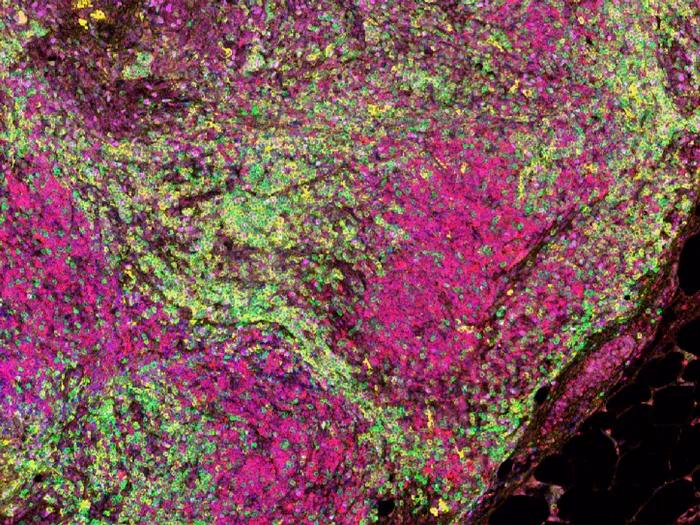
New mouse model for liposarcoma can help uncover new therapies
Understanding Prostate Biopsy

After 25 procedures and constant fainting, patient finds long term relief
Radiation therapy for non-cancer diseases
How breast cancer cells survive in bone marrow after remission