What is an ophthalmic ultrasound?
An ophthalmic ultrasound assists physicians in the diagnosis and treatment of ocular and orbital diseases. It allows for evaluations of the anterior segment of the eye as well as the eye’s intraocular and orbital structures.
Benefits
Ophthalmic ultrasound can help physicians:
- Detect and differentiate intraocular and orbital tumors
- Detect vitreoretinal diseases
- Detect inflammatory diseases
- Detect optic nerve diseases
- Detect and differentiate types of glaucoma
- Take extraocular muscle measurements for Thyroid Eye Disease
- Locate intraocular lens position after cataract surgery
- Detect ocular trauma
- Complete A-scan biometry for axial length measurements prior to cataract surgery
Our Approach
The Kellogg Eye Center offers extensive ophthalmic ultrasound services to assist physicians in the diagnosis and treatment of ocular and orbital diseases. The service is staffed with highly trained, certified technicians who perform more than 1,400 ultrasounds each year.
State-of-the-art ultrasound technology allows us to provide you with evaluations of the anterior segment of the eye as well as the eye’s intraocular and orbital structures. We perform ultrasound procedures for both adult and pediatric patients. After the tests are reviewed by a Kellogg physician, we send a report—usually on the same day as testing—to the referring physician. These reports will be digitally saved.
Kellogg uses the Eye Cubed™ system, with real-time imaging and advanced movie technology, with a platform equipped for:
- 10 MHz Posterior Segment
- 40 MHz Wide Field Anterior Segment – Ultrasound Biomicroscopy (UBM)
- Standardized Diagnostic A-scan
- Axial Length Biometry A-scan
Referrals
If you have questions or wish to refer a patient for ultrasound testing, please call 734-764-4190.
Our Team
- Bernadete Ayres, MD, Director
- Tanya McClendon, COA, CDOS
- Mariane Sanzenbacher, COT
- Erica Nickles
News & Stories
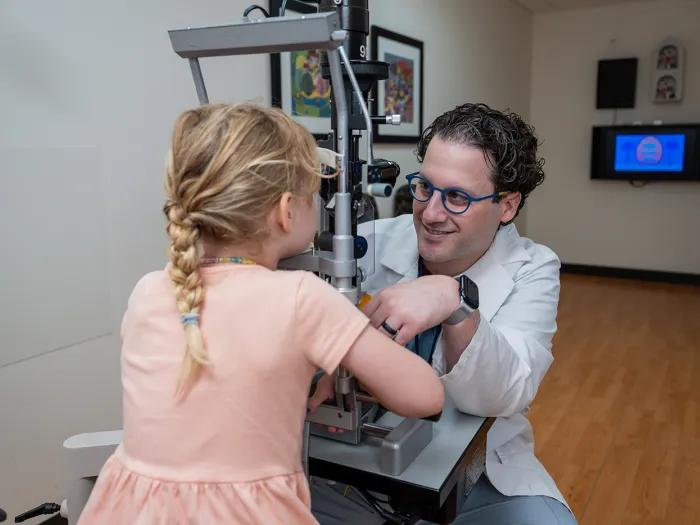
Innovative children’s vision research gets a boost from the Knights Templar Eye Foundation

Nerf gun accident causes retinal detachment in pediatric patient

Kellogg care inspires gift to vision research

Mediterranean diet can slow progression of age-related macular degeneration

Patient with retinitis pigmentosa receives new hope at Kellogg’s low vision clinic