
Traumatic Brain Injury (TBI) Blood Test
Traumatic Brain Injury (TBI) Blood Test
What is a Traumatic Brain Injury (TBI) blood test?
A blood test that can help your emergency care team decide whether you need a head CT after a head injury. After a fall, hit to the head, or other head injury, it’s normal to worry about internal bleeding or a serious brain injury. In many cases, a CT scan is the right next step. But for some patients, a TBI blood test can provide additional information to help your care team determine whether a CT scan is necessary.
This test supports safe decision-making, helps avoid unnecessary radiation exposure, and can reduce time spent waiting for imaging — while keeping your care and safety the top priority. Many concussions and mild head injuries do not require a CT scan. This test helps your care team safely decide when imaging is needed and when it isn’t.
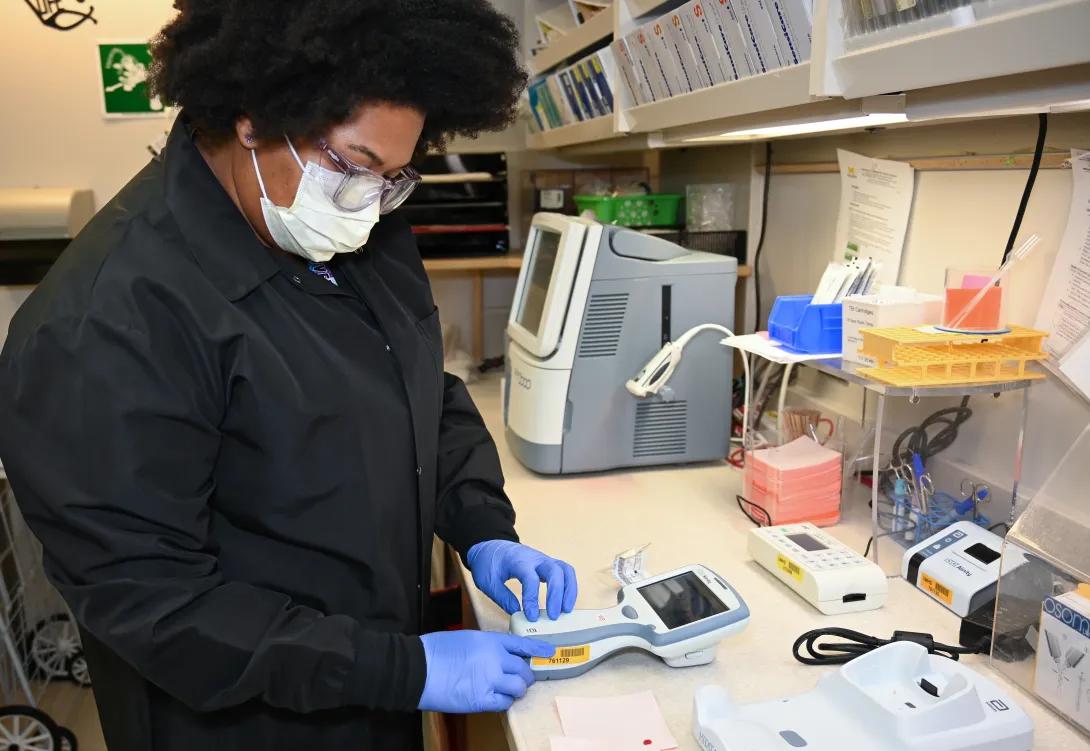
How does a TBI blood test work?
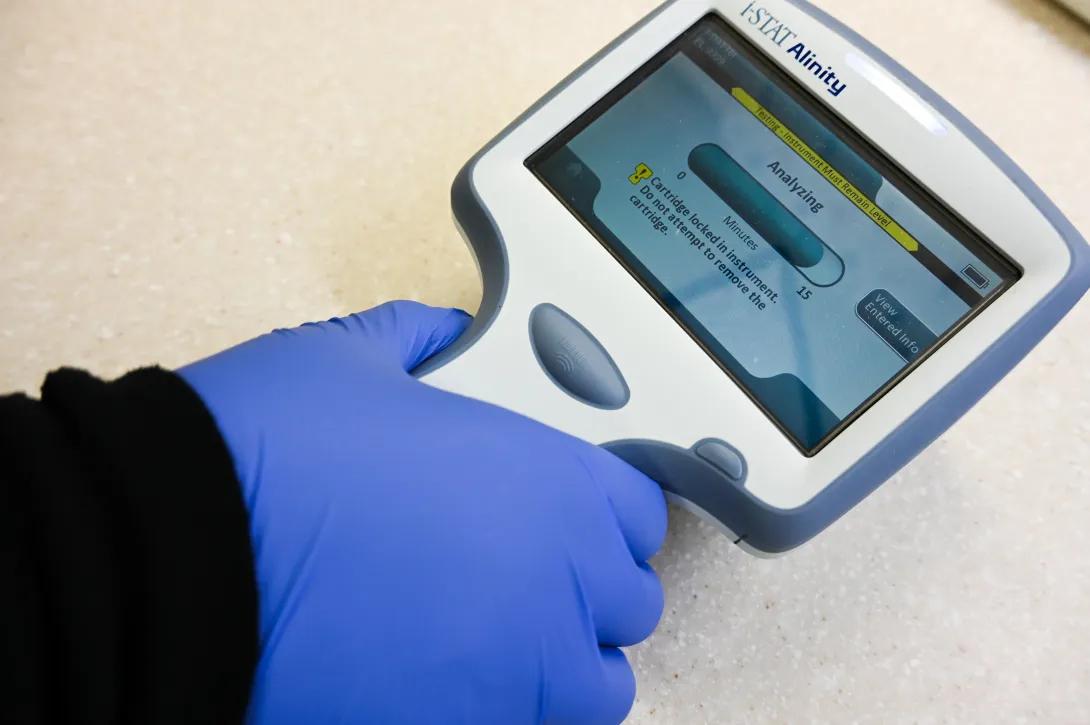
The TBI blood test checks for elevation in two proteins, GFAP or UCH-L1, that can be released into the bloodstream after a brain injury. When these markers are not elevated, it can be a reassuring sign that a serious injury that would appear on a CT scan is unlikely.
Your emergency care team will use the result along with your symptoms, medical history, and physical exam to decide what care is best for you.
Results are available quickly while you’re still in the Emergency Department.
Why is a TBI blood test done?
CT scans are an important tool — and sometimes they’re necessary right away. But CT scans
also have downsides, including:
- Radiation exposure
- Longer wait times in a busy Emergency Department
- Higher costs for patients and the health system
For some low-risk head injuries, a blood test can help your clinician make a safer, more
confident decision about whether a CT scan is needed.
Who the test is for
Your clinician may consider the TBI blood test if:
- You had a recent head injury (timing matters)
- Your symptoms and exam suggest you may be low risk, but a CT is still being considered
- Your care team wants an additional piece of information to guide the decision
This test is used only when it makes clinical sense. It is not used for every head injury.
When the test is not recommended
There are situations where this test is not appropriate, including some higher-risk injuries or scenarios where a CT scan would be needed regardless of the blood test result. Your care team may choose a different approach if:
- The head injury occurred outside the recommended time window
- You are already planned to receive other CT imaging that makes avoiding a head CT unlikely
- You have certain medical factors that may change how clinicians evaluate head injury risk (your team will review this with you)
If the test isn’t the right fit, your clinician will explain why and what your next step should be.
What do the results of a TBI blood test mean?
Your clinician will interpret the blood test together with your symptoms and exam.
If the test result suggests a low likelihood of serious injury:
Your clinician may decide that a head CT is not needed at this time and may discharge you with clear instructions on what symptoms to watch for.
If the test result suggests a higher likelihood of injury:
Your clinician may recommend a CT scan to look for bleeding or other signs of injury.
Important: A normal test does not mean “nothing happened.” Some people may still experience concussion symptoms even when imaging is normal. These symptoms are common and usually improve with time and rest. Your care team will guide you on next steps.
After the Test
If you go home after a head injury evaluation, you’ll receive instructions about what symptoms to watch for and when to seek care again. Most people recover fully with rest and gradual return to activity, but it’s important to follow your care team’s guidance.
You may be advised to follow up if you have symptoms such as:
- Worsening headache
- Ongoing dizziness, nausea, or vomiting
- Confusion, trouble concentrating, or feeling “foggy”
- Vision changes
- Problems with balance
- Sensitivity to light or noise
- New or worsening symptoms over time
If appropriate, your care team may recommend follow-up with a clinician experienced in concussion or brain injury recovery.
Learn more about recovery and what to expect after a concussion.
Frequently Asked Questions
This test is ordered by a clinician when it is medically appropriate during an Emergency Department evaluation.
No. It helps guide the decision. Some patients still need a CT scan based on symptoms, exam findings, or other risk factors.
The test is a blood draw. Your care team uses it as one piece of information alongside your clinical evaluation to support safe decision-making.
Follow the discharge instructions and return for care if symptoms worsen or you develop new concerns. When in doubt, seek medical attention.
