
Chaperones During Sensitive Examinations
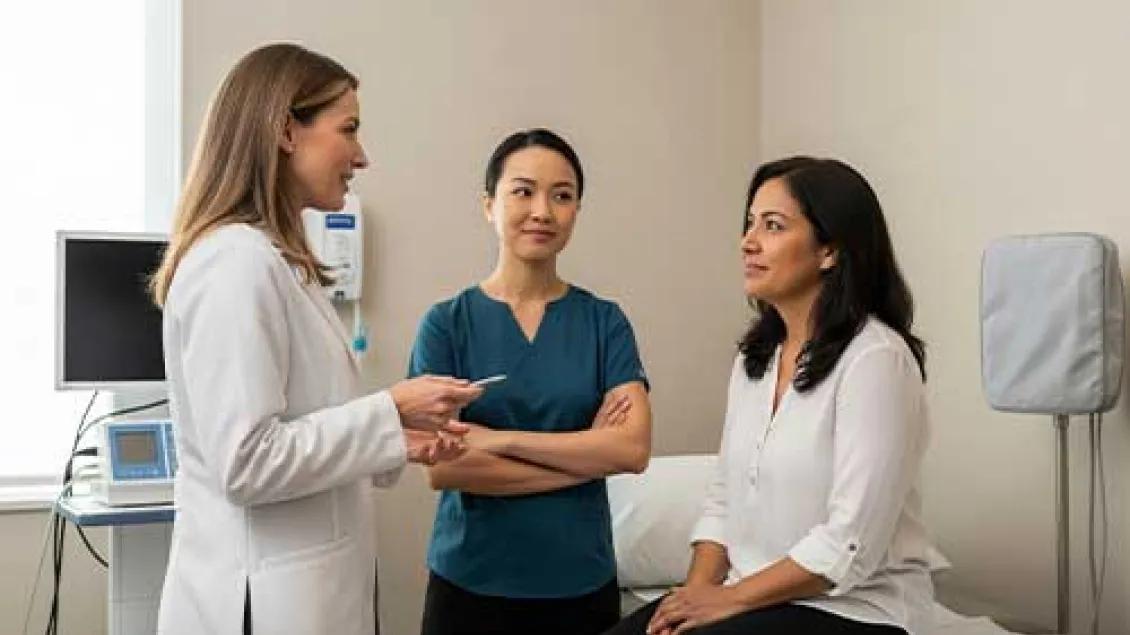
At Michigan Medicine, our goal is to provide the best possible care with minimal risk for both our patients and health professionals. One way to do this is through our Chaperone Policy, which sets a consistent standard for patient care. A chaperone is a witness who may assist patients and health professionals in completing sensitive exams, procedures and care in a consistent, safe and respectful manner.
Policy
Chaperone Policy for Patients
Providing a Reassuring & Respectful Healthcare Experience for Our Patients
University of Michigan Health values the safety and dignity of our patients. As part of our commitment to creating a respectful, comfortable environment, we provide chaperones during sensitive exams or procedures, as well as upon request.
A chaperone acts as a witness during sensitive medical exams and procedures or upon request. Chaperones protect both patients and providers by helping create a neutral, safe, respectful environment.
Chaperones can help ease distress among patients with mental health considerations, neurodevelopment disorders, or who for cultural or religious reasons may find certain procedures threatening or confusing. Their presence also assists providers by reinforcing our culture of reliability and protects them from allegations of improper behavior.
A sensitive examination or procedure includes the physical examination of or a procedure involving the genitalia or rectum (regardless of gender) or female breast or the breast of a patient who identifies as female.
Additionally, patients may find certain exams or procedures stressful or distressing due to mental health needs, neurodevelopment issues, or cultural or religious reasons—chaperones may be requested or provided for these situations as well.
The chaperone may be a trained health professional or staff member. Whenever possible, the chaperone should be a gender that the patient feels more comfortable with.
Family members and friends of adult patients should not serve as chaperones, but may be present during chaperoned procedures if the patient requests.
The chaperone’s primary role is to observe and to provide reassurance and comfort to the patient. The chaperone will stand in an unobtrusive location during the procedure and provide assistance to the provider and support to the patient if needed.
The chaperone may also assist the patient with personal hygiene, toileting, or dressing needs if the patient needs or requests assistance.
Any chaperone who witnesses inappropriate or unacceptable behavior on the part of a healthcare provider is required to report it immediately.
Chaperones are intended to create a safe environment for both patients and providers. Adult patients who are able make their own medical decisions have the right to decline the presence of a chaperone (this will be noted in the patient record). However, providers may decide not to perform a particular exam or procedure without a chaperone present.
For adult patients lacking the capacity to give informed consent or considered to be vulnerable in another capacity (i.e. under sedation), and for all adolescent patients, the presence of a chaperone is mandatory during sensitive exams or procedures.

Get the Patient Guide
At University of Michigan Health, our goal is to provide the best possible care with minimal risk for both our patients and providers. To learn more about the different types of sensitive exams and what each involves, download our PDF guide.
