Atopic Keratoconjunctivitis (AKC)
Atopic Keratoconjunctivitis (AKC)
What is Atopic Keratoconjunctivitis?
Atopic Keratoconjunctivitis (AKC) is the result of a condition called "atopy". Atopy is a genetic condition where your immune system produces higher than normal antibodies in response to a given allergen. Although AKC is a perennial (year round) disease, your symptoms may worsen in the winter. Unlike atopic dermatitis, which is generally seen early in childhood, atopic keratoconjunctivitis appears during late adolescence and early adulthood. Men are more commonly affected than women.
With AKC, the conjunctiva lining the eyelids is usually red and swollen. The lower eyelid generally is affected more than the upper eyelid. This is a differentiating symptom from vernal keratoconjunctivitis where the upper eyelid is most often affected. If left untreated, AKC can progress to ulceration, scarring, cataract, keratoconus and corneal vascularization.
Appointment Information
For more information or to make an appointment, call 734-764-4190.
What are the symptoms of AKC?
- Sensitivity to light
- Itching
- Burning
- Tearing
- Red and hardened eyelids
The symptoms described above may not necessarily mean that you have atopic keratoconjunctivitis. However, if you experience one or more of these symptoms, contact your ophthalmologist for a complete exam.
How is AKC diagnosed?
AKC usually is diagnosed by clinical exam and a medical and family history, although a conjunctival biopsy may be helpful in distinguishing AKC from other conditions.
How is AKC treated?
Combinations of oral and topical antihistamines and mast cell stabilizers usually are effective in controlling symptoms. Only in severe cases should topical steroid therapy be considered. Other steroid-sparing agents may be helpful, including cyclosporine or tacrolimus. Systemic treatment of the conditions that accompany AKC may be very helpful.
Locations
-
Comprehensive Ophthalmology & Cataract Surgery Clinic | Kellogg Eye Center 1000 Wall St
Floor 1
Ann Arbor, MI 48105-1912Get Directions -
Ophthalmology Clinic | Brighton Center for Specialty Care 7500 Challis Rd
Entrance 1, Level 2
Brighton, MI 48116-9416Get Directions -
Ophthalmology Clinic | Canton Health Center 1051 N Canton Center Rd
Canton, MI 48187-5097Get Directions -
Ophthalmology Clinic | Chelsea Health Center 14700 E Old US Highway 12
Floor 1
Chelsea, MI 48118-1185Get Directions -
Ophthalmology Clinic | Northville Health Center 39901 Traditions Dr
Floor 2
Northville, MI 48168-9493Get Directions -
Ophthalmology Clinic | West Ann Arbor Health Center-Parkland Plaza 380 Parkland Plaza Ste 210
Floor 2
Ann Arbor, MI 48103-6201Get Directions
Doctors

Jill Elizabeth Bixler, MD
Clinical Assistant Professor
Ophthalmology

Theresa M Cooney, MD
Clinical Associate Professor
Ophthalmology
Julia Dalia, MD
Clinical Assistant Professor
Ophthalmology

Joshua Robert Ehrlich, MD, MPH
Associate Professor
Ophthalmology

Angela Renee Elam, MD, MPH
Assistant Professor
Ophthalmology, Oculoplastics Ophthalmology

Charles Ross Frank, MD
Clinical Assistant Professor
Ophthalmology

Sarah Jayne Garnai, MD
Clinical Assistant Professor
Ophthalmology

Sean Owen Hansen, MD
Clinical Assistant Professor
Ophthalmology

Vanitha Isaac Jeyaraj, MD
Clinical Assistant Professor
Ophthalmology

Ariane Dev Kaplan, MD
Clinical Associate Professor
Ophthalmology













News & Stories
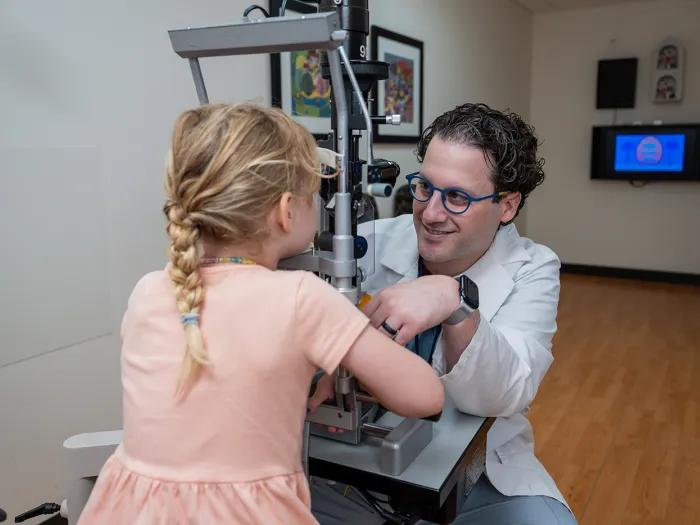
Innovative children’s vision research gets a boost from the Knights Templar Eye Foundation

Nerf gun accident causes retinal detachment in pediatric patient

Kellogg care inspires gift to vision research

Mediterranean diet can slow progression of age-related macular degeneration

Patient with retinitis pigmentosa receives new hope at Kellogg’s low vision clinic