Invasive Ductal Carcinoma (IDC)

What is invasive ductal carcinoma (IDC)?
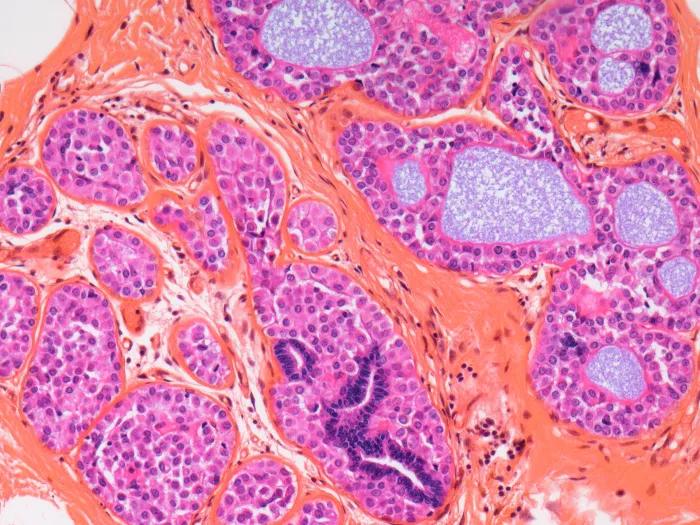
Invasive ductal carcinoma (IDC) is the most common type of breast cancer, accounting for about 80% of all breast cancer diagnoses. IDC begins in the milk ducts of the breast and then invades the surrounding breast tissue. From there, it has the potential to spread (metastasize) to other parts of the body.
Our Approach
The Weiser Family Center for Breast Cancer is dedicated to providing compassionate, cutting-edge care for individuals affected by breast cancer. We enhance lives through early detection, personalized treatment, and survivorship support, while advancing research, education, and advocacy. Our unwavering commitment is to make a meaningful difference, improving breast cancer outcomes for all.
Appointment Information
If you're a patient interested in making an appointment, please call 734-647-8902.
Healthcare providers looking to refer a patient, please contact M-LINE: 800-962-3555.
For those with questions, please contact our Cancer AnswerLine at 800-865-1125.
What are the symptoms of IDC?
Many patients don't have symptoms. Instead, they are diagnosed through screening mammogram.
Symptoms of IDC include:
- Lump in the Breast: Often the first noticeable symptom.
- Thickening of Breast Tissue: An unusual thickening in the breast or underarm area.
- Change in Size or Shape: Noticeable changes in the size, shape, or appearance of the breast.
- Dimpling or Puckering: Changes in the skin texture, often resembling an orange peel.
- Nipple Changes: Retraction, discharge, or pain in the nipple area.
- Redness or Scaliness: The skin around the breast or nipple becomes red, swollen, or scaly.
How is IDC diagnosed?
Diagnosis of IDC typically involves a combination of the following:
- Physical Examination: Palpation of the breasts and surrounding lymph nodes.
- Imaging Tests:
- Mammography: Often the first imaging test is used.
- Ultrasound: Helps to evaluate the characteristics of the lump.
- MRI: May be used for more detailed imaging.
- Biopsy: Removal of tissue samples for microscopic examination.
- Core Needle Biopsy: Common method using a hollow needle.
- Surgical Biopsy: Sometimes required to remove a larger tissue sample.
Staging
The stage of IDC is critical for determining the prognosis and treatment plan. Staging is based on:
- Tumor Size (T): The size of the primary tumor.
- Lymph Node Involvement (N): Whether cancer has spread to nearby lymph nodes.
- Metastasis (M): Whether cancer has spread to distant organs.
How is IDC treated?
Treatment for IDC varies based on the stage and characteristics of the tumor, patient’s overall health, and personal preferences. Options typically include:
Surgery
- Lumpectomy: Removing the tumor and some surrounding tissue.
- Mastectomy: Removing one or both breasts.
Radiation Therapy
- Often used after surgery to destroy any remaining cancer cells. Learn more about radiation therapy and breast cancer.
Chemotherapy
- Uses drugs to kill cancer cells or stop their growth.
- Can be administered before surgery (neoadjuvant) or after surgery (adjuvant).
Learn more about systemic therapy and breast cancer.
Hormone Therapy
- For tumors that are hormone receptor-positive. It blocks hormones that fuel cancer growth.
- Includes drugs like tamoxifen or aromatase inhibitors.
Targeted Therapy
- Targets specific molecules involved in cancer cell growth, such as HER2.
- Includes drugs like trastuzumab (Herceptin).
Immunotherapy
- Uses the body's immune system to fight cancer.
Patient Resources
The psychosocial impacts of breast cancer are profound and multifaceted, necessitating a comprehensive approach to care that addresses emotional, psychological, and social needs. At the Weiser Family Center for Breast Cancer, we understand by leveraging a range of support services and resources, breast cancer patients can better cope with their diagnosis, treatment, and post-treatment phases, enhancing their overall quality of life.
For more specific information on symptoms, diagnosis and treatment information, please visit the following pages on the different types of breast cancer:
- Ductal Carcinoma in Situ
- Inflammatory Breast Cancer
- Invasive Lobular Carcinoma (ILC)
- Male Breast Cancer
- Hereditary Breast Cancer
- Metastatic Breast Cancer
- Tumor Receptors & Breast Cancer
- Aromatase Inhibitors Musculoskeletal Symptoms (AIMSS)
- Breast Cancer & Sexual Health
- Breast Cancer & Young Women
- Breast Cancer & Older Adults
Visit our online library
Lumpectomy & Axillary Surgery: A Patient Care Guide for Before and After Surgery
Lumpectomy & Sentinel Lymph Node Biopsy: A Patient Care Guide for Before and After Surgery
Mastectomy: A Patient Care Guide for Before and After Surgery
Mastectomy & Axillary Surgery: A Patient Care Guide for Before and After Surgery
Axillary Surgery: A Patient Care Guide for Before and After Surgery
Related services offered by U-M Health:
Locations
-
Breast Care Clinic | Brighton Center for Specialty Care 7500 Challis Rd
Entrance 1, Level 1
Brighton, MI 48116-9416Get Directions -
Breast Care Clinic | Hamilton Community Health Network 2900 N. Saginaw Street
Flint, MI 48505Get Directions -
Breast Oncology Clinic | Rogel Cancer Center 1500 E Medical Center Dr
Floor 1
Ann Arbor, MI 48109-5916Get Directions
Doctors

Monika Leigh Burness, MD
Clinical Associate Professor
Medical Oncology, Internal Medicine

Erin Frances Cobain, MD
Associate Professor
Medical Oncology, Internal Medicine

Aleksandar Filip Dragovic, MD
Clinical Associate Professor
Radiation Oncology

Norah Lynn Henry, MD, PhD
Professor
Medical Oncology, Internal Medicine

Borislav Hristov, MD
Clinical Assistant Professor
Radiation Oncology

Tasha Michelle Hughes, MD
Clinical Associate Professor
Surgical Oncology, Surgery

Jacqueline Sara Jeruss, MD, PhD
Professor
Surgery

Kathleen Anne Kemmer, MD
Clinical Assistant Professor
Medical Oncology, Hematology, Internal Medicine

Aki Morikawa, MD, PhD
Clinical Associate Professor
Medical Oncology, Hematology, Internal Medicine

Lauren Michelle Perry, MD
Clinical Assistant Professor
Surgical Oncology, Surgery






Providers

Joan Marie Armstrong, NP
Advanced Practice Nurse
Nurse Practitioner - Family, Nurse Practitioner

Susan Marie Egner, NP
Advanced Practice Nurse
Nurse Practitioner
Tamara Mangan Ghormley, NP
Advanced Practice Nurse
Nurse Practitioner, Nurse Practitioner - Community Health
Kimberly Ann Hoskins, NP
Advanced Practice Nurse
Nurse Practitioner - Adult Health
Mary-Jo Marie Julin, NP
Advanced Practice Nurse
Nurse Practitioner
Amanda Leigh Kovach, PA-C
Physician Assistant
Physician Assistant

Katherine Ann Lew, PA-C
Physician Assistant
Physician Assistant
Margaret Anne Miodonski, NP
Advanced Practice Nurse
Nurse Practitioner-Women's Health, Nurse Practitioner
Alissa Ann Stewart, PA-C
Physician Assistant
Physician Assistant
Megan Ann Williams-Morad, PA-C
Physician Assistant
Physician Assistant
News and Stories

New oral nanomedicine boosts effectiveness of cancer immunotherapies

5-year survival rate has increased for all cancers, according to American Cancer Society

Breast cancer patient encourages women to commit to their health
What is ductal carcinoma in situ breast cancer?

Patients are opting in for 10 years of breast cancer treatment