
Stomach Cancer
Stomach Cancer
What is stomach cancer?
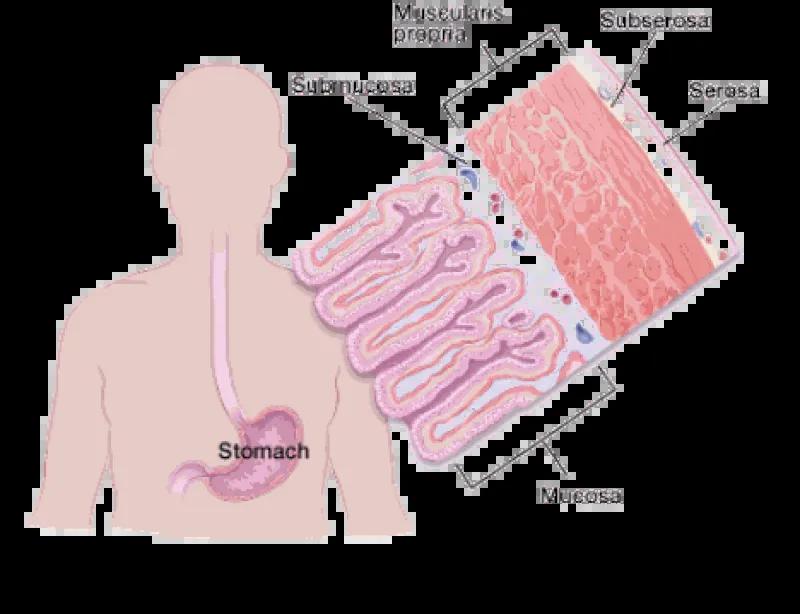
Stomach (or gastric) cancer is the growth of abnormal cells in the stomach. Cancer usually starts in the inner layer (where food touches the stomach) and moves into the outer layers of the stomach. It may spread to nearby organs or to other parts of the body.
Appointment Information
The Gastrointestinal Oncology Program offers diagnosis and treatment for those with stomach cancer. To make an appointment or for more information:
Healthcare professionals, please contact our M-LINE service: 800-962-3555.
Patients, please call 734-647-8902.
What are the types of stomach cancer?
Stomach cancer types include:
Adenocarcinomas of the stomach
Cancers in the gland cells that line the mucosa are the most common stomach cancer type. They make up about 95% of all stomach cancers. Adenocarcinoma types include:
- Intestinal: Cancer cells in intestinal adenocarcinoma may have changes (mutations) in certain genes. Experts can often identify these mutations and use drugs called targeted therapies to treat them to help eliminate cancer while sparing healthy tissue. Intestinal adenocarcinoma is the most common type of stomach adenocarcinoma.
- Diffuse: Cancer cells in diffuse adenocarcinomas are more likely to spread. These cancers may grow more quickly. Diffuse adenocarcinomas are a less common type of stomach adenocarcinoma.
Less common types of stomach cancer
Other cancer types can also begin in the stomach. These cancers include:
- Gastrointestinal stromal tumors (GISTs): Tumors that can form anywhere in the digestive tract, including the stomach.
- Neuroendocrine tumors: Tumors that form in hormone-producing neuroendocrine cells found in the stomach.
What are the symptoms of stomach cancer?
Stomach cancer symptoms may be mild or more severe and may mimic other digestive conditions. When stomach cancer first develops, you may have symptoms such as:
- Abdominal bloating, discomfort or nausea, especially after you eat
- Appetite loss
- Indigestion or heartburn
As gastric cancer worsens (advances), you might have:
- Bloody stools
- Fluid build-up in your abdomen (ascites)
- Jaundice
- Pain in the stomach
- Unexplained weight loss
- Swallowing problems
How is stomach cancer diagnosed?
The gastrointestinal cancer team at Rogel Cancer Center includes subspecialists with expertise in all stomach cancers. We begin by doing a physical examination and talking with you about any symptoms you’re experiencing. Our specialists identify all stomach cancer types with advanced diagnostic testing. We use:
Blood tests
Experts draw blood samples to check for certain proteins and substances that indicate cancer.
Endoscopy
During upper endoscopy, we insert a thin, flexible tube with a lighted camera (endoscope) into your mouth and down your throat. Specialists obtain detailed views of your esophagus, stomach and the beginning of your small intestine (duodenum).
During this test, experts may remove a small tissue sample (biopsy) for our pathology experts to examine under a microscope. They determine whether cancer is present and may also measure levels of certain genes or proteins to inform treatment decisions.
Imaging tests
Our stomach cancer experts use imaging tests to determine cancer’s location and whether it has spread (metastasized). We use this information to design customized treatment strategies. You may have:
- Barium swallow: We have you drink a metallic liquid (barium) to coat your stomach and make your digestive tract more visible during X-rays. Specialists take multiple images during this test, also known as an upper GI series.
- Computed tomography (CT) scan: Specialists take a series of X-rays that create detailed images of cancer’s location. We may inject or have you safely swallow dye to make cancer more visible during this test.
- Endoscopic ultrasound: Experts insert an endoscope and use high-energy sound waves to create images of tumors.
- Magnetic resonance imaging (MRI): Using radio waves and magnets, our radiology specialists look for cancer cells inside the layers of your stomach. We use these detailed images to see if cancer has spread.
We may use laparoscopy to diagnose stomach cancers. Specialists insert a thin instrument with a light and camera (laparoscope) through a small incision in your abdomen. They view the tumor’s location and may do a biopsy at the same time.
How is stomach cancer treated?
We treat all gastric cancers with personalized treatment plans designed to meet your unique health needs. Our stomach cancer experts give you access to the most advanced treatment options. We offer:
Radiation oncology for stomach cancer
Our radiation oncologists use advanced radiation techniques to treat stomach cancers. We may use radiation alone or in combination with chemotherapy (chemoradiation). Specialists use:
- External beam radiation: We use a machine to precisely target stomach tumors with high-energy beams. These beams help shrink tumors and relieve symptoms.
Surgery for stomach cancer
We use surgery to treat many stomach cancer types. Our expert surgeons have the expertise and experience to remove even the most complex stomach tumors. We offer:
- Subtotal gastrectomy: Surgeons remove the part of the stomach where tumors are located, along with nearby lymph nodes, tissues and organs that cancer affects.
- Total gastrectomy: Surgeons remove the entire stomach. They also remove affected lymph nodes and may remove part of the small intestine. In total gastrectomy, surgeons create a connection between your esophagus and small intestine so you can still eat.
Our experts also use surgical procedures when tumors aren’t completely removable (unresectable). These procedures help relieve pain, keep gastric pathways in the esophagus and stomach open, and preserve your ability to eat.
Systemic therapy for stomach cancer
Our medical oncologists use powerful medications to treat stomach cancer, including cancer that has spread to other areas. We use:
- Chemotherapy: Drugs that enter your bloodstream to kill cancer cells
- Immunotherapy: Drugs that help your immune system find and destroy cancer cells
- Targeted therapy: Drugs that attack — or target — specific cancer cells while sparing healthy cells
The expert oncology nurses at Rogel Cancer Center oversee delivery of systemic therapy infusions. You receive drugs in a vein (intravenously) through a thin, flexible tube (catheter). Our oncology nurses keep you comfortable and help you manage any treatment side effects.
Hyperthermic (heated) intraperitoneal chemotherapy (HIPEC) for stomach cancer
Our gastrointestinal cancer specialists use hyperthermic intraperitoneal chemotherapy (HIPEC) to kill stomach cancer cells that have spread to the abdominal lining (peritoneum). During surgery, experts bathe the abdomen with heated chemotherapy drugs. HIPEC helps destroy cancer cells that are often resistant to traditional chemotherapy.

Questions about cancer?
Contact our Cancer AnswerLine™ at 800-865-1125. You'll talk to a nurse with years of experience in cancer care.
