Home Ventilator Program (Pediatric)
Home Ventilator Program (Pediatric)
The Pediatric Home Ventilator Program is dedicated to the care of children with severe breathing problems that require mechanical ventilator support. Our program is the largest in Michigan, and one of the largest pediatric ventilator programs in the country.
Our Approach
Each member of our team is committed to improving the health and quality of life of children who are dependent on ventilators or ventilation devices to breathe. This includes children who receive positive-pressure ventilation through a tracheostomy tube, as well as children who receive “non-invasive ventilation” through a nasal or face mask.
Our mission is to provide cutting edge, comprehensive, and coordinated care to children who require respiratory support. Care is family-centered and based on the latest research and clinical evidence. Our scope of practice flows seamlessly from the inpatient unit to the outpatient clinic to home and community. Care is delivered by a multidisciplinary team which includes the following specialists:
- Pediatric pulmonologist will evaluate and optimize respiratory function and mucus clearance and mechanical ventilation. The pulmonologist will also monitor for sleep disordered breathing. Annual testing includes pulmonary function for children ages 5 and older (when able) and carbon dioxide and oxygen saturation levels. The team includes five pediatric pulmonologists (link to bios)
- Pediatric rehabilitation physician will work with families to optimize function through modalities of therapy and assistive devices including wheelchair seating and bracing.
- Clinical dietitian supports and guides the nutritional plan for each child based on their degree of involvement and clinical situation. The dietician monitors growth and body chemistries through blood tests and recommends nutrition based on this information. The dietician works collaboratively with families to incorporate family preferences into the nutritional plan.
- Social worker assists families in navigating the many dimensions of care including advocating with insurance, school and community resources and providing supportive counseling to families.
- Nursing team includes nurse practitioners and a registered nurse to provide care coordination, family and professional education and phone support.
- Respiratory care clinical specialist supports the respiratory care needs and equipment required including ventilators, cough assist machines, and chest oscillator vests. Specialists provide family and professional respiratory education and phone support.
The Pediatric Home Ventilator Team also participates in the a number of multidisciplinary clinics at Mott Children’s Hospital, including the spinal muscular atrophy (SMA) clinic, Duchene muscular dystrophy clinic and VEPTR program for thoracic insufficiency.
Who We Treat
We take care of patients from infancy through young adulthood. We specialize in the management of the following medical diagnoses:
- Bronchopulmonary dysplasia/chronic lung disease of infancy – A disease of prematurely-born infants in which the process of lung development is arrested.
- Tracheomalacia/bronchomalacia – A condition in which the walls of the trachea (windpipe) or bronchi (branches of the windpipe)are abnormally soft, leading to narrowing or closure during exhalation.
- Restrictive Lung Disease – A disease in which inflation of the lungs is prevented by compression. The lungs may be compressed by abnormalities of the rib cage and spine (including scoliosis, kyphosis, Jeune syndrome), excessive muscle activity (cerebral palsy) or increased abdominal pressure (eg liver disease).
- Neuromuscular Disorders– A disorder in which a patient cannot exert the proper respiratory effort to breathe. Neuromuscular disorders include the muscular dystrophies, spinal muscular atrophy (SMA) and spinal cord injuries.
- Central Hypoventilation – A condition characterized by breathing that is too weak or slow to meet the needs of the body. This may occur in children with congenital central hypoventilation syndrome (CCHS), acquired central hypoventilation, meningomyelocele, brain malformations and seizures.
- Obstructive Sleep Apnea – A condition characterized by episodes of stopped breathing during sleep, usually associated with structural abnormalities of the airway.
- Other Chronic Lung Diseases – Any disease or disorder in which lung function is impaired.
Services
The testing performed at the Pediatric Home Ventilator Program includes:
- Carbon Dioxide Monitoring: Measures the levels of carbon dioxide in the blood to assess respiratory function.
- Pulse Oximetry: Monitors oxygen saturation levels in the blood to ensure adequate oxygenation.
- Pulmonary Function Testing: Evaluates lung function, typically for children aged 5 and older, to assess breathing capacity and function.
- Bronchoscopy: A diagnostic procedure to visually examine the airways.
- Polysomnography: A sleep study to monitor sleep patterns and diagnose sleep disorders such as obstructive sleep apnea.
- Annual Testing: Includes routine assessments of pulmonary function, carbon dioxide levels, and oxygen saturation levels for ongoing monitoring.
These tests and assessments help in tailoring individualized care plans for children requiring ventilator support.
Treatments provided by the Pediatric Home Ventilator Program include:
- Ventilator Support:
- Non-Invasive Ventilation: Using a nasal or face mask for positive-pressure ventilation.
- Invasive Ventilation: Ventilation through a tracheostomy tube.
- Diaphragmatic Pacing: For select patients.
- Medical Management:
- Optimization of Respiratory Function: By pediatric pulmonologists, including management of mucus clearance and ventilation.
- Sleep Disorder Monitoring: Continuous assessment for sleep-disordered breathing.
- Assistive Devices and Therapy: Provided by pediatric rehabilitation physicians to optimize patient function.
- Nutritional Support: Managed by clinical dietitians to develop and monitor nutritional plans based on growth and body chemistries.
- Specialized Equipment:
- Ventilators: For mechanical breathing support.
- Cough Assist Machines: To help clear mucus from the airways.
- Chest Oscillator Vests: To assist with mucus clearance.
Children in the program also benefit from participation in multidisciplinary clinics at C.S. Mott Children's Hospital, such as the spinal muscular atrophy (SMA) clinic, Duchenne muscular dystrophy clinic, and the VEPTR program for thoracic insufficiency.
Appointment Information
Schedule an appointment by calling us at 734-615-3267.
Locations
-
Pediatric Pulmonary Clinic | C. S. Mott Children's Hospital 1540 E Hospital Dr
Floor 6 Reception C
Ann Arbor, MI 48109-4234Get Directions
Doctors
Amy Goldstein Filbrun, MD
Clinical Associate Professor
Pediatric Pulmonology, Pediatrics

Fauziya Hassan, MBBS, MS
Clinical Professor
Pediatric Pulmonology, Sleep Medicine, Pediatrics
Tara Nicole Havens, MD
Clinical Assistant Professor
Pediatric Pulmonology

Marc Barry Hershenson, MD
Professor
Pediatric Pulmonology, Pediatric Critical Care Medicine, Pediatrics

Joseph Edward Hornyak, MD, PhD
Clinical Professor
Physical Medicine & Rehabilitation, Spinal Cord Injury Medicine
Toby Crowe Lewis, MD
Associate Professor
Pediatric Pulmonology, Pediatrics
Thomas George Saba, MD
Clinical Associate Professor
Pediatric Pulmonology, Pediatrics
Providers
Ann Marie Ramsey, NP
Advanced Practice Nurse
Nurse Practitioner, Nurse Practitioner - Family, Nurse Practitioner - Pediatrics
News & Stories

Chronic blood clots in woman’s lungs treated without surgery
Biologic drug reduces symptoms, hospitalization for severe pulmonary hypertension after diagnosis
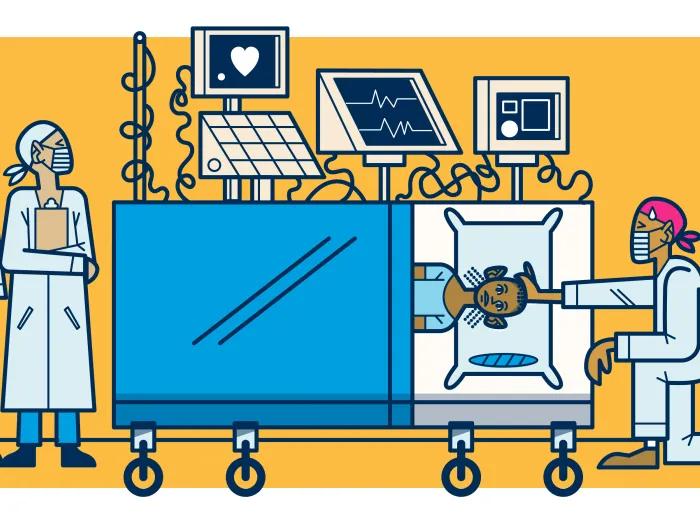
Children who suffer cardiac arrest more likely to survive at ECMO capable hospitals
Would you know if your kid was vaping?
ECMO offers sickest COVID patients a chance to survive, but a slimmer one than previously thought