Michigan Dialysis Services

A UM clinical partnership with Fresenius Medical Care
There’s a basic level of care that every dialysis clinic provides. Then there’s the care we promise you at Michigan Dialysis Services (MDS). We surround you with a professional staff that includes a greater presence of physicians and advanced practice providers than our competitors – one of many advantages of being associated with a world-class research hospital. That association also ensures that cutting-edge treatments and technologies will come your way first.
Working side by side with our doctors are nurses, social workers, dietitians, technicians and others who are highly trained in their professions and in providing the personal touch that makes you feel welcomed, comfortable and cared for. Personal and professional: Isn’t that what you want in a dialysis provider? It’s a promise we deliver on every day.
NOTE: Michigan Dialysis Services is a joint venture between U-M Health and Fresenius Medical Care.
Hemodialysis
Hemodialysis, which uses a machine to move your blood through a filter outside your body, can be delivered in two settings: at our clinic or in your home.
If you choose to be treated at one of our clinics, you will:
- Have frequent contact with physicians, nurses and other medical professionals and be dialyzed by technicians who are with you during treatment.
- Interact with other people going through the same thing you are
- Come to the clinic three days a week on a set schedule
In-center treatment may be the best choice for you IF:
- There’s no one at home to help
- You don’t want to be dialyzed every day
- You are uncomfortable with or unable to perform your own treatment
- You prefer to be closely monitored by dialysis professionals
- You don’t want to have medical supplies and equipment in your home
Patients who choose in-center dialysis come to the clinic three times a week on alternating days – either Monday/Wednesday/Friday or Tuesday/Thursday/Saturday. The average treatment time lasts for four hours. While here, you can meet with your physician or physician assistant and interact with nurses, technicians and other professionals. To pass the time, you can read, watch TV, listen to music or use a computer. (Free Wi-Fi is provided.)
If you choose to be treated at home, you will:
- Be freer to move around and to control the times of day you are treated
- Experience fewer ups and downs in how you feel, because of the shorter time between sessions
- Be seen monthly at our clinic by our treatment team
At-home treatment may be the best choice for you IF
- You are comfortable performing or helping to perform your own treatment
- You want more flexibility in the times of day you are dialyzed
- You don’t want to travel to the clinic more than once a month unless needed
Patients who choose at-home dialysis typically perform their treatments four to seven days a week. (Home Hemodialysis will require a friend or family member to help – a process that requires four to six weeks of training.) You’ll be expected to visit the clinic once a month or as needed to enable the medical staff to monitor your condition, though you are free to contact the clinic by phone at any time you have questions.
Peritoneal Dialysis
Peritoneal dialysis (PD), which involves filling the lining of your belly with a sterile solution to filter your blood, is conducted at home.
If you choose PD, you will:
- Have no need for a partner
- Be freer to control the times of day you are treated
- Experience fewer ups and downs in how you feel, because of the shorter time between sessions
- Enjoy fewer diet restrictions
- Be seen monthly at our clinic by our treatment team
- Be able to dialyze while you sleep
Contact Us
- Ann Arbor: (734) 677-1490
- Livonia: (734) 432-7870
- Canton: (734) 844-0137
*If English is your second language or you’re unable to hear, you can request an interpreter to communicate for you. Ask the clinic receptionist to schedule a U-M Health medical interpreter for your next appointment. These services are free.
Frequently Asked Questions
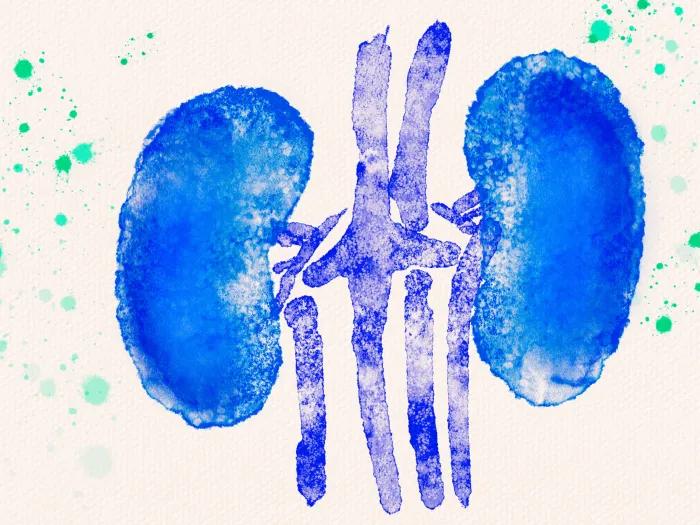
The kidneys are two bean-shaped organs, each about the size of your fist. They are located in the middle of your back, just below your rib cage, on either side of your spine.
These organs serve a number of purposes. The most important is that they filter your blood, then return the clean blood to your circulation system and send waste products – such as extra salt, minerals and toxins – out of your body through your urine.
Chronic kidney disease (CKD) is diagnosed when your kidney function gets worse over time. This can happen as a result of diabetes, high blood pressure and other conditions.
Your physician can test you on an ongoing basis to see how your disease is progressing. If you reach a point of losing 85 to 90 percent of your kidney function, you may feel very bad – a sign that waste products are building up in your body. This is called end stage kidney failure. At this stage, you will need dialysis or a transplant to survive.
Dialysis is a way of cleaning your blood when your kidneys can no longer do the job. There are two kinds of dialysis. In hemodialysis, you are connected through an artery to a machine that removes your blood for filtering then returns it. In peritoneal dialysis, your belly cavity – whose lining acts as a natural filter – is filled with a sterile solution that pulls waste products from the body.
That depends on a number of factors. You can ask your physician to refer you to the University of Michigan Transplant Center for an evaluation.
Transplant Center
If kidney transplantation becomes a treatment option, ask your physician to refer you to the U-M Health Transplant Center for an evaluation.
Locations
-
Canton Dialysis Center 275 N Canton Center Road
Canton, MI 48187Get Directions -
Dialysis Clinic | Eisenhower Corporate Park 2850 S Industrial Hwy Ste 100
Ann Arbor, MI 48104-6796Get Directions -
Livonia Center for Specialty Care 19900 Haggerty Road
Livonia, MI 48152Get Directions
News & Stories

The Kidney Warning Signs You’re Missing— And Why Waiting is Dangerous

The quiet warning signs your kidneys may be signaling
Medicare's New GLP-1 Bridge Program

Kidney transplant recipient celebrates 10 year anniversary at Transplant Games
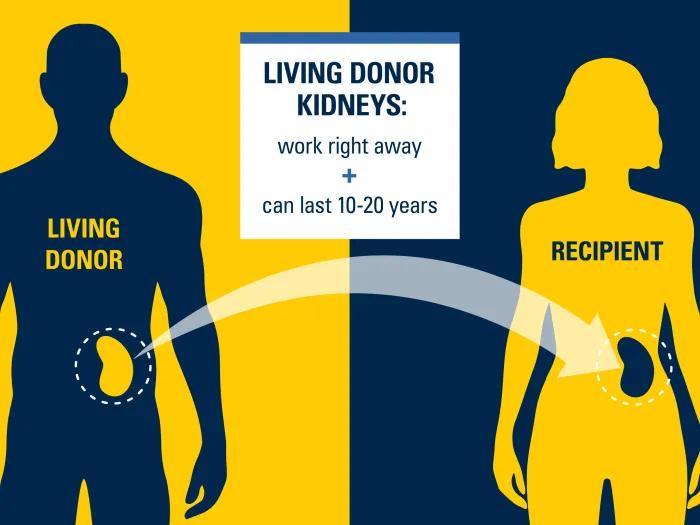
Making a difference with living donor kidney organs