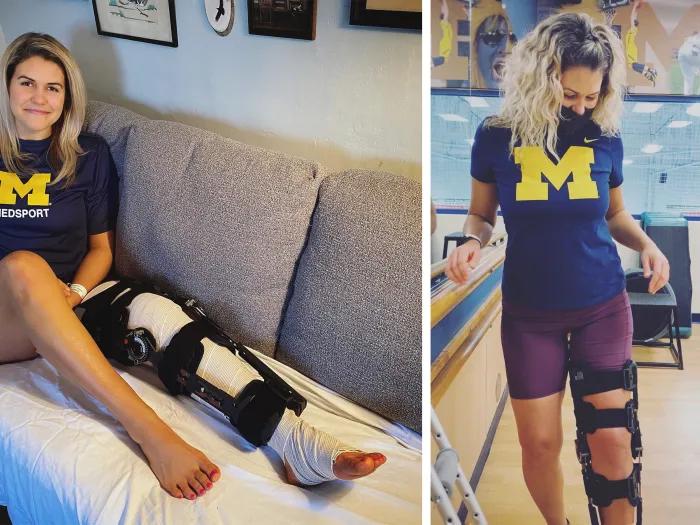
Patellofemoral Instability
Patellofemoral Instability
What is patellofemoral instability?
Patellofemoral Instability is a condition where the kneecap (patella) slips out of place from its normal position. It may slip partially (subluxate) or completely (dislocate) causing pain and swelling. If it comes completely out of place, it is also called a patella dislocation. Often there is a sense of the knee buckling or giving way and, in some instances, there may be the feeling and sound of pop or clunk. Occasionally the kneecap may be seen visibly of place. These events are often painful.
After this occurs, if the kneecap is in its normal position, the treatment is usually rest, ice, pain relievers, bracing, and physical therapy. If the kneecap is out of place, it may require urgent medical care to have it put back into position (reduced). Generally, most children improve with conservative (non-surgical) treatment. Your clinician will do a knee exam and obtain an X-ray (picture of the bones). In some cases, magnetic resonance imaging (known as MRI) may be needed to evaluate deep structures. If the patellofemoral instability continues to happen or is very severe surgery may be considered.
Patellofemoral instability is most common in adolescents ages 10-18, although it can occur in younger ages too.
What causes patellofemoral instability?
- Anatomic differences: The femur (thigh bone) may not have a deep enough groove for the kneecap (a condition called trochlear dysplasia) or the kneecap may sit too high (a condition called patella alta).
- Weak or tight muscles: If the muscles around the knee are weak (quadriceps muscle) or the tissue is too tight toward the outside of the knee, the kneecap may not glide properly.
- Loose joints: Some people are loose jointed which allows the kneecap to slide easily out of place. This can be something you are born with, or it can develop in the kneecap after an injury.
- Improper alignment: If the femur and tibia (shin bone) are not in good alignment, sometimes the patella doesn't move properly with motion of the joint.
- Genu valgum, also known as knock knees, is an alignment when the knees touch but the feet are apart when standing.
- Femoral anteversion is when the top of the thigh bone points in a forward direction, making the femur have an inward rotation. Children with anteversion can easily sit in a “W” position.
- External tibial torsion is when the shin bone has an outward twist
Types
- Patellar subluxation (partial slip)
- Patella dislocation (complete slip)
- Traumatic: Most often it is related to a traumatic event such as a fall or twist of the knee.
- Recurrent: If the slip occurs more than once it is called recurrent instability.
- Habitual: This is if the slip happens involuntarily every time the knee flexes to a certain angle.
- Congenital: In rare instances a young child has a kneecap that is permanently out of place.
Our Approach
Children who present with patellofemoral instability will have a thorough physical evaluation. A knee exam will be performed to evaluate the kneecap position and watch how it moves as the knee is bent and straightened and when your child walks or changes positions. In addition, they will have an overall evaluation of the limb alignment, muscle strength, and the clinician will take into consideration of any other medical conditions that might contribute. These other conditions could be loose ligaments in the body, imbalance of muscle strength, or any other developmental or congenital differences.
At the time of the visit the clinician will decide if imaging is needed, which is usually an X-ray to see the bone. In some children, but not all, they may recommend an MRI. Most of the time the clinician will start treatment right away with a referral to physical therapy and bracing. They will also provide instructions to assist with mobility at school and temporary limitations for gym class and sports. Crutches may be recommended if there is concern of deep injury to the bone (such as a crack or fracture) or if walking is difficult.
The clinicians at U-M Health have a collaborative approach with physical therapists and communicate about progress and improvement in the knee and make sure the teams all agree when it is time to allow activities and sports. And if the knee is just not getting better the team will share that information as well.
In some instances when patellofemoral instability is severe, the clinician might recommend surgery. Our surgeons are nationally known for their expertise in this condition. The surgical steps will be individualized to the child based on the severity of the condition, their age and how the kneecap glides and moves in the body. For all children, the goal is to improve the function of the knee, so the pain goes away and the child gets back to doing the things they love to do.
Appointment Information
To make an appointment, please reach out to our team to schedule with one of our knee experts. At your first appointment we will start with a comprehensive history and physical exam as well as obtain any needed x-rays. Your clinician will discuss your goals, and an individualized care plan will be created.
What are the symptoms of patellofemoral instability?
- Knee shifting or being unsteady: A partial or full slip may be associated with a sense of the knee being unsteady or buckling. It can cause the leg to give out. In severe cases it can lead to a fall.
- Knee clunk or slip sensation: The kneecap can slide out of the groove and clunk. This can cause pain.
- Knee locking: If the kneecap slides out of place it may get stuck and need to be put back. This can also be associated with a visible deformity.
- Knee swelling: The kneecap slipping can irritate the inside of the knee joint and cause internal bleeding which leads to a swollen knee joint.
- Pain: the kneecap slip can bruise the bone inside the knee and stretch tissue when is
slides. This can cause pain around the kneecap.
How is patellofemoral instability diagnosed?
The provider will perform a comprehensive exam asking about your child’s symptoms, medical history, and physical activity levels.
Next, the clinician will perform a physical exam, which may include:
- Palpation (feeling around the knee and leg), range of motion, knee stability and strength testing.
- Your clinician will examine leg alignment and watch your child move the knee or walk to determine if they suspect improper strength or alignment as a cause.
Other Tests: At times, to confirm the diagnosis and rule out other possible conditions, your child might need additional tests. These tests may also be used to create an individualized treatment plan, especially if surgery is being considered.
- X-rays: This is a picture of the bone. It will show if there are any bone problems or alignment issues in the knee joint. It’s a simple and quick test that can help rule out fractures (cracks in the bone), significant malalignment, or other bone-related issues.
- MRI (Magnetic Resonance Imaging): If the provider is looking to better see the internal structures of the knee joint an MRI might be ordered. It is used to look for damage to structures such as cartilage or ligaments. It also shows the knee joint in 3 dimensions which is helpful for understanding how the kneecap functions in the knee.
- CT (Computed Tomography): This scan is a test that helps to look at the bones and alignment closer if there are concerns for significant malalignment. This also shows the bone in 3 dimensions.
How is patellafemoral instability treated?
Often treatment is conservative (nonsurgical):
- Rest and Activity Modification: Sometimes crutches are needing if walking is difficult. Reducing activities that put pressure on the knee give the knee time to rest. This will allow any swelling or pain to resolve.
- Physical Therapy and Home Exercise: A physical therapist can teach exercises that strengthen the muscles around the knee to help stabilize the kneecap. Stretching the muscles, especially those around the hip and thigh, are important for overall flexibility. Exercise both at physical therapy and/or at home are important to prevent repeat events.
- Ice and Elevation: Applying ice packs for 15-20 minutes after activity can help reduce swelling and pain.
- Knee Bracing or Taping: In some cases, these can help to support the knee and while recovering.
- Medications: Over-the-counter pain relievers like ibuprofen or acetaminophen can help reduce pain and inflammation. Topical anesthetics can also help with severe pain.
- Proper Sports Preparation: Make sure to increase activity levels gradually once you are cleared by your clinician to get back to activities.
Surgical Treatment
- Repeat dislocations: If the kneecap repeatedly slides out of place your clinician may recommend surgery, so it does not continue to happen. The type of surgery may vary based on age, the unique anatomy of the bones, muscles, and ligaments of the knee. The procedure may include building a ligament to hold the kneecap in place. In some people the surgery may also involve lengthening tight structures that pull the kneecap out of place.
- Loose body: If there is concern of a chipped piece of bone or cartilage (called a loose body) floating in the knee after the kneecap slips, surgery may be needed to repair or remove it. This is often treated by making small pokes in the skin and inserting a camera into the knee joint (arthroscopy). It is often followed by the surgery to hold the kneecap in place to prevent another kneecap dislocation.
- Severe Malalignment: If the clinician notices severe malalignment, a surgery may be recommended to prevent future problems in the knee later in life. In children who are still growing, this could be a minimally invasive surgery to guide the growth into proper alignment, and in those who are done growing it may be a surgery to realign the bone.
Research
Our team has cared for thousands of children with patellofemoral instability. We have specialized expertise in both non-surgical and surgical management. Our providers are national and international experts in the surgeries for this condition, and we actively participate in some of the leading research looking to better understand and treat patellofemoral instability in pediatric patients.
Locations
-
Orthopaedic Sports Medicine Program | Domino's Farms 24 Frank Lloyd Wright Dr Ste 1000
Lobby A
Ann Arbor, MI 48105-9484Get Directions -
Orthopaedic Surgery Clinic | Brighton Center for Specialty Care 7500 Challis Rd
Entrance 1, Level 1
Brighton, MI 48116-9416Get Directions -
Pediatric Orthopaedics Clinic | Trinity Health Oakland Hospital 44555 Woodward Ave., Suite 505
Pontiac, MI 48341Get Directions -
Pediatric Orthopaedic Surgery Clinic | Northville Health Center 39901 Traditions Dr
Floor 1
Northville, MI 48168-9493Get Directions -
Pediatric Orthopaedic Surgery Clinic | Northville Health Center 39901 Traditions Dr
Floor 1
Northville, MI 48168-9493Get Directions
Doctors

Eileen Aidan Crawford, MD
Clinical Associate Professor
Orthopedic Surgery, Sports Medicine

Kristina Sinacori Walick, MD
Clinical Assistant Professor
Orthopedic Surgery, Pediatric Orthopedics
Providers

Kimberly Anne Veres Hannah, PA-C
Physician Assistant
Physician Assistant

McKenzie L Jones, PA-C
Physician Assistant
Physician Assistant
Antonette Nicole Krebs, PA-C
Physician Assistant
Physician Assistant

Donald Lawson, NP
Advanced Practice Nurse
Nurse Practitioner
Olivia Rose Mears, PA-C
Physician Assistant
Physician Assistant
News & Stories

A concussion expert and football father discusses why he values teamwork over zero-risk
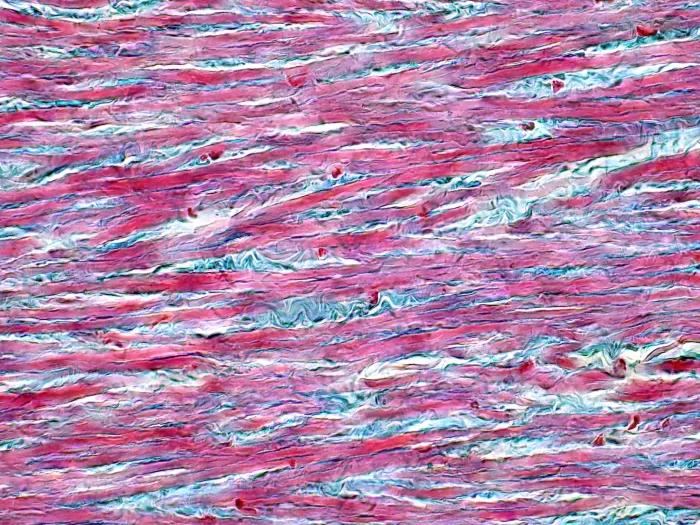
Why tendons heal so poorly and how researchers hope to fix them

A Gift to Benefit All: Bill and Sally Martin’s Visionary Support for Sports Medicine
Gift launches new sports medicine institute at Michigan Medicine
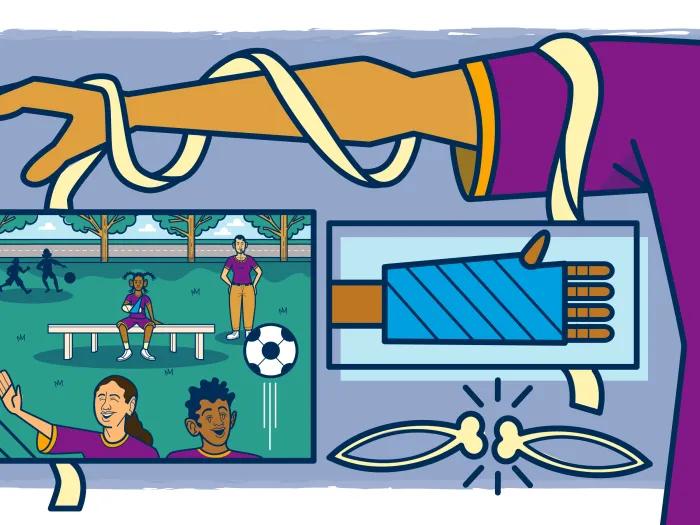
Properly treating, and recovering, from pediatric sports injuries