Mesenteric Vascular Disease
Mesenteric Vascular Disease
What is mesenteric vascular disease?
Mesenteric vascular disease is a condition that develops when the arteries in the abdomen that supply the intestines with blood become narrowed due to the build-up of plaque (a process called atherosclerosis). The result is a lack of blood supply to the intestines. The disease can come on suddenly with severe abdominal pain or may develop over time.
Risk factors for mesenteric vascular disease include atrial fibrillation, heart failure, chronic renal failure, smoking, a family history of atherosclerosis, high blood pressure, diabetes, high cholesterol, advanced age, obesity and a sedentary lifestyle.
Our Approach
Clinicians at the University of Michigan Frankel Cardiovascular Center are experts in the diagnosis and treatment of mesenteric vascular disease.
Treatment is focused around a multidisciplinary approach and includes specialists from nephrology, interventional radiology, intensive care and vascular surgery. This means multiple specialists can be seen in a single visit and treatment strategies are a coordinated effort between every physician involved in the patient’s care.
Appointment Information
Visit our Make an Appointment page for more information on our care and services.
What are symptoms of mesenteric vascular disease?
Patients with mesenteric artery disease often experience weight loss and severe abdominal pain following meals. Other symptoms include vomiting, dizziness and low blood pressure due to accumulation of acid in the blood.
How is mesenteric vascular disease diagnosed?
Diagnosis is typically made through ultrasound or direct imaging of the artery. Imaging tests include CT scan, magnetic resonance angiography (MRA) or an arteriography, which can be used to determine the location and the extent of the disease.
How is mesenteric vascular disease treated?
Patients whose symptoms are mild to moderate can often manage their disease by making lifestyle changes that include: quitting smoking, getting regular exercise and managing related conditions such as diabetes, high blood pressure and high cholesterol.
Surgical Options
- Endarterectomy: Involves the surgical removal of plaque build-up on the inner lining of the artery.
- Bypass Grafting: Redirects blood flow around an area of blockage. The procedure creates an alternate channel for blood flow, bypassing an obstructed or damaged vessel. The graft may come from a healthy section of the patient's own vein, or from a synthetic material such as Dacron™.
Endovascular Options
- Balloon Angioplasty and Stenting: A catheter with a small balloon at the end is inserted through an artery in the groin and guided to the narrowed segment of the artery. When the catheter reaches the blockage, the balloon is inflated to widen the narrowed artery (known as balloon angioplasty). In some cases, it may be necessary to place a stent (a wire-mesh tube that expands to hold the artery open). The stent is left permanently in the artery to provide a reinforced channel for blood flow.
Locations
-
Cardiology Clinic | Frankel Cardiovascular Center 1425 E Ann St
Floor 3 Reception C
Ann Arbor, MI 48109-5856Get Directions -
Vascular Surgery Clinic | Frankel Cardiovascular Center 1425 E Ann St
Floor 3 Reception B
Ann Arbor, MI 48109-5856Get Directions
Doctors

Geoffrey Douglas Barnes, MD, MSc
Associate Professor
Cardiovascular Disease, Internal Medicine

Robert John Beaulieu, MD
Clinical Associate Professor
Vascular Surgery

Craig Stanton Brown, MD
Clinical Assistant Professor
Vascular Surgery

Frank Michael Davis, MD
Assistant Professor
Vascular Surgery

Jonathan Lee Eliason, MD
Professor
Vascular Surgery, Surgery

James Barklow Froehlich, MD
Clinical Professor
Cardiovascular Disease, Internal Medicine

Santhi Kalaichelvi Ganesh, MD
Professor
Cardiovascular Disease, Internal Medicine

Peter Kerr Henke, MD
Professor
Vascular Surgery, Surgery

Nicholas Harold Osborne, MD
Associate Professor
Vascular Surgery, Surgery

Nimesh Anantlal Patel, MD
Clinical Assistant Professor
Vascular Surgery, Surgery
News & Stories

Young father survives aortic dissection after delayed diagnosis
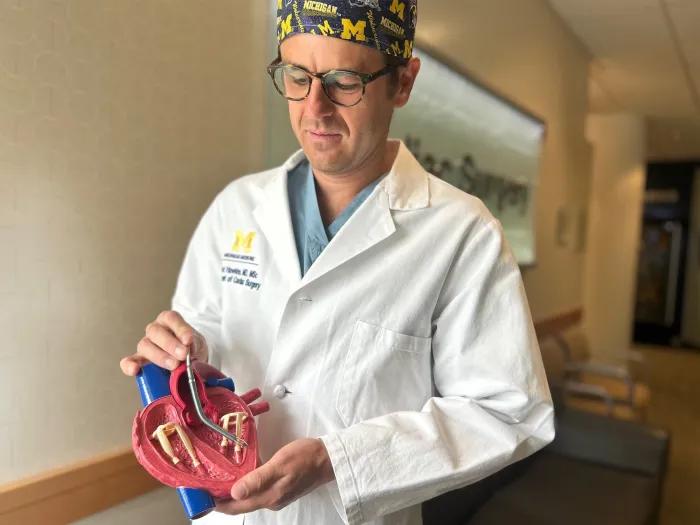
How a temporary heart pump can support high risk cardiac surgery

A heart attack 9 days after giving birth: Mother of 4 shares her SCAD experience

A night of two national titles for U-M, as scientists and basketball players both triumph
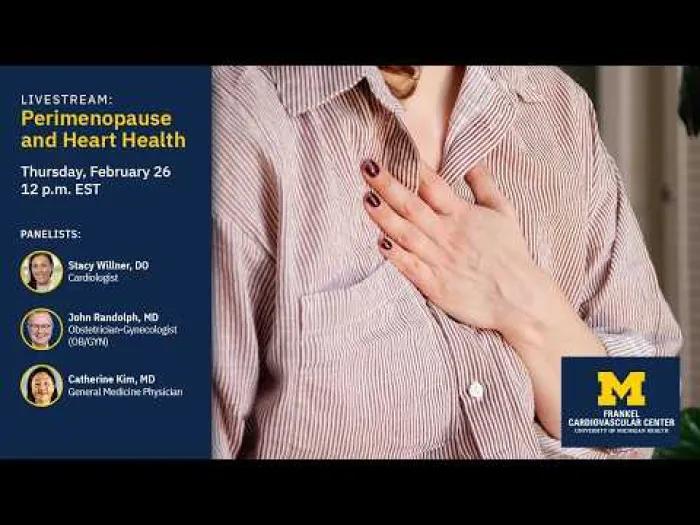
Perimenopause and heart health: What you need to know