LASIK Surgery
LASIK Surgery
What is LASIK surgery?
The goal of Laser in-situ keratomileusis (LASIK) is to reduce dependency on glasses or contact lenses by reshaping the cornea. Light passes through the lens and cornea and is focused onto the retina, a thin layer of tissue at the back of the eye. If light does not hit the retina properly, your vision is blurry and you have a refractive error. Depending on the degree of your refractive error and the physical attributes of your eyes, our physicians will recommend a specific procedure that will give you the best correction possible.
A good candidate for LASIK is over the age of 21, has had a stable prescription for 6 months; is nearsighted up to 20 diopters, farsighted up to 4 diopters, or has astigmatism up to 5 diopters; is not pregnant or nursing; and has no history of herpes infection in the eye, keratoconus, advanced glaucoma or cataracts.
How is LASIK performed?
Laser in-situ keratomileusis (LASIK) is surgery to improve how well you can see. It reshapes the outer part of your eyeball called your cornea. This can fix vision problems in one or both eyes. These problems include nearsightedness, farsightedness, and astigmatism.
To do the surgery, the doctor first cleans your eye and puts drops in it. The drops numb your eye. Then the doctor uses special tools to keep your eye open and to put pressure on your cornea. With a blade or laser, the doctor cuts a flap in your cornea. With another laser, the doctor reshapes the cornea and then puts the flap back. Then the doctor puts more drops in your eye and covers it with a clear shield.
The surgery takes about 10 to 20 minutes. Before surgery, you may get medicine to help you relax. During surgery, you may feel pressure in your eye. After surgery, your eyes may burn or itch. You may feel like there is something in your eye. Your eye may also water more than usual.
You may see better as soon as the surgery is over. Or things may look blurry for a few days. You will probably be able to go back to work or your normal routine in 1 to 3 days.
For some people, it takes 3 to 6 months to see as clearly as possible. But most people no longer need glasses or contact lenses.
Appointment information
We’re always happy to answer your questions or help you schedule an appointment. Call us at 734-615-8441 or email [email protected].
How do you prepare for LASIK?
Surgery can be stressful. This information will help you understand what you can expect. And it will help you safely prepare for surgery.
Preparing for surgery
- Be sure you have someone to take you home. Anesthesia and pain medicine will make it unsafe for you to drive or get home on your own.
- Understand exactly what surgery is planned, along with the risks, benefits, and other options.
- If you take a medicine that prevents blood clots, your doctor may tell you to stop taking it before your surgery. Or your doctor may tell you to keep taking it. (These medicines include aspirin and other blood thinners.) Make sure that you understand exactly what your doctor wants you to do.
- Tell your doctor ALL the medicines, vitamins, supplements, and herbal remedies you take. Some may increase the risk of problems during your surgery. Your doctor will tell you if you should stop taking any of them before the surgery and how soon to do it.
- Make sure your doctor and the hospital have a copy of your advance directive. If you don’t have one, you may want to prepare one. It lets others know your health care wishes. It’s a good thing to have before any type of surgery or procedure.
Post-procedure
Laser in-situ keratomileusis (LASIK) is surgery to improve your vision. The doctor used surgical tools to keep your eye open and to apply pressure to the outside layer of your eyeball (cornea). The doctor used a special blade or laser to cut a flap in your cornea. Another laser was used to remove or reshape your eye tissue. Then the doctor put the flap back, added drops to your eye, and placed a clear, protective shield over your eye.
Your eye may burn, itch, be teary, or feel like there is something in it for 3 or 4 days after surgery. But it's important not to rub your eye. Rubbing your eye could damage it.
You will probably be able to return to work or your normal routine 1 to 3 days after surgery. For a few days, you may have blurry vision or watery eyes. Your eyes may be bloodshot for up to 3 weeks. This is because LASIK surgery can cause small blood vessels in your eye to break. Some people also find that they are sensitive to light or see starbursts or halos for 1 to 3 weeks after surgery.
If you have eye pain, your doctor may prescribe drops or medicines. You can expect your eye to get better each day, but it may feel dry for 1 to 3 months after surgery. Over-the-counter or prescription eyedrops can help with dryness.
For some people, it takes 3 to 6 months to get the full benefits of surgery and to see as clearly as possible.
What are the risks of LASIK?
The risk of complications from LASIK surgery is low and decreases with a more experienced surgeon. Look for a corneal specialist or surgeon who does the surgery often.
Complications and side effects from LASIK may include:
- Clouded vision (clouding of the cornea caused by inflammation during healing). This usually goes away on its own. But your doctor may give you medicine or do a procedure to relieve the inflammation.
- Night vision problems, such as halos. (These are often described as a shimmering circle around light sources such as headlights or street lamps.)
- Glare, or being more sensitive to bright light.
- Double vision (diplopia), usually in one eye.
- New astigmatism caused by wrinkling in the corneal flap or other flap complications.
- Loss of best corrected vision. (This is the best possible vision you can achieve using glasses or contact lenses.)
- Overcorrection or undercorrection.
Serious vision-threatening complications are rare but may include:
- Infection of the cornea (keratitis).
- Elevated pressure inside the eye (intraocular pressure) leading to glaucoma.
Patient Resources
For more information, check out the following videos and articles:
Locations
-
Cornea & Refractive Surgery Clinic | Kellogg Eye Center 1000 Wall St
Elevator B Floor 3
Ann Arbor, MI 48105-1912Get Directions
Doctors

Pauline Dmitriev, MD
Clinical Assistant Professor
Ophthalmology

Farida Esaa Hakim, MD
Clinical Assistant Professor
Ophthalmology
Christopher Thomas Hood, MD
Clinical Associate Professor
Ophthalmology

Jennifer Yeong-Hua Li, MD
Clinical Instructor
Ophthalmology
Shahzad Ihsan Mian, MD
Professor
Ophthalmology
News & Stories
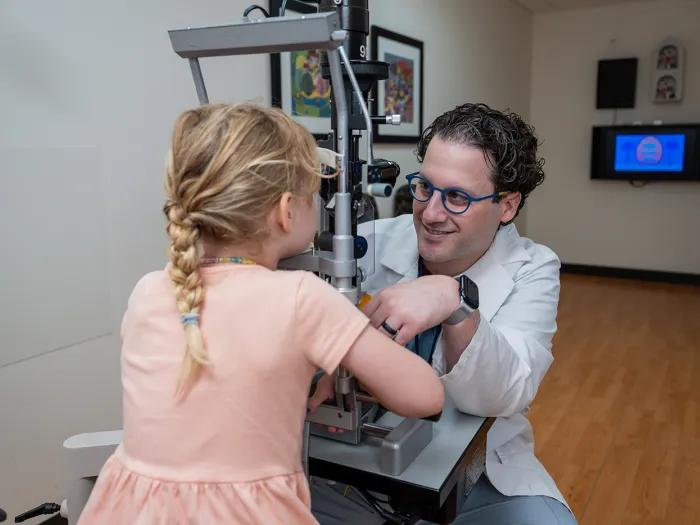
Innovative children’s vision research gets a boost from the Knights Templar Eye Foundation
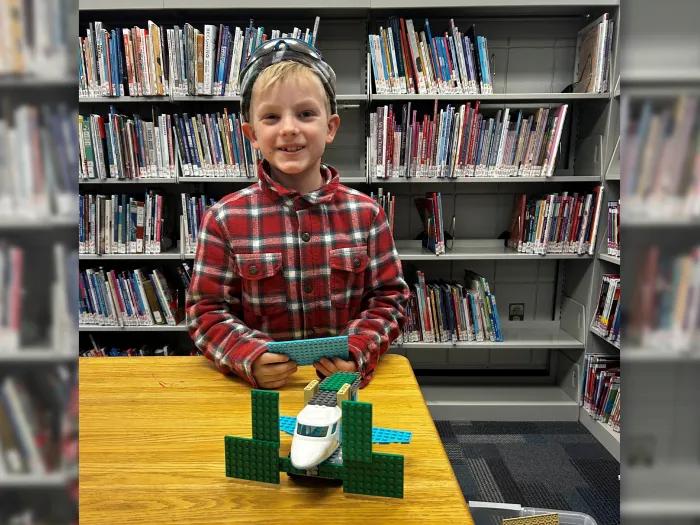
Nerf gun accident causes retinal detachment in pediatric patient

Kellogg care inspires gift to vision research

Mediterranean diet can slow progression of age-related macular degeneration

Patient with retinitis pigmentosa receives new hope at Kellogg’s low vision clinic