W.K. Kellogg Eye Center
Discover the Kellogg Eye Center—where leading-edge care, innovative research, and expert training come together to protect sight and transform lives.
The University of Michigan Health W.K. Kellogg Eye Center is a nationally recognized leader in vision care, research, and education, dedicated to improving lives through the prevention, treatment, and cure of eye disease. With a team of renowned ophthalmologists, scientists, and educators, we deliver compassionate, patient-centered care backed by the latest scientific advancements.
At the Kellogg Eye Center, we combine clinical excellence, pioneering research, and a deep commitment to training future eye care professionals. From restoring sight with advanced treatments to exploring new ways to protect vision, our mission is simple: helping people see a brighter future.
Schedule Care or Refer a Patient
Leading the Future of Eye Care
The Kellogg Eye Center's mission has three goals: providing excellent patient care for vision problems, researching better treatments for eye diseases, and training future eye doctors. This helps us improve eye care now and for the future.
Patient Care
At the Kellogg Eye Center, we are committed to compassionate, expert care that protects and restores vision, helping every patient see their world more clearly.
Research
The U-M Department of Ophthalmology is dedicated to advancing the science of vision, turning discoveries into innovations that bring hope and sight to people around the world.
Education
The U-M Department of Ophthalmology provides exceptional education and training, preparing the next generation of eye care leaders with the skills and knowledge to transform patient care.
Compassionate Vision Care Starts Here
Michigan's #1 Eye Hospital
Year after year, Kellogg Eye Center is recognized as one of the nation’s top eye care centers. Ranked #8 in the U.S. and #1 in Michigan by U.S. News & World Report, we’re proud to deliver world-class ophthalmology care close to home.
Take the Next Step
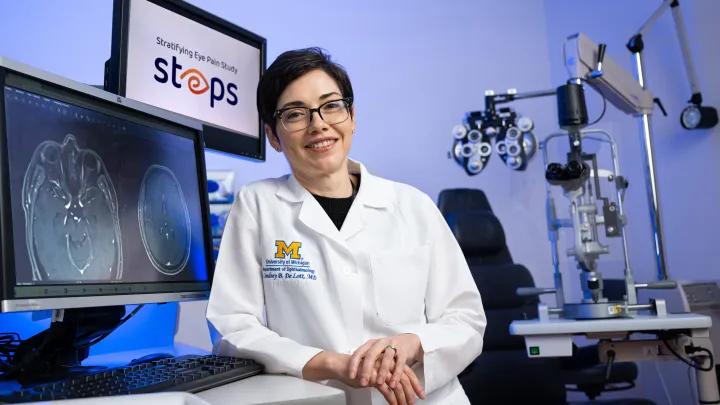
Schedule an Appointment
Call us at to schedule an appointment at a Kellogg Eye Center location, either at the center or at one of our community clinics.
Visit our Make an Appointment page for more information.
Please note: some specialty services require a physician referral. We can help you through this process.
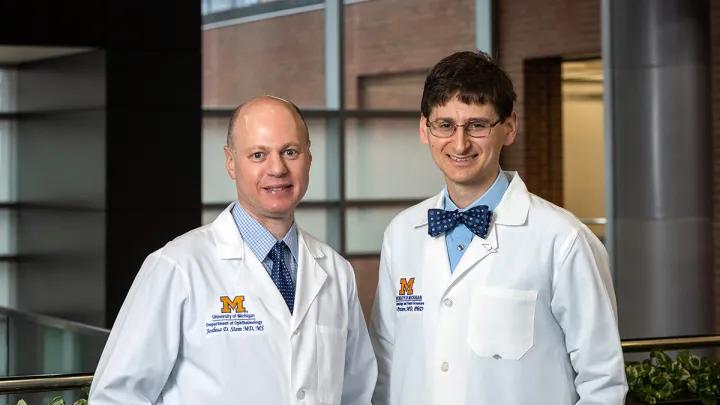
Find a Kellogg Doctor
Looking for the right eye care specialist? The Find a Doctor tool makes it easy to search for expert providers by name, specialty, or location—so you can connect with the care you need, close to home.
Search by name, location or service.
For physicians who want to refer a patient or consult with a specialist at the Kellogg Eye Center:
- Call MLine at 800-962-3555
- Visit our Refer or Transfer a Patient page for additional information and resources
Vision Correction That Fits You
Glasses, contact lenses, and LASIK are effective options to help you achieve your best vision. Whether you prefer the ease of glasses, the flexibility of contacts, or the long-term freedom of LASIK, each solution is tailored to fit your lifestyle and visual needs. Our team is here to help you find the option that's right for you.

Refractive Surgery
For many people, refractive surgery offers tremendous benefits: clearer vision and freedom from – or reduced dependence on – glasses. But, there is a lot to consider before you choose refractive surgery or any other form of vision-correcting surgery.

Glasses
- Visit a Kellogg Optical Shop
Our opticians custom fit eye glasses that correct for all prescriptions
Give the Gift of Vision
When you give to the Kellogg Eye Center you give the gift of vision to a child, a parent, a colleague.
Michigan Answers
Michigan Answers blend over a century of teaching, research, and patient care with a passion for transforming lives, pushing the limits of what's possible. They inspire confidence, hope, and the pathway to breakthroughs.
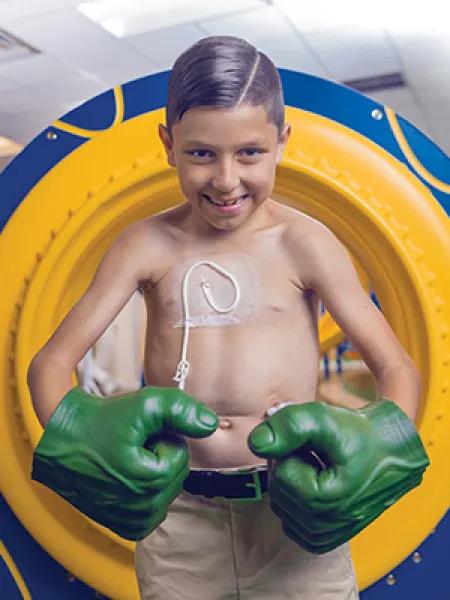
Bentley's Michigan Answer
Bentley's Michigan Answer
As Marguerita Booth had never heard of a child being born with their organs on the outside of their body. And yet as she lay in the darkened room of her first ultrasound of her first pregnancy, she was suddenly introduced to a condition that surprisingly affects 1 in every 3600 babies.

Kade's Michigan Answer
Kade's Michigan Answer
Alone. Scared. Never knowing who to trust or where to turn for help. That’s how Kade Fitzgerald of Jackson, Michigan lived the first 32 years of his life. Assigned female at birth, Kade knew at age 6 that he was meant to be a man.
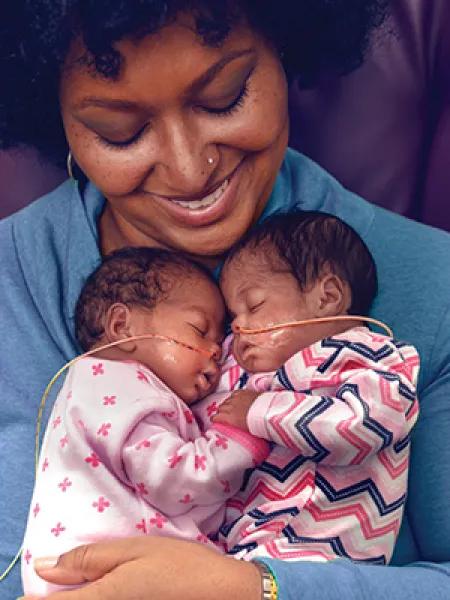
Merriah and Melliah's Michigan Answer
Merriah and Melliah's Michigan Answer
Few moments eclipse the joy of discovering that you’re pregnant with twins. But for 37-year-old Merrick and 37-year-old Mychal, the news that they’d be having fraternal girls with an expected delivery date of Christmas Day 2020 made the news even more exciting.

Carter's Michigan Answer
Carter's Michigan Answer
Carter Hilton celebrated his sixth birthday by doing what he loves most: running around his backyard, dancing with his younger brother, and being chased throughout the house by his mom. It helps that Carter is a naturally exuberant child. It also helps that Michigan Medicine performed the first in-womb spina bifida surgery in Michigan nearly four months before Carter was born.

Sierra's Michigan Answer
Sierra's Michigan Answer
Imagine two patients. Both the same age and height. The same gender and race. Both have a similar medical history. Two people, almost identical in every way. So, why does one of them, seemingly at random, develop diabetes?
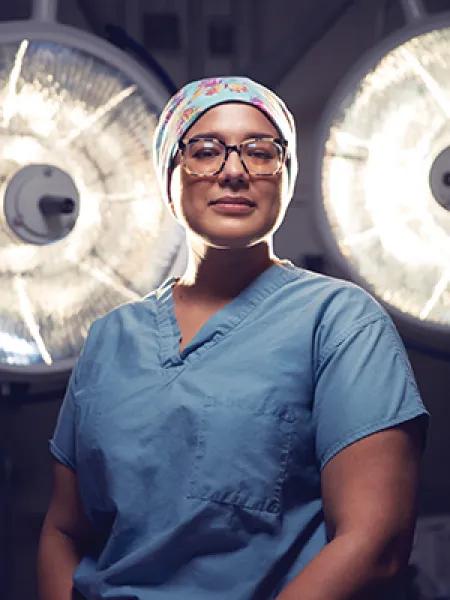
Dr. Valbuena's Michigan Answer
Dr. Valbuena's Michigan Answer
Most aspiring physicians study medicine with the hopes of saving lives, being on the cutting edge of research, or developing the latest therapies and technologies. For Dr. Valeria Valbuena, it was all of the above, plus one additional life-affirming goal.

Dr. Vydiswaran's Michigan Answer
Dr. Vydiswaran's Michigan Answer
What if the true power of social media isn’t found in a like, tweet or follow? For an emerging field of research taking place at Michigan Medicine, it’s the data inside social media that may have the power to give patients bigger answers and better outcomes.
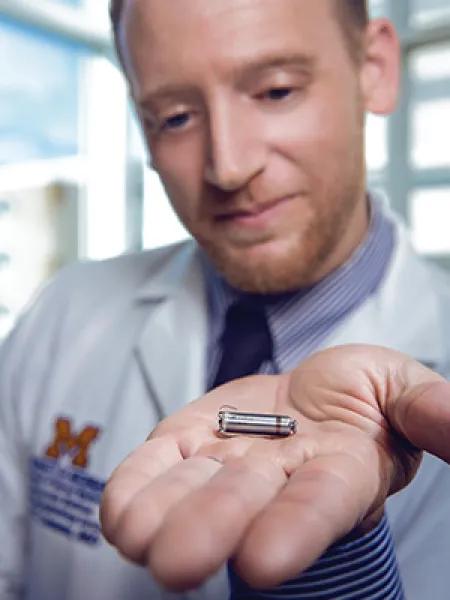
Dr. Cunnane's Michigan Answer
Dr. Cunnane's Michigan Answer
Since 1958, millions of lives have been saved by what could arguably be considered as medicine’s biggest breakthrough – the pacemaker. And while its technology has dramatically improved over the last 63 years, chief concerns regarding the pacemaker have always been that it was too big and bulky and that the wires leading from it would sometimes break. But in February of 2020, Michigan Medicine helped change all of that.
News & Stories

Commentary: Global health research makes America richer and healthier

Nerf gun accident causes retinal detachment in pediatric patient

Mediterranean diet can slow progression of age-related macular degeneration

Patient with retinitis pigmentosa receives new hope at Kellogg’s low vision clinic

Rare genetic eye disease treated with gene therapy helps 2 children see again