Colorectal Cancer
Colorectal Cancer
What is colorectal cancer?
Colorectal cancer happens when abnormal cells grow in your colon or rectum. These cells often form in growths called polyps. Not all polyps become cancer. Colorectal cancer is also called colon or rectal cancer, depending on where it's located. Your risk for colorectal cancer gets higher as you get older.
Appointment Information
The specialists at U-M Health Rogel Cancer Center work together to treat all types of colorectal cancer in our multidisciplinary clinics. Our specialist team offers access to expert diagnoses and the most advanced treatments for colorectal cancers. The multidisciplinary approach at Rogel Cancer Center ensures you benefit from our team’s years of training, skill and experience. Learn more on our colorectal cancer page.
If you have been diagnosed with colorectal cancer, or suspect you have it, please call 734-647-8902 to make an appointment. If you have questions, please contact our Cancer AnswerLine at 800-865-1125.
Healthcare professionals looking to refer a patient to our program, please call our M-Line at 800-962-3555.
What are the types of colorectal cancer?
- Anal cancer: The anus is the small flexible opening at the end of your GI tract. Our experts offer advanced treatment options for growths in the soft tissues of the anus.
- Colon cancer: When cells in the colon grow in ways that aren’t typical, polyps can occur. Our specialists routinely identify (and remove) polyps during colon cancer screening with colonoscopy.
- Rectal cancer: The rectum is the last part of your colon. Rectal cancer often requires a combination of medical and surgical treatments. Our surgeons, radiologists, medical oncologists and radiation oncologists work together to determine the best treatment for your needs.
What are the symptoms of colorectal cancer?
Colorectal cancer in its early stages usually doesn't cause any symptoms. Symptoms occur later, when the cancer may be harder to treat. The most common symptoms include:
- Blood in your stool or very dark stools.
- A change in your bowel habits. (You may have more frequent bowel movements or a feeling that your bowels aren't emptying completely.)
- Low energy (fatigue).
- Pain in the belly or rectal pain.
How is colorectal cancer diagnosed?
Determining tumor location and extent is critical to developing the best treatment plan. When appropriate, our expert radiologists use magnetic resonance imaging (MRI) to provide detailed views of the colon, rectum and anus to inform treatment options.
How is colorectal cancer treated?
Treatment for colorectal cancer is based on the stage and location of the cancer. It's also based on other things, such as your overall health. The main treatments are:
- Surgery. In most cases, the doctor removes part of the colon or rectum and sews the healthy ends back together. Sometimes a small area of cancer can be removed during a colonoscopy.
- Chemotherapy. These medicines kill fast-growing cells, including cancer cells and some normal cells. They may be given after surgery to help destroy any cancer cells that remain.
- Radiation therapy. This uses high-dose X-rays to destroy cancer cells and shrink tumors. It may be combined with surgery. Chemotherapy and radiation may be given together. (This is called chemoradiation.)
In some cases, targeted therapy or immunotherapy may be an option. A clinical trial may also be an option.
Your doctor will talk with you about your options and then make a treatment plan.
Questions about cancer?
Contact our Cancer AnswerLine™ at 800-865-1125. You'll talk to a nurse with years of experience in cancer care.
Locations
-
Multidisciplinary Colorectal Cancer Clinic | Rogel Cancer Center 1500 E Medical Center Dr
Level B1 Reception E
Ann Arbor, MI 48109-5912Get Directions -
Oncology Clinic | Brighton Center for Specialty Care 7500 Challis Rd
Entrance1, Level 1
Brighton, MI 48116-9416Get Directions
Doctors

Filip Bednar, MD, PhD
Associate Professor
Surgical Oncology, Surgery

John Charles Byrn, MD
Clinical Professor
Colon & Rectal Surgery, Surgery
OXANA V Crysler, MD
Clinical Assistant Professor
Medical Oncology, Internal Medicine

Kyle Clifford Cuneo, MD
Clinical Professor
Radiation Oncology
Donnele Daley, MD
Assistant Professor
Surgical Oncology, Surgery

Joseph Robert Evans, MD
Clinical Associate Professor
Radiation Oncology

Calista Marie Harbaugh, MD
Assistant Professor
Colon & Rectal Surgery, Surgery
John Christopher Krauss, MD
Clinical Associate Professor
Medical Oncology, Hematology, Internal Medicine

Gifty Kwakye, MD, MPH
Clinical Professor
Colon & Rectal Surgery, Surgery
Michael F McGee, MD
Clinical Associate Professor
Colon & Rectal Surgery, Surgery



Providers

Pamela Christine Fisher, PA-C
Physician Assistant
Physician Assistant
Ashleigh Nora Gamalski, PA-C
Physician Assistant
Physician Assistant
News & Stories

New oral nanomedicine boosts effectiveness of cancer immunotherapies

Blood-based multi-cancer screening tests: Ready for primetime?
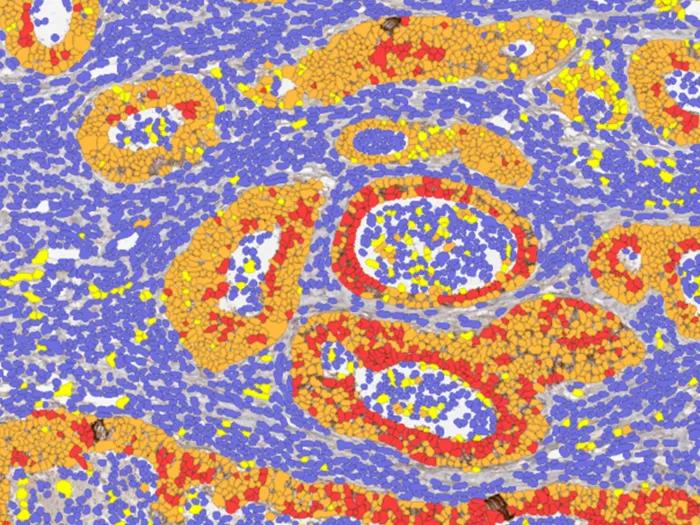
Study explains how colorectal cancer cells maintain high iron levels

Thriving after a rectal cancer diagnosis

Doctors perform first liver transplant in Michigan for colon cancer