Small Cell Lung Cancer
Small Cell Lung Cancer
What is small cell lung cancer?
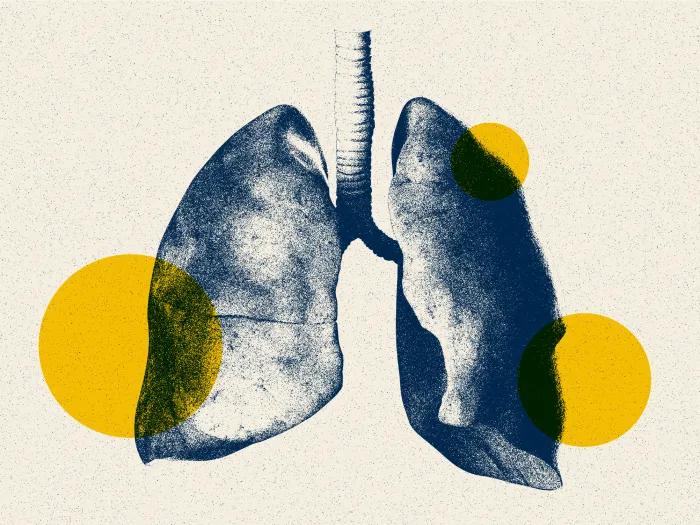
Small cell is a type of lung cancer that happens when abnormal cells grow out of control in the lungs. The cells form tumors and invade nearby tissue. The cancer usually starts in the breathing (bronchial) tubes in the lungs. Small cell lung cancer grows fast and can spread quickly.
About 10% to 15% of all lung cancers are small cell lung cancer (SCLC), named for the size of the cancer cells when seen under a microscope. Other names for SCLC are oat cell cancer, oat cell carcinoma, and small cell undifferentiated carcinoma. It is very rare for someone who has never smoked to have small cell lung cancer.
Appointment Information
The Lung Cancer Program evaluates and treats patients with known or suspected lung tumors and severe emphysema. Each week, a team of thoracic surgeons, medical oncologists, pathologists, radiation oncologists and other experts reviews each patient's case and provides a personalized treatment plan.
If you've been diagnosed with lung cancer, or suspect you may have it, please call 734-647-8902.
If you're referring a patient, please contact M-Line 800-962-3555.
For people with questions, please call our Cancer AnswerLine at 800-865-1125.
What are the symptoms of small cell lung cancer?
The first signs of early small cell lung cancer may include coughing, chest pain, wheezing, feeling short of breath, and fatigue. There may also be blood in the mucus that was coughed up. The symptoms of later stages can include swelling of the face. They also include hoarseness, trouble swallowing, and weight loss.
How is small cell lung cancer diagnosed?
A biopsy and chest X-rays are used to diagnose small cell lung cancer. You may have a CT scan and other tests. Your doctor will also do a physical exam. The doctor will ask about your symptoms, your past health, if you smoke or have smoked, and any family history of cancer.
How is small cell lung cancer treated?
Treatment for small cell lung cancer is based on the stage of the cancer and other things, such as your overall health. This cancer has two stages: limited stage and extensive stage. The main treatments for both stages are:
- Chemotherapy.
- These medicines kill fast-growing cells, including cancer cells and some normal cells. Chemotherapy and radiation may be given together. (This is called chemoradiation.)
- Radiation therapy.
- This uses high-dose X-rays to kill cancer cells and shrink tumors. It may help prevent or treat the spread of cancer to the brain.
- Immunotherapy.
- This treatment helps your immune system fight cancer. It may be given along with chemotherapy.
Sometimes other treatments are used, such as laser therapy or surgery. In some cases, a clinical trial may be a good choice.
Your doctor will talk with you about your options and then make a treatment plan.

Questions about cancer?
Contact our Cancer AnswerLine™ at 800-865-1125. You'll talk to a nurse with years of experience in cancer care.
Locations
-
Thoracic Oncology Clinic | Rogel Cancer Center 1500 E Medical Center Dr
Floor B1 Reception E
Ann Arbor, MI 48109-5912Get Directions -
Thoracic Surgery Clinic | Taubman Center 1500 E Medical Center Dr
Floor 2 Reception C
Ann Arbor, MI 48109-5344Get Directions
Doctors

Andrew Ching-Hung Chang, MD
Professor
Thoracic Surgery, Surgery
Aleksandar Filip Dragovic, MD
Clinical Associate Professor
Radiation Oncology

Peggy Ping Hsu, MD, PhD
Clinical Instructor
Medical Oncology, Internal Medicine

Shruti Jolly, MD, MBA
Clinical Professor
Radiation Oncology
Gregory Peter Kalemkerian, MD
Clinical Professor
Medical Oncology, Internal Medicine

Kiran Hari Lagisetty, MD
Clinical Associate Professor
Thoracic Surgery, Surgery
Jules Lin, MD
Professor
Thoracic Surgery, Surgical Critical Care, Surgery

William Robert Lynch, MD
Clinical Associate Professor
Thoracic Surgery, Surgical Critical Care, Surgery

Arathi Mohan, MD
Clinical Assistant Professor
Medical Oncology, Internal Medicine

David Duston Odell, MD
Professor
Thoracic Surgery, Surgery




News & Stories
Diagnosed with pancreatic cancer: Now what?

5-year survival rate has increased for all cancers, according to American Cancer Society
'Molecular glue' stabilizes protein that inhibits development of non-small cell lung cancer
Understanding Prostate Biopsy
Focal therapy for prostate cancer