Expanding camp adventure for all
Accessibility updates are expanding and improving experiences at Camp Michigania
5:00 AM
Written by Katherine Fiorillo. This piece was originally run by the Michigan Alumni Association
Camp Michigania has always been a big part of the Wikol family’s life.
Michael Wikol, ’83, first went to the Alumni Association’s family camp as an infant, and even proposed to his wife, Kristin, on Walloon Lake.
They have carried on the family tradition with their three children, who all started to go to Camp as babies.
But Camp has always been a little different for Ellie Wikol, the couple’s middle child.
Ellie, now 25, was born with disabilities that affect her communication and physical abilities, which made it much more challenging to participate in some of her favorite Camp activities such as the zip line, giant swing, kayaking, and swimming without additional family support.
But now Ellie’s Camp experiences — and those of her caregiving family — have transformed through a series of recent accessibility accommodations and upgrades at the family camp in Northern Michigan.
“She likes to go on vacation and she wants to go swimming and she loves to do the zip line, arts and crafts, and go horseback riding, but I think now what’s different is that she might have participated maybe 40 or 50% of the time [without significant family support], and now she’s up to 80% or 90%,” said Kristin Wikol.
Central to these changes are ongoing accessibility accommodations and upgrades at Camp Michigania, including adaptive kayaking, ropes course equipment, broader staff education and more.
Developed in partnership with the University of Michigan Adaptive and Inclusive Sports Experience, or UMAISE, Camp Michigania is becoming a more inclusive getaway for all campers.
Building up
Melissa Tinney, a Michigan Medicine doctor specializing in physical medicine and rehabilitation, was first introduced to Camp Michigania when she served as a Faculty Forum speaker in 2022, bringing her adaptive recreation and accessibility expertise to Michigania campers and staff.
Once on the grounds, she started looking for opportunities to collaborate on accessibility, and found several options Camp could implement right away.
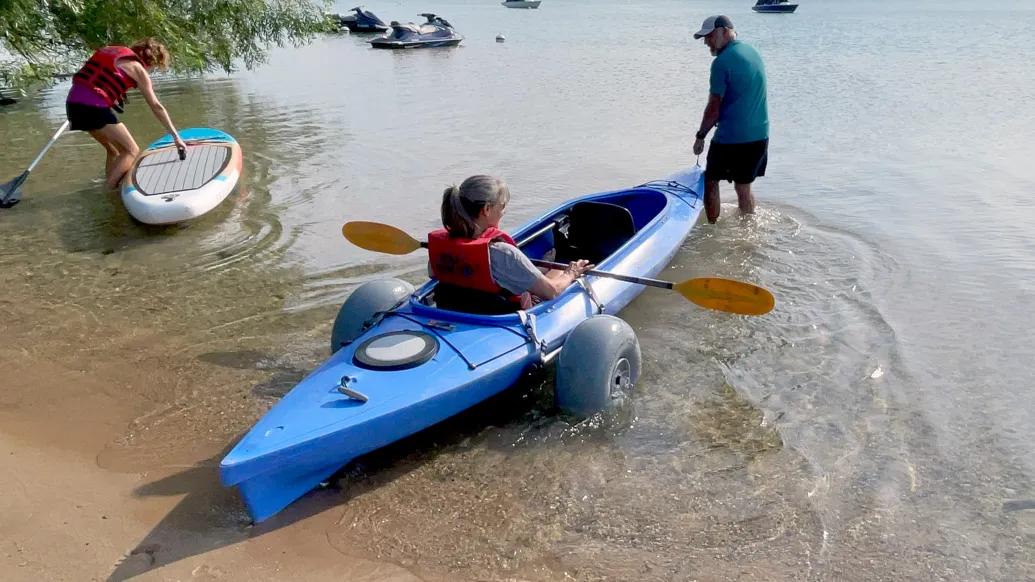
The first was adaptive kayaking on Camp’s iconic Walloon Lake.
An adaptive kayak is wider than a standard kayak and has outriggers to help stabilize the boat for secure on- and off-boarding at the lakeshore, and because UMAISE had offered the program since 2017, they knew exactly what equipment to recommend and training to provide to Camp.
Another was the purchase of a trail chair — the GRIT chair — an all-terrain mobility device to navigate Michigania’s trails while seated, rather than hiking.
Not all of the changes involve new equipment.
One improvement campers saw this year was a table in the Ceramic, Arts and Crafts building on small risers, allowing a power wheelchair to fit comfortably beneath.
Tinney says Camp staff became more proactive at identifying adaptations like these with updated accessibility training.
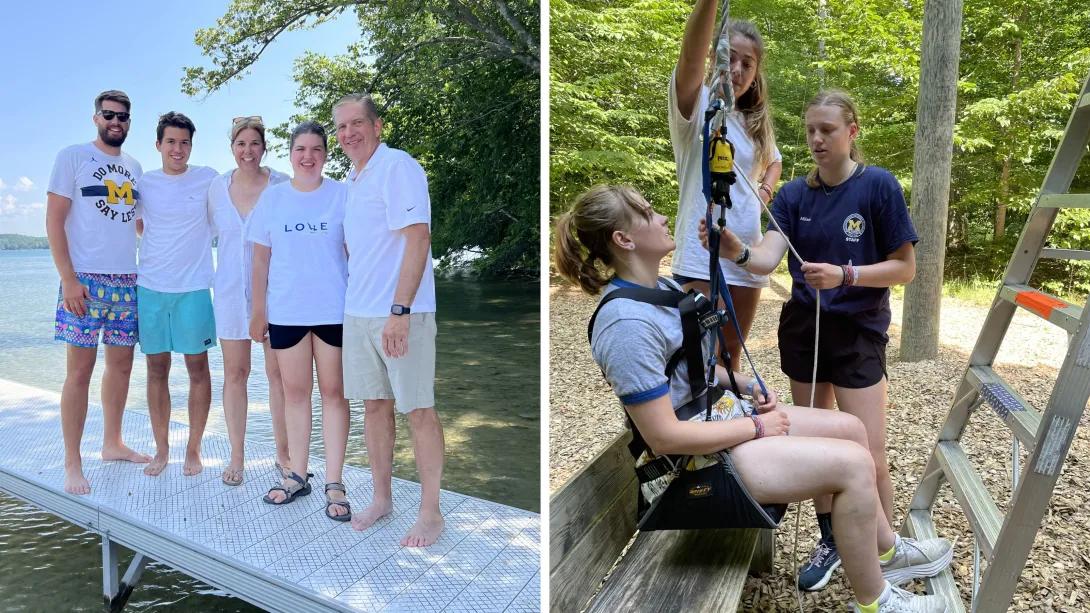
One of the most-used pieces of new equipment is the seated harness for the ropes course.
Kelley Stearns, MA’19, associate director of Camp Michigania, says the ropes course can be hard for anyone — younger children and older adults have trouble climbing up to access the zip line, so the seated adaptation helps them climb with confidence and reduce the risk of injury.
“It’s not just equipment that’s benefiting folks with disabilities. It’s holistically better for the program to have equipment that can meet a wide range of needs to be able to be outside doing recreation,” Stearns said.
Tinney and UMAISE program administrator Courtney Fankhauser have contributed to updated staff training since 2023, which covers disability etiquette, how-tos for the new equipment, and techniques for adapting other activities without specialized gear for all ages and abilities.
“Being able to reinvent and reimagine some things to better meet people’s needs is something that we’re hopeful to be building into the culture, and just making accessibility more of a part of the everyday,” Stearns said.
More Michigania
Alongside the physical upgrades, Camp staff are working to remove the stigma of accommodations and accessibility so more campers will feel encouraged to join in, no matter their ability level.
“We’re trying to think about ways to make the equipment more visible because there’s a stigma around asking to use equipment,” Stearns said.
The goal is for accommodation to be interwoven into Camp life, integrated into activities alongside everyone else.
“Particularly for someone like Ellie … what Camp does a good job at is adapting situations for them to participate, trying to be as inclusive as possible with the groups,” Michael Wikol said.
One way this is possible is with a shadow: a dedicated Camp staff member who stays with campers like Ellie throughout the day, following an individualized plan that helps them participate in all the activities they enjoy in a way that works for everyone involved.
It’s a well-established program at Camp that has supported camper needs and experiences for more than a decade, but it’s been enhanced by additional training and adaptive equipment purchases.
When she was growing up, Michael and Kristin would take turns chaperoning and helping Ellie around Camp, but the ability to have a shadow, who is well-versed in the accessibility equipment and how to make other accommodations, has changed their whole family’s experience.
“The shadow is the support Ellie needs as an adult to go from place to place, but also is the facilitator with all the program leads, and helps her have a better quality experience at Camp,” Kristin Wikol said.
Today, Ellie’s three favorite things about Camp are the zip line, swimming, and the Unicorn.
With the right support and accommodations, Ellie and campers like her are more fully experiencing the freedom and adventure that defines Camp Michigania.
“For somebody with special needs, you’re looking for growth and bigger independence,” Michael Wikol said.
“For kids, [Camp] is a place where you just let them go and experience new things, walk around independently, grab their own food, try things you might not have ever been exposed to. You can see the same opportunities for experiences and growth for people with special needs. … This is a great place for them to grow and develop individually.”

Health Lab
Explore thousands of health news & research stories by visiting the Health Lab homepage for more.
Media Contact
Public Relations
Department of Communication at Michigan Medicine
In This Story
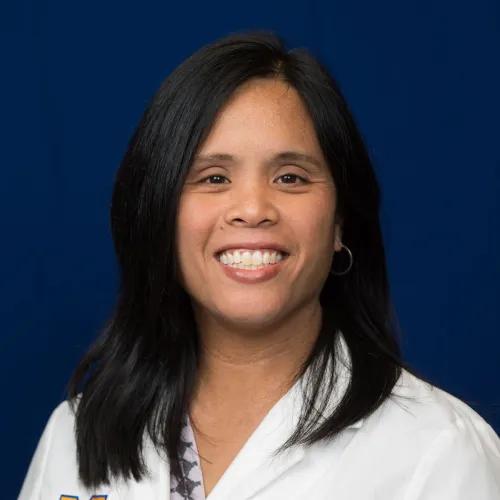
Melissa J Tinney
Clinical Assistant Professor
Stay Informed
Want top health & research news weekly? Sign up for Health Lab’s newsletters today!
Featured News & Stories
Many older adults make Medicare decisions quickly and most don’t change plans, poll finds

Many hospitals still don’t do enough to prevent UTIs from catheters

Is the United States Lagging Behind Europe in Memory Improvement?
Rabies is on the rise: Experts offer advice
Mediterranean diet can slow progression of age-related macular degeneration