Transcatheter Aortic Valve Replacement (TAVR)
Transcatheter Aortic Valve Replacement (TAVR)
What is transcatheter aortic valve replacement (TAVR)?
Transcatheter aortic valve replacement (TAVR) is a minimally invasive procedure used to replace the aortic valve in people with severe aortic stenosis. In the past, valve replacement required open heart surgery. With TAVR, our doctors use a catheter (thin tube) to fit a new valve inside the diseased valve. Because surgery is not needed, patients recover faster and spend less time in the hospital. Most patients notice dramatic improvement within a few days or weeks.
Who is eligible for TAVR?
TAVR is for patients with severe aortic stenosis. Stenosis is a narrowing of the valve opening caused by calcium buildup or scarring of the valve’s leaflets. The narrow valve opening restricts blood flow from the heart to the aorta. This requires the heart to work harder and can cause symptoms such as shortness of breath, chest pain and heart failure. For these patients, TAVR can greatly improve their quality of life.
Originally, TAVR was only approved for patients who could not tolerate surgical aortic valve replacement. In 2019, TAVR was approved by the Food and Drug Administration (FDA) for all patients. This approval was based on clinical trial results showing TAVR outcomes were equal to or better than open surgical valve replacement.
Our Approach
We were one of the select group of hospitals involved in early TAVR clinical trials in 2011 and have replaced more than 2,500 aortic valves using TAVR. We have also received a 3-star rating — the Society of Thoracic Surgeons' highest rating — for isolated aortic valve replacement. Patients needing valve replacement choose the Frankel Cardiovascular Center for TAVR because of our:
- Excellent performance ratings: We received a score of high performing (the highest possible) for TAVR from U.S. News & World Report. The score is based on many factors, including patient experience, which is consistently ranked as excellent.
- High volume of TAVR procedures: High volumes are a marker for better systems, teams, processes and outcomes. Our volume of TAVR procedures is among the highest in the state and in the U.S.
- Experienced multidisciplinary teams: Our TAVR team is made up of cardiologists, surgeons, radiologists, anesthesiologists, physician assistants, nurses, technicians and many others. The teams work together seamlessly to ensure your procedure is successful.
- Personalized care: Our clinical care coordinators are the main point of contact for each patient. They serve as a liaison to the medical team and are there to answer all your questions. They provide one-on-one education, so you know what to expect before, during and after your procedure.
Appointment Information
To schedule an evaluation with a Frankel Cardiovascular Center physician, call 888-287-1082. Or visit the Make a Cardiovascular Appointment page to learn what to expect when you call us.
Physicians: To refer a patient, call M-Line at 800-962-3555.
What should I expect with TAVR?
Our doctors insert a catheter into an artery using a needle puncture. There are two main approaches:
- Transfemoral: Through the femoral artery in the groin
- Transapical: Through an artery in the chest or the tip of the heart’s left ventricle (apex)
Once the catheter has been inserted and reaches the aortic valve, the doctor places the collapsible replacement valve. As it expands, it pushes the old valve’s leaflets out of the way. Before removing the catheter, our team evaluates how the new TAVR valve functions and ensures it is in the correct position. If needed, the valve can be repositioned.
How long does a TAVR valve last?
The TAVR valve is a biological tissue valve made from cow or pig heart tissue. Because the procedure is relatively new, doctors are not sure how long a replaced TAVR valve will last. Research suggests the valve may last up to 10 years. If the valve were to fail, our doctors can replace it. This can be done surgically or with a new TAVR valve inserted inside the old one. We have one of the largest programs in the country for removing and replacing TAVR valves. Younger people should discuss longevity of the valve with their doctor to determine their best option
Locations
-
Cardiac Surgery Clinic | Frankel Cardiovascular Center 1425 E Ann St
Floor 3 Reception C
Ann Arbor, MI 48109-5856Get Directions -
Cardiology Clinic | Frankel Cardiovascular Center 1425 E Ann St
Floor 3 Reception C
Ann Arbor, MI 48109-5856Get Directions
Providers

Angela Mary Stamper, NP
Advanced Practice Nurse
Nurse Practitioner, Nurse Practitioner - Acute Care
Doctors

Gorav Ailawadi, MD, MBA
Professor
Thoracic Surgery, Surgery
Stanley Joseph Chetcuti, MD
Clinical Professor
Interventional Cardiology, Cardiovascular Disease, Internal Medicine
Stanley Joseph Chetcuti, MD
Clinical Professor
Interventional Cardiology, Cardiovascular Disease, Internal Medicine
Kristopher Barrett Deatrick, MD
Clinical Associate Professor
Thoracic Surgery, Surgery, Pediatric Cardiothoracic Surgery

George Michael Deeb, MD
Professor
Thoracic Surgery, Surgery

Shinichi Fukuhara, MD
Clinical Assistant Professor
Thoracic Surgery, Surgery

Paul Michael Grossman, MD
Clinical Professor
Interventional Cardiology, Cardiovascular Disease, Internal Medicine

Sarah Kathrine Gualano, MD
Clinical Associate Professor
Cardiovascular Disease, Interventional Cardiology
Barbara Hamilton, MD, MS
Clinical Assistant Professor
Thoracic Surgery, Cardiac Surgery

Robert Bruce Hawkins, MD, MSc
Assistant Professor
Thoracic Surgery


News & Stories

Young father survives aortic dissection after delayed diagnosis
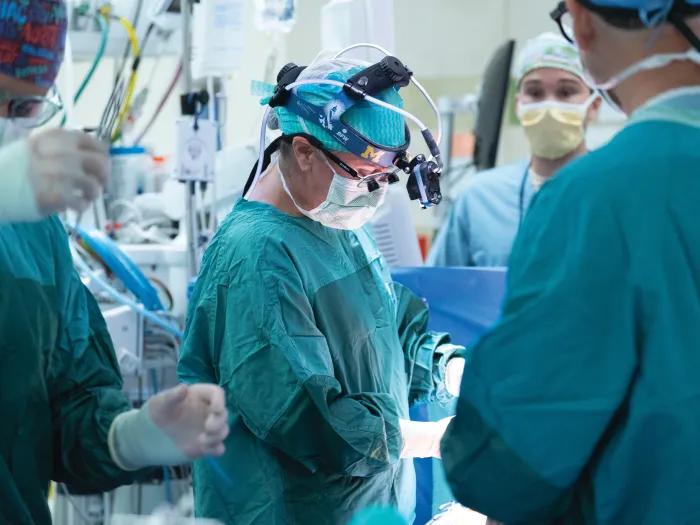
C.S. Mott Children’s Hospital first in country to implant expandable heart valve during FDA review phase
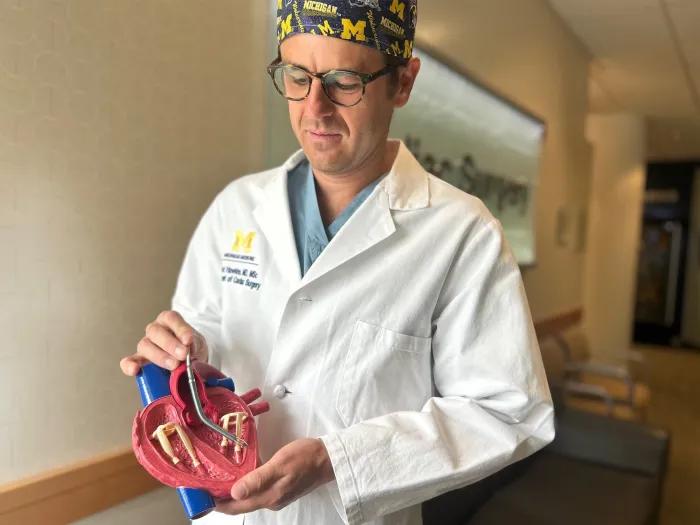
How a temporary heart pump can support high risk cardiac surgery
Failed TAVR? Heart surgeons explain TAVR explant, options and risks
Fontan patient inspires as pediatric cardiology fellow