
Noah Fromson
Public Relations Representative
Fromson joined Michigan Medicine in March 2021. He covers the neurosciences and cardiovascular medicine. He spent three years as a television reporter in West Michigan and is passionate about multimedia storytelling. Contact: [email protected] Twitter: @noahfromson

Health Lab
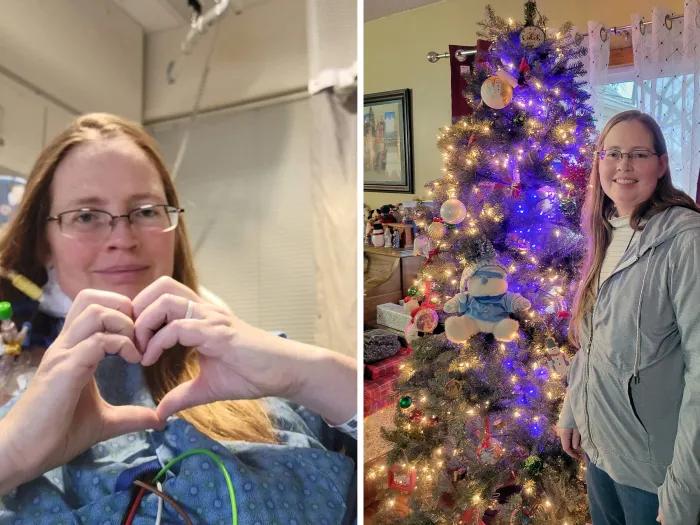
A heart transplant for her birthday
At Michigan Medicine, a mother of eight kids underwent a heart transplant surgery through a process called donation after circulatory death, or DCD, which saved her life.

Health Lab
Nearly 30% of caregivers for severe stroke survivors experience psychological distress
Post-traumatic stress worse among Mexican American caregivers compared to white caregivers.

Health Lab
Immune metabolite reduces atherosclerosis in mice
Itaconate shows promise in reducing inflammation for several conditions

Health Lab
Popular blood thinner associated with higher risk of bleeding complications
In a study of the three most commonly prescribed blood thinners, the oral anticoagulant rivaroxaban, known by the brand name Xarelto, was associated with a significantly higher risk of bleeding complications than apixaban (brand name Eliquis) and warfarin for patients with blood clots or atrial fibrillation.
Health Lab
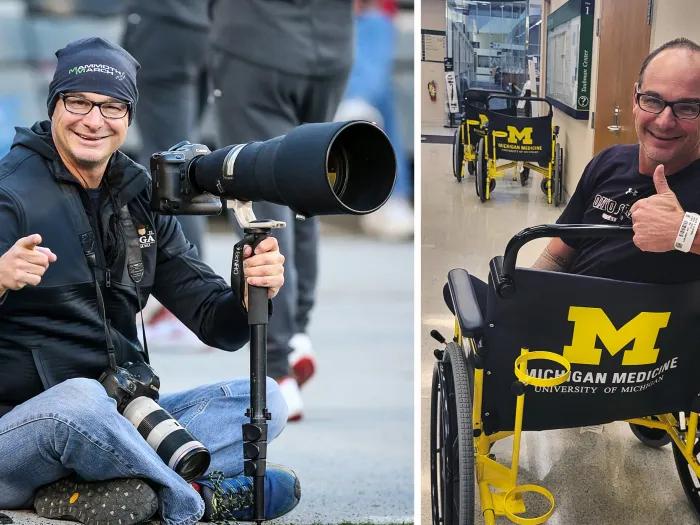
Heart attack at Michigan-Ohio State game ends in win for Ohio photographer
An Ohio-based sports photographer is recovering safely at home — and feeling somewhat victorious, despite the Buckeye loss — after having a heart attack at the conclusion of the Michigan-Ohio game.

Health Lab
Both virtual and in-person nutrition visits help to lower cholesterol
The use of telehealth remains high, with over 20% of American adults taking appointments online. These visits include video calls with registered dietitian nutritionists, who have a critical role in helping patients take on lifestyle changes through medical nutrition therapy. With a focus on the changing digital landscape, researchers at Michigan Medicine found that telemedicine patients with hyperlipidemia — an excess of cholesterol or fats in the blood — experienced similar positive health benefits compared to those who had in-person visits.
Health Lab
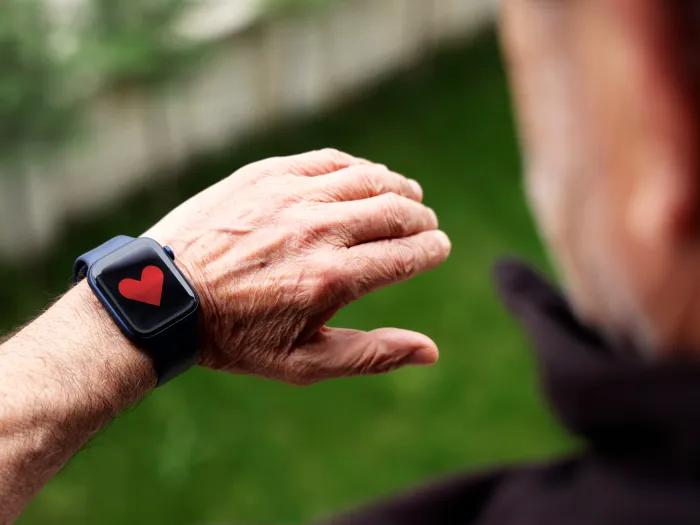
Clinical smart watch finds success at identifying atrial fibrillation
A Michigan Medicine research team developed a prescription wristwatch that continuously monitors the wearer’s heart rhythm and uses a unique algorithm to detect atrial fibrillation. The clinical-grade device, called the Verily Study Watch, proved very accurate at identifying atrial fibrillation in participants.

Health Lab
Immune protein suPAR links viral infection as possible cause of kidney disease
Through a series of experiments in non-human primates, mice and humans, a multi-institutional team led by researchers from Michigan Medicine and Rush University found that the immune protein soluble urokinase plasminogen activator receptor, or suPAR, is an important link between viral infections and proteinuria; the elevation of protein in the urine is known to cause glomerulopathy, a common form of kidney disease.

Health Lab
Irregular heartbeat after valve surgery increases risk of stroke, death
Postoperative atrial fibrillation, commonly known as Afib, has traditionally been viewed as benign and limited. But a study led by researchers at the University of Michigan Health Frankel Cardiovascular Center finds that postoperative atrial fibrillation increases the risk of strokes and permanent Afib — and is linked to worse long term survival — after heart valve surgery.
Health Lab
Women stroke survivors believe they will receive worse care in the emergency room
National study examined health care perceptions of approximately 3,500 women, including those with and without a history of stroke

Health Lab
Drawing a tube of blood could assess ALS risk from environmental toxin exposure
Investigators have developed an environmental risk score that assesses a person’s risk for developing ALS, as well as for survival after diagnosis, using a blood sample.
Health Lab
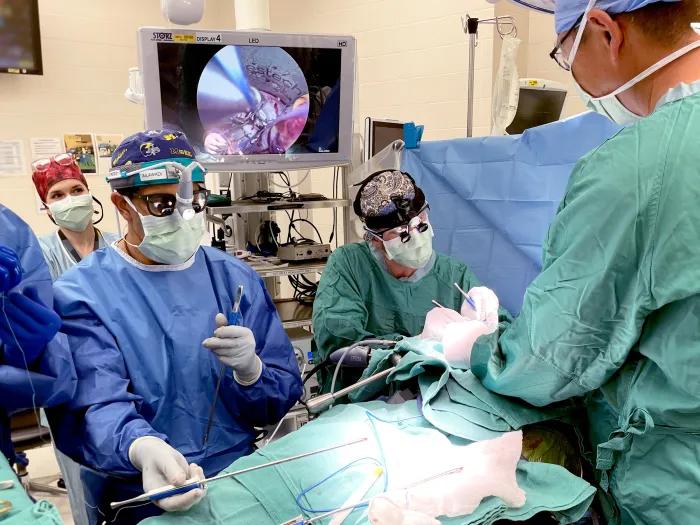
Treating heart valve disease: What are your options?
Michigan Medicine’s head of cardiac surgery, Gorav Ailawadi, M.D, M.B.A., answers questions about different treatment options for heart valve disease.
Health Lab
Older adults from distressed communities attend less cardiac rehab after heart procedures
Older adults who live in disadvantaged communities are less likely to attend cardiac rehabilitation after common heart procedures, a Michigan Medicine-led study finds.

Health Lab
TAVR: Less than one-third of patients enter cardiac rehab after heart procedure
The vast majority of people who have a minimally invasive heart valve replacement procedure do not participate in recommended cardiac rehabilitation, a Michigan Medicine-led study finds.

Health Lab
Tailored text messages not enough to improve mobility after heart issues
A Michigan Medicine report shows that adding a mobile health application to such devices yields mixed results. Tailored text messages to encourage high-risk people to move more may improve some short-term outcomes but doesn’t always improve physical activity levels for everyone.
