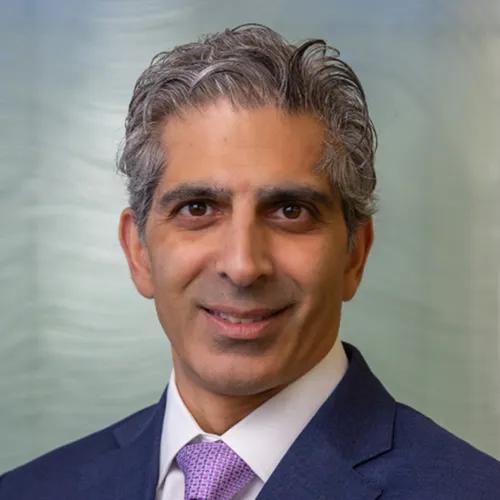
Gorav Ailawadi, MD, MBA
To request an appointment call
Manage Your Profile
About
Dr. Gorav Ailawadi joined the University of Michigan as the Chair of Cardiac Surgery in September of 2020. Previously, he served as the Chief of Cardiac Surgery, Co-Director of the Cardiac Valve Center, and Director of the Medical Device Innovation Center at the University of Virginia.
Dr. Ailawadi was raised in Maryland and New Jersey. He attended an accelerated honors program in medical education at Northwestern University where he received the awards for best overall student and top surgical student. Additionally, he was elected to the Alpha Omega Alpha Honor Society. While completing a surgery residency at the University of Michigan, Dr. Ailawadi spent two research years investigating and understanding the development of aortic aneurysms. His work was recognized by the NIH/Lifeline Association and was chosen as the top research project in 2003. While at Michigan, he received the Top Resident and Young Investigator Awards. He then completed his training and joined the faculty at the University of Virginia in thoracic and cardiovascular surgery.
Dr. Ailawadi has internationally-recognized expertise in mitral and aortic valve disease with vast experience in minimally invasive cardiac surgery, and percutaneous/transcatheter valve therapies having performed over 600 minimally invasive procedures and roughly 3000 heart operations. He has been invited to national and international conferences to share his expertise with novel minimally invasive approaches, valve disease, reoperative and AF surgery.
At Virginia, Dr. Ailawadi was the first surgeon in the U.S. to perform hybrid AF ablation, the first U.S. Surgeon to perform the MitraClip procedure, and the world’s first transcaval TEVAR procedure. He has been the principal investigator for a novel left atrial appendage clip to prevent strokes in patients with atrial fibrillation. Dr. Ailawadi served one of five core principal investigators leading the CTSN linked research consortium (NIH) developing new trials in cardiac surgery. Currently, Dr. Ailawadi is on the executive steering committee for numerous transcatheter and surgical trials in valvular disease. Dr. Ailawadi is the surgical national principal investigator for the Summit Trial investigating TENDYNE, a transcatheter mitral valve replacement without stopping the heart. In 2019, Dr. Ailawadi completed his MBA from the Darden School of Business.
Dr. Ailawadi has been funded by the NIH, AHA, among other grants. His research lab studies novel mechanisms and new treatments for aortic aneurysms. He has published over 350 peer-reviewed manuscripts in journals, including the New England Journal of Medicine, Circulation, and JACC. Dr. Ailawadi is member of the American Association for Thoracic Surgeons, the American Surgical Association, and the Cardiac Surgery Biology Club. In his leisure time, Dr. Ailawadi enjoys exercise, sports, and spending time with his wife, Aarti, and their three children.
Areas of Practice
Minimally invasive valve surgery, minimally invasive mitral surgery, percutaneous therapies, aortic aneurysm surgery, aortic root/David procedure and Hypertrophic obstructive cardiomyopathy (HOCM)
Expertise
- Aortic Aneurysm
- Aortic Arch Aneurysm
- Aortic Dissection (Type A, Type B & Chronic Dissection)
- Aortic Endocarditis
- Aortic Graft Infection
- Aortic Root Aneurysm
- Aortic Stenosis
- Aortic Valve Disease
- Aortic-Related Connective Tissue Disorders
- Aortitis
- Arteriosclerotic Aortic Disease
- Ascending Aortic Aneurysm
- Chronic Total Occlusion (CTO)
- Complex Coronary Artery Disease
- Enlarged Aorta
- Mitral Valve Disease
- Patent Foramen Ovale (PFO)
- Pseudoaneurysm & Mycotic Aneurysm
- Thoracic Aortic Aneurysm
- Thoracoabdominal Aortic Aneurysm
- Tricuspid Valve Disease
- Coronary Artery Bypass Grafting (CABG)
- Mitral Valve Repair & Treatment
- Surgical Aortic Valve Replacement (SAVR)
- TAVR Explant: Surgical Aortic Valve Replacement (SAVR) after TAVR
- Thoracic Endovascular Aneurysm Repair (TEVAR)
- Transcatheter Aortic Valve Replacement (TAVR)
- Transcatheter Mitral Valve Repair (TMVr)
- Valve-in-Valve TAVR
Locations
-
Cardiac Surgery Clinic | Frankel Cardiovascular Center 1425 E Ann St
Floor 3 Reception C
Ann Arbor, MI 48109-5856Get Directions
Insurance Accepted
University of Michigan Health participates with most health insurance plans.
Education & Training
Medical School or Training
Residency
Board Certifications
Research Overview
Aortic Aneurysms are the 15th leading cause of death in the United States and corrective aneurysm repair through either open or endovascular surgery remains the only treatment therapy for this deadly disease. Often, aneurysms remain clinically undiagnosed and under-represented as many deaths perceived to be from cardiac arrest are actually from aneurysm rupture. Aneurysms are anatomically divided by their location in reference to the diaphragm with thoracic aneurysms (TAAs) located above while abdominal aneurysms (AAAs) are located below the diaphragm. Recent evidence suggests that these diseases have different disease pathologies that could be based on the embryological origin of the aortic layer and thereby could have different medical treatment therapies. Sadly, the mechanisms of aortic aneurysm formation and advanced aneurysm disease leading to rupture remain largely unknown. It is unknown why some patients have small aneurysms that rupture while other patients rupture at considerably larger aortic diameters. Dr. Ailawadi and his team seek to understand the mechanisms that regulate aortic aneurysm rupture in abdominal and descending thoracic aortic aneurysms. He and his team have spent a number of years developing novel animal models for the study of aneurysm rupture and utilize these models to develop medical therapies to halt disease progression or prevent rupture.
A major focus of Dr. Ailawadi’s current studies is to identify factors, mechanisms, and potential therapeutic targets that can promote beneficial, and/or inhibit detrimental aneurysm growth and smooth muscle cell phenotypic transitions within advanced aortic aneurysms. On average, patients are diagnosed for roughly 5 years from when a growing aneurysm is diagnosed and when it is a large enough that it requires corrective surgery. This window of time is ideal for novel medical therapies to prevent growth and rupture. He and his team have investigated the role of the IL-1 signaling pathway in early and late stage aortic aneurysms. His team found that elimination of IL-1β or IL-1R1 resulted in significant attenuation of small abdominal and thoracic aortic aneurysms (ATVB 2012, Circulation 2015). In addition, he found that treatment of small aortic aneurysms with Anakinra, a IL-1R1 antagonist, results in significant inhibit in small aortic aneurysms. His team is currently looking at the effects of Anakinra treatment in a newly developed chronic abdominal aortic aneurysm models to determine if Anakinra can inhibit large advanced aneurysms as seen in humans. His team is also working on studies looking at the conditional elimination of IL-1R1 in tissues important to aneurysm formation. His team’s results so far suggest that elimination of IL-1 signaling in abdominal aortic aneurysms appears beneficial, which is contrary to findings in other vascular diseases such as atherosclerosis. In addition, other downstream factors in the IL-1 signaling pathways had shown that IL-6 signaling could play a significant role in advanced aneurysm formation in thoracic aortic aneurysms (Ann Thoracic Surgery 2015). His team continues to diligently work toward the identification of a potential medical treatment therapy to halt aneurysm progression and prevent rupture following diagnosis.
Clinically, Dr. Ailawadi’s focus is on minimally invasive valve treatments. His team has investigated numerous studies investigating the outcomes of adult cardiac surgery and specifically catheter and less invasive surgical approaches.Dr. Ailawadi and his team have become interested in the outcomes surrounding mitral repair using minimally invasive techniques. Moreover, Dr. Ailawadi has also become interested in the role of the surgeon scientist in the academic research landscape. In this capacity, He and his team want to investigate how successful surgeon scientists achieve and maintain funding and how to encourage the next generation of surgeon scientists.
Dr. Ailawadi has won numerous awards for his basic and clinical outcomes research including an NIH K08, R21, and R01 awards, several TSFRE grants, and several projects supported by NIH funding. He has an established mentoring track record with mentees winning awards at STS, FASEB, AHA and ACS.
Patient Ratings & Comments
Visit our Physician Ratings & Comments page to learn more about how patient ratings are collected, calculated, and updated to help you make an informed decision when choosing the right physician for your care.
Patient Ratings
182 Patient Ratings
Patient Comments
February 11, 2026 - "Dr Ailawadi, on a scale of 1-5, show get a 10. He is a great listener, explains all options for care. I feel extremely fortunate in having him as my surgeon !"
February 4, 2026 - "Dr. Ailawadi made sure my family and I understood all his explanations and even suggested we record our meeting to help answer questions later!"
January 14, 2026 - "I truly appreciated Dr. Ailawadi's approach to my care and treatment plan. He didn't just jump right to scheduling surgery but explained that further investigation (testing) would be beneficial. He explained how my heart was currently functioning and the areas that need to be addressed."
December 29, 2025 - "I would highly recommend Dr Ailawadi [...]"
December 4, 2025 - "Dr. Ailawadi was great."
November 5, 2025 - "Dr. Ailawadi was very caring and explained every aspect of my condition and options in an exemplary way. [...]"
October 20, 2025 - "Dr Ailawadi discussions were precise, knowledgeable, and calming; he took the time to address all my questions & concerns both professionally and humanely."
September 29, 2025 - "Dr. Ailawadi's care and concern for his patients well being is outstanding."
September 24, 2025 - "Dr Ailawadi and [...] were wonderful"
May 28, 2025 - "My visit with Dr. Ailawadi was very positive. He's a caring, knowledgeable doctor and one of the highest caliber doctors I've had the privilege of knowing and taking care of my health."
Featured News & Stories
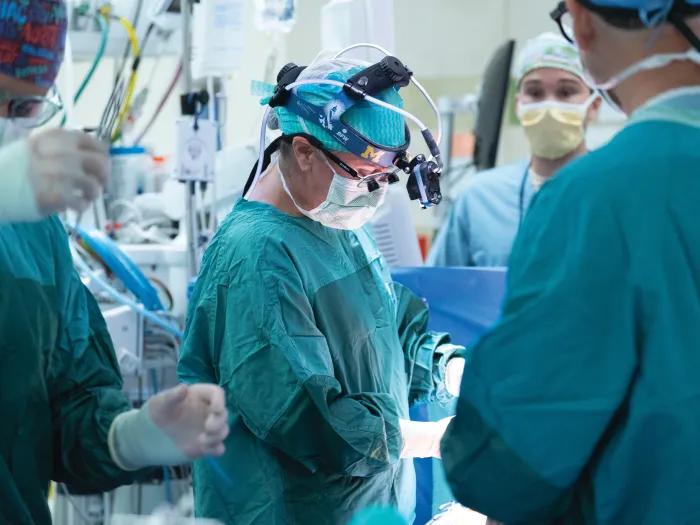
C.S. Mott Children’s Hospital first in country to implant expandable heart valve during FDA review phase
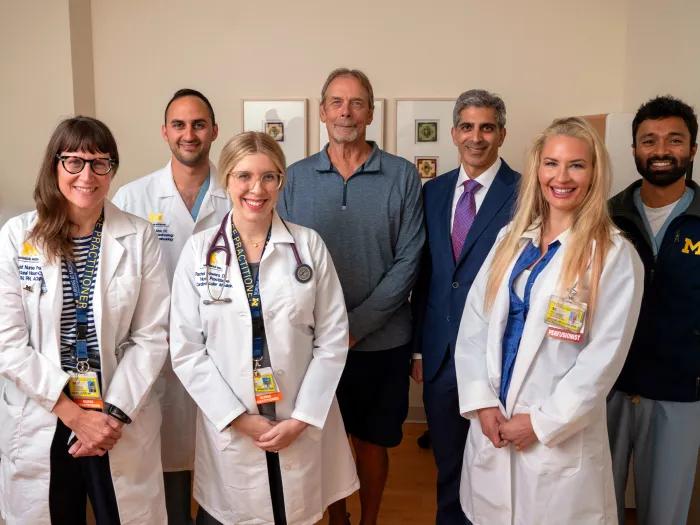
Planting a tree, and hope, for a heart healthy future
Women more likely than men to die after heart surgery complications