
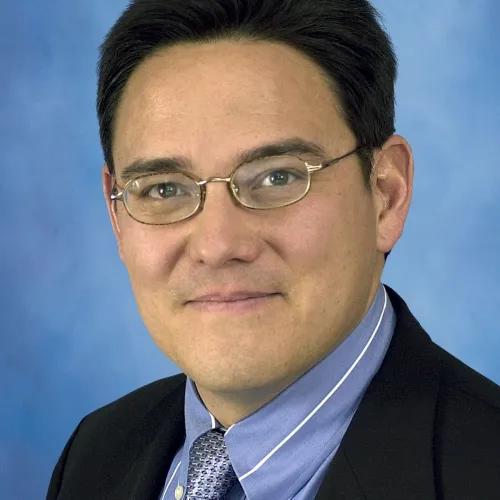
Randall Sukhyun Sung, MD
To request an appointment call
Manage Your Profile
About
Randall S. Sung, M.D., is an Associate Professor in the Section of Transplantation Surgery at the University of Michigan. He received his undergraduate degree in Biochemistry from Harvard in 1985 and his M.D. degree in 1991 from Columbia University College of Physicians and Surgeons. He spent his general surgery residency training at Columbia. , and was a research fellow in the lab of Mark Hardy, where he became trained in islet isolation, pancreas procurement, and in rodent models of islet transplantation. Dr. Sung spent his clinical fellowship at the University of Michigan. His first faculty appointment was at the Recanati-Miller Transplantation Institute at Mount Sinai. In late 2002, Dr. Sung returned to the University of Michigan, where he is a multi-organ transplant surgeon and the Surgical Director of Kidney and Pancreas Transplantation. In these roles, he has been instrumental in increasing the volume of kidney and pancreas transplants. He has overseen the development of Transplant Center protocols and policies for the Kidney and Pancreas Transplant Program, and has led efforts to safely increase the use of high-risk donors. In his role as the medical student facilitator for the Section of Transplantation, he developed the third year medical student curriculum for the transplant rotation, and received the 2008 Silver Scalpel Teaching Award, which is awarded annually to the highest rated attending surgeon by students rotating on the Surgery clerkship.
Dr. Sung has provided extensive service to the American Society of Transplant Surgeons (ASTS). Through his work on the Fellowship Curriculum Committee, he helped develop the organizational structure and content for the first nationwide transplant surgery fellows' curriculum. He recently served as the Chair of the Vanguard Committee. Here, he represented the interests of the society's junior members and of young transplant surgeons in general. As Vanguard Committee chair, he chaired the Planning Committee for the ASTS Winter Symposium, which has become a signature event each year for the society. He previously served on the ASTS Continuing Medical Education Committee and currently is a member of the ASTS Fellowship Training Committee. He also serves as the director of the University of Michigan's American Society of Transplant Surgeons-approved fellowship training program in kidney, pancreas, and liver transplantation.
Research
Dr. Sung's research interests include kidney and pancreas transplantation outcomes, deceased donor organ utilization, and the high-risk organ transplantation. He has specifically studied the allocation and use of expanded criteria donor (ECD) kidneys, and published a series of articles describing the effectiveness of a revised deceased donor kidney allocation policy that was designed to increase the efficiency of ECD kidney allocation, increase utilization, and reduce ECD kidney discard. As a result of his research in this area, he is a recognized expert on kidney and pancreas allocation policy development and kidney and pancreas utilization. He also has expertise in combined liver-kidney transplantation, has published several analyses of national data on this topic, and presented these findings at national meetings and consensus conferences.
He was a Co-investigator for the Scientific Registry of Transplant Recipients (SRTR) from 2002-2010, and was the Principal Investigator on the University of Michigan subcontract with Arbor Research, the primary contract holder. His activities included representing the SRTR on Organ Procurement and Transplantation Network (OPTN) committees, including the oversight of analyses performed by the SRTR for the Kidney Committee, Pancreas Committee, and Organ Availability Committee. He also represented SRTR at consensus conferences and the HRSA Transplantation Collaborative Learning Sessions. He also assisted in the development of simulation models for kidney and pancreas allocation and the kidney and pancreas graft and patient survival models, and was an important contributor to the SRTR Annual Report on the State of Transplantation.
Dr. Sung' laboratory research focuses on pancreatic islet transplantation. During residency, he trained in islet isolation, pancreas procurement, and in rodent models of islet transplantation. Beginning with his fellowship at the University of Michigan, he has investigated immune responses to gene therapy vectors in mouse islet transplant models. He has received the Central Surgical Association Foundation Grant, an AST/ASTS Transplant Young Investigator Award, the AST Faculty Grant, and a JDRF Research Grant.
Areas of Practice
Clinical research interests focus upon outcomes assessments in pancreas transplantation, including pancreas utilization, donor risk assessment metrics, and the survival benefit of pancreas transplantation.
Expertise
Locations
-
Transplant Clinic | Taubman Center 1500 E Medical Center Dr
Floor 1 Reception G
Ann Arbor, MI 48109-5334Get Directions -
Transplant Clinic | UM Health-West Park East 4055 Cascade Rd SE
Metro Health Park East
Grand Rapids, MI 49546-2149Get Directions -
Kidney & Pancreas Transplant Clinic | Detroit Riverview Center Medical Pavilion II 7633 E Jefferson Ave Ste 180
Detroit, MI 48214-2513Get Directions
Insurance Accepted
University of Michigan Health participates with most health insurance plans.
Education & Training
Medical School or Training
Residency
Board Certifications
Research Overview
Dr. Sung's research interests include kidney and pancreas transplantation outcomes, deceased donor organ utilization, and the high-risk organ transplantation.
Patient Ratings & Comments
Visit our Physician Ratings & Comments page to learn more about how patient ratings are collected, calculated, and updated to help you make an informed decision when choosing the right physician for your care.
Patient Ratings
34 Patient Ratings
Patient Comments
October 2, 2025 - "Dr Sung was confident, clearly competent and patient and straightforward with my questions and concerns. I felt very at ease after speaking with him."
