How to prevent choking in your kids
Choking is a parent’s worst nightmare. Read on to get prevention tips and guidance for safe foods to give your young children
2:13 PM
Author |
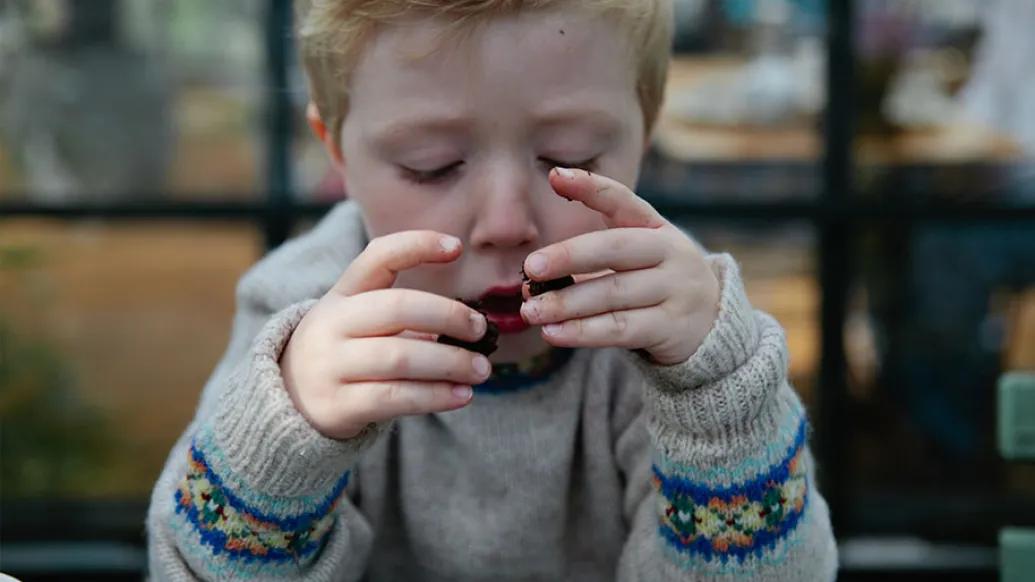
According to the Centers for Disease Control and Prevention, choking rates are highest for babies under the age of one.
Majority of kids’ choking injuries are caused by food, but there are three basic steps that can keep safe from choking:
- Keeping a watchful eye on children when eating and playing
- Keeping dangerous toys, foods and household items out of reach
- Learning how to intervene if a child is choking
How to prevent choking among babies
Your baby should sit up while eating, and be supervised at all times.
Don’t hurry your child when eating—allow plenty of time for meals and only put a small amount of food on their tray at a time.
Avoid round, firm foods and large chunks such as hot dogs, nuts, whole grapes, hard or sticky candy, popcorn and raw carrots, which are all unsafe at this age.
Although hot dogs aren’t safe for babies, your toddler can have them as long as they’re cut lengthwise before they’re offered one.
Avoid stringy foods like string beans and celery, and avoid commercial white bread products since they can form pasty globs in your baby’s mouth.
Offer only a few pieces of food at a time and cut meat and poultry across the grain and into tiny fingertip-sized pieces.
Remember: food pieces should be no larger than one-half inch in any direction, and if in doubt, cut the food into smaller pieces.
Safe and healthy foods for babies
- O-shaped cereals
- Whole wheat toast
- Scrambled eggs
- French toast
- Cooked peas (no pod)
- Very ripe pear slices
- Well-cooked apple slices
- Cooked pasta pieces (consider using whole grain pasta)
- Bite-size pieces of tofu (no larger than one-half inch in any direction)
- Deli meat or string cheese cut into small pieces
- Bite-size pieces of avocado
- Soft-cooked beans
How to prevent choking among children
Although babies are a large concern, kids of any age can choke on food and small objects.
Believe it or not, a lot of the choking prevention advice for babies still holds true for children up to seven years old!
The American Academy of Pediatrics says that the following foods are highest risk and children under four years old should not consume them:
- Hot dogs or sausage (cut length wise and in small pieces to make them safer)
- Hard, gooey or sticky candy
- Peanuts, nuts and seeds
- Whole grapes
- Marshmallows
- Chunks of peanut butter
- Popcorn
- Chewing gum
Children under age seven should not be given nuts as they’re still considered a choking risk.
Make sure your kids eat at the table, or at least while sitting down. There should be no running, walking or lying down while they eat.
Mealtime needs to be supervised by adults; older brothers and sisters are not aware of what foods may cause a younger sibling to choke.
Many choking accidents actually happen when an older sibling gives dangerous foods to a younger child.
It’s important to take the time to learn CPR and first aid for choking so that you’re aware of how to handle the situation should it arise.
Non-food choking hazards for kids
There are items that aren’t food that are considered choking risks for children. These include:
- Latex balloons. Balloons cause more childhood deaths than any other toy. Any substance that can take the shape of a child’s windpipe or airway (like balloons) is a more dangerous choking hazard than a hard, solid object. Children up to 8 years old are still at risk for choking on balloons. Keep uninflated or broken balloons out of kids’ reach, and supervise children when they are around balloons.
- Small, loose, or broken toys and parts. A small toy or part can easily become lodged in a child's ear, nose or throat. Children can be seriously injured or killed from inhaling, swallowing or choking on objects such as marbles, small balls, toys or parts of toys that can be compressed to fit completely into a child’s mouth.
- Other hazardous items. Round, oval, cylinder or ball-shaped toys, toy parts or other objects. These are the biggest risk when they are the size of the child's windpipe. Some examples are coins, magnets, rubber balls, pen or marker caps and small button-type batteries (like watch batteries.) Small button batteries are especially dangerous because when swallowed they can burn a hole in your child’s esophagus in as quickly as two hours.
How to childproof your home to prevent choking
Each time before you set your crawler or toddler loose, get down on the ground and look for dangerous items.
Remember to check under furniture and between cushions.
If you have older kids, make sure your younger child can’t get to their toys with smaller parts.
While you’re preparing your home for a new baby, start training your older children to keep dangerous toys in designated areas.
Make sure to supervise kids while they’re playing and ensure older kids don’t give dangerous toys or objects to your younger kids.
Follow age recommendations found on toy packages—they’re often based on possible choking hazard risks.
Also be aware of other kinds of airway obstruction injuries such as suffocation, strangulation and entrapment from different items around your house and how to prevent them and other injuries.
Additional resources:
- How tiny batteries can cause big choking risk for kids (C.S. Mott Children’s Hospital)
- Responding to a Choking Emergency (AAP)
- Choking prevention tips (AAP)
- Video: CPR KiDS – First Aid for the choking child or baby
- Video: Conscious Child Choking
Reviewed by Sara Laule, MD
Updated by Sydney Ryckman, MD, January 2022

Health Lab
Explore thousands of health news & research stories by visiting the Health Lab homepage for more.
Media Contact

Public Relations
Department of Communication at Michigan Medicine
Stay Informed
Want top health & research news weekly? Sign up for Health Lab’s newsletters today!
Featured News & Stories
Safe sleep for babies

Summer Camp

Spring and Summer Safety

Vaccine Safety

PFAS Contamination