The hidden life of parasites like Cyclospora
Biologists and doctors explain how parasites infect people—and how to respond or reduce your risk
3:20 PM
Author |
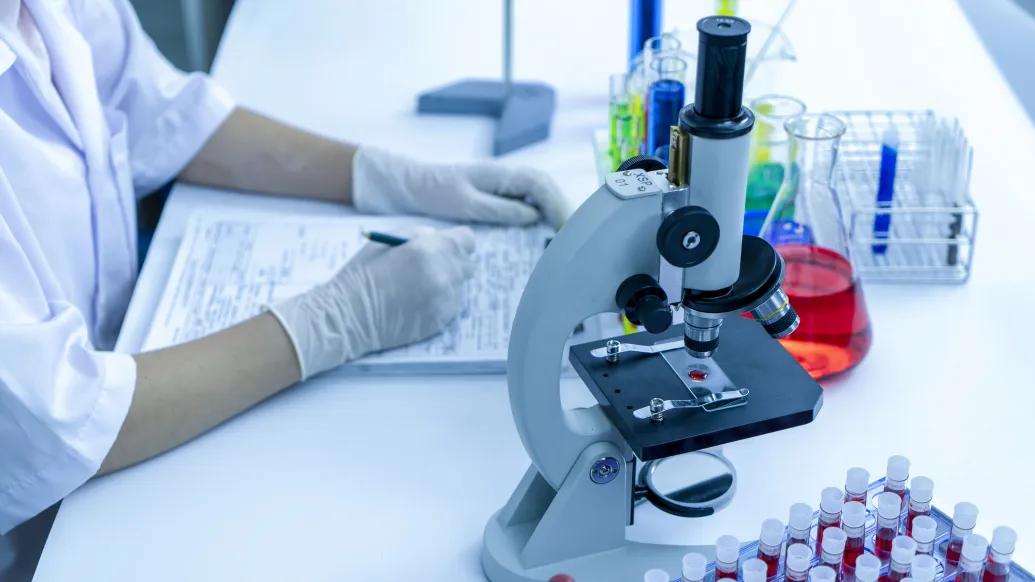
Cyclosporiasis, an illness caused by the parasite Cyclospora cayetanensis, has affected thousands of people in the United States, causing symptoms such as cramping, nausea and diarrhea.
The infection can be dangerous, especially for people who are older, immunosuppressed or immunocompromised, pregnant or have other chronic health problems.
Parasites are organisms that take nutrients from a host and reproduce at the host’s expense. Intestinal parasites like Cyclospora are discerning about their hosts; they cannot affect just any organism.
Hosting an unwanted guest
There are two host categories: definitive and intermediate. Definitive hosts are organisms in which parasites can sexually reproduce.
Intermediate hosts can still support a parasite, but no sexual reproduction can take place.
Humans are thought to be the only definitive host for Cyclospora.
Other common parasites, like Toxoplasma, can affect humans as an intermediate host.
Humans are most often exposed to Toxoplasma through contaminated food or water or exposure to the feces of the parasite’s definitive host, cats.
“Toxoplasma has a very broad host range, while its cousin Cyclospora has a narrow host range, thought to be only humans,” said Vernon Carruthers, Ph.D., professor in the Department of Microbiology & Immunology at the University of Michigan Medical School.
He and colleague Yifan Wang, D.V.M., Ph.D., study Toxoplasma gondii, which can cause severe illness in people who are pregnant or with weakened immune systems.
How do parasites reproduce?
Cyclospora enters the human body orally, usually by eating food that has been irrigated with water containing the spores.
Each spore contains four parasites, which break out of the spores when in a human host.
The parasites then migrate and embed themselves in the intestinal walls.
“Once the parasites do that, they then change into a different stage designed to replicate and amplify the infection,” Carruthers said.
“Some of those will start to change into the male and female forms.”
Parasites like Cyclospora can replicate themselves asexually to spread throughout the host, but in order to infect a new host, they need to create more spores through sexual reproduction of the male and female forms.
“One of the interesting things about Cyclospora is that the male is motile, meaning it can move,” Carruthers said.
"The female form is inside intestinal cells, and somehow the male finds the female that's inside a cell. It’s mind-blowing how this works.”
These new spores exit the human body through defecation, ready to start the cycle over again.
Interestingly, it takes one to two weeks for these spores to become infectious.
This makes the parasite challenging to pass from person to person; instead, the parasite needs to pass from person to food source before entering a new host.
Toxoplasma has a similar cycle, but with humans as intermediate hosts, it affects people in different ways.
It will replicate asexually within the human body, but unlike Cyclospora it does not stay within the digestive tract.
“Toxoplasma can go to the brain, despite the blood-brain barrier which filters a lot,” said Wang, Assistant Professor of Microbiology & Immunology.
Toxoplasma, unlike Cyclospora, can lie dormant and not cause symptoms.
“The parasite will start this semi-dormant stage where it won’t be easy to be seen by the host’s immune response.”
How do you test for parasites?
Healthy people can walk around with taxoplasma gondii infections and never know it unless they get an antibody test.
Those with Cyclospora, as many people have discovered recently, aren’t so lucky.
Cyclosporiasis can be detected through special tests of stool, the clinical name for poop.
In reality, during an outbreak doctors will look at symptoms and history of the patient to make a presumptive diagnosis and begin treatment even before a test result is available.
Michigan Medicine’s infectious disease experts have made a treatment protocol publicly available for clinicians anywhere who need guidance during the current Cyclospora outbreak.
“TMP/SMX (trimethoprim/sulfamethoxazole) or Bactrim, is the first line treatment recommendation for Cyclospora. TMP/SMX works by sequentially blocking the parasites’ ability to make folate, and since it can’t use the host’s folate, it dies,” explained Lindsay Petty, M.D., Clinical Associate Professor in the Division of Infectious Diseases.
People who can’t take Bactrim are often prescribed ciprofloxacin and nitazoxanide, which are less effective but can still help clear the infection.
In otherwise healthy people, the infection can go away on its own but that can take up to a month or longer.
Avoiding parasites
Avoiding parasites of all kinds, and other kinds of foodborne illness caused by bacteria and other microbes, comes down to good hygiene and safe food processing and handling to avoid accidentally consuming contaminated food or water.
Current warnings from public health agencies pointing towards contaminated lettuce for the 2026 Cyclospora outbreak, and recalls are in progress.
But because of Cyclospora’s incubation period, illness may continue to pop up for a while.
To reduce risk year-round, washing all produce, peeling when appropriate, cooking produce when possible—and washing your hands—is good advice in general.
The U.S. Department of Agriculture’s Food Safety Basics website has good information to follow.
More research needed on Cyclospora
Research on Cyclospora is still relatively young.
The parasite was only first described by scientists in 1979 and only got its scientific name in 1994.
“Cyclospora is really hard to study in the lab because it doesn’t culture,” Wang said, meaning that it can’t be grown in laboratory dishes for scientists to examine.
“There is no animal model,” so scientists can’t take Cyclospora from human patients and infect laboratory animals with it to study it further.
Wang continued, “We don't know the host's response to the parasite infection unless we take out certain samples from the human patient, but that's also provided limited information. If we want the research to move toward a better understanding of Cyclospora biology, the first thing people need to do is to build a laboratory culturing system, which has been a major challenge."
But given the massive impact of this summer’s outbreak on Americans, and especially Michiganders, it’s a challenge worth rising to.
Sign up for Health Lab newsletters today. Get medical tips from top experts and learn about new scientific discoveries every week.
Sign up for the Health Lab Podcast. Add us wherever you listen to your favorite shows.

Health Lab
Explore a variety of health care news & stories by visiting the Health Lab home page for more articles.
Media Contact

Public Relations
Department of Communication at Michigan Medicine
In This Story

Yifan Wang, DVM, PhD
Assistant Professor
Stay Informed
Want top health & research news weekly? Sign up for Health Lab’s newsletters today!
Featured News & Stories
Scientists discover that bacteria use an understudied polymer found in all life to protect cell functions during stress
Researchers create new path to target hard-to-drug prostate cancer protein
How new care models, within a new building launch, are helping optimize patient care
Path forward for glioblastoma treatment

Studying neurons using neurons