
Ophthalmology (Eye and Vision Care)
Ophthalmology is a medical specialty dedicated to eye health, focusing on diagnosing, treating, and preventing eye diseases.
Each year, more than 230,000 patients trust the W.K. Kellogg Eye Center for their vision care. Ranked as the #8 ophthalmology program in the nation and #1 in Michigan, we are known for treating even the most complex conditions with groundbreaking solutions and compassion.
Beyond routine eye care, our full range of subspecialty programs allows us to diagnose and treat conditions across all areas of ophthalmology. Our expert teams handle everything from comprehensive exams to advanced surgical and medical treatments.
We are one of the only clinics in the country dedicated to pediatric retinal disease, offering innovative treatments—including gene therapy—for infants and children. Our researchers are also at the forefront of pioneering human stem cell transplantation for patients with dry age-related macular degeneration (AMD).
Our services extend further, offering genetic counseling, ocular prosthetics, ophthalmic photography, and much more.
The difference in care is clear at Kellogg Eye Center—where expertise, compassion, and possibility come together for your vision.
Seeking Treatment or a Consult?
Michigan's #1 Eye Hospital
Year after year, Kellogg Eye Center is recognized as one of the nation’s top eye care centers. Ranked #8 in the U.S. and #1 in Michigan by U.S. News & World Report, we’re proud to deliver world-class ophthalmology care close to home.
Our Expertise Includes
- Comprehensive Ophthalmology Service
- Cornea & Refractive Surgery Service
- Facial Nerve Clinic
- Glaucoma Service
- Neuro-Ophthalmology Service
- Ocular Oncology Service
- Oculoplastic Surgery Service
- Pediatric Ophthalmology Service
- Retina Service
- Retinal Dystrophy Clinic
- Vision Care Service
- Visual Rehabilitation Program
- Age-related Macular Degeneration (AMD or ARMD)
- Amblyopia (Lazy Eye)
- Astigmatism
- Atopic Keratoconjunctivitis (AKC)
- Blepharitis
- Cataract
- Chalazion & Stye
- Conjunctivitis (Pink Eye)
- Corneal Erosions or Abrasions (Scratched Eye)
- Cystoid Macular Edema (CME)
- Cytomegalovirus Retinitis (CMV Retinitis)
- Detached Retina (Retinal Detachment)
- Diabetic Retinopathy
- Diplopia (Double Vision)
- Dry Eye Syndrome
- Esotropia
- Exotropia
- Eyelid Spasms (Eye Twitching or Eye Twitch)
- Floaters & Flashes
- Glaucoma
- Herpes Simplex Virus (HSV) of the Eye
- Herpes Zoster (Shingles) of the Eye
- Optic Atrophy
- Optic Neuritis
- Pinguecula
- Refractive Errors
- Retinitis Pigmentosa (RP)
- Retinopathy of Prematurity (ROP)
- Retinoschisis
- Seasonal Allergic Conjunctivitis (Hayfever)
- Strabismus (Misaligned Eyes, Crossed Eyes or Wall Eyes)
- Thyroid Eye Disease (TED or Graves Eye Disease)
- Cataract Surgery
- Corneal Cross-Linking (Collagen Cross-Linking)
- Descemet Membrane Endothelial Keratoplasty (DMEK)
- Enucleation & Evisceration
- LASIK Surgery
- Phakic Intraocular Lenses (IOLs) or Implantable Contact Lenses (ICLs)
- Photorefractive Keratectomy (PRK)
- Prosthetic Replacement of the Ocular Surface Ecosystem (PROSE)
- Thyroid Eye Disease Treatment
- WaveLight LASIK
Related Eye and Vision Care
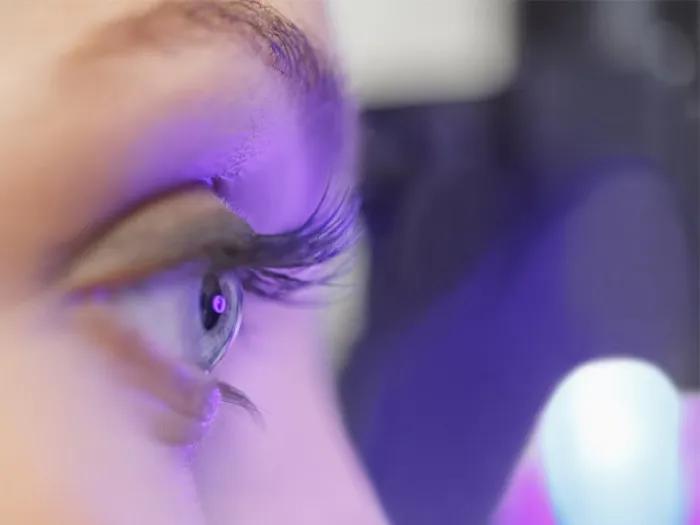
Ready to see life more clearly? At the Kellogg Eye Center, our experienced team offers advanced refractive surgery options to help you reduce or eliminate your dependence on glasses or contacts—with precision, comfort, and care you can trust.
News & Stories

Nerf gun accident causes retinal detachment in pediatric patient

Mediterranean diet can slow progression of age-related macular degeneration

Patient with retinitis pigmentosa receives new hope at Kellogg’s low vision clinic

Rare genetic eye disease treated with gene therapy helps 2 children see again
A new clue for aging eyes