COPD & Emphysema
COPD & Emphysema
What is COPD?
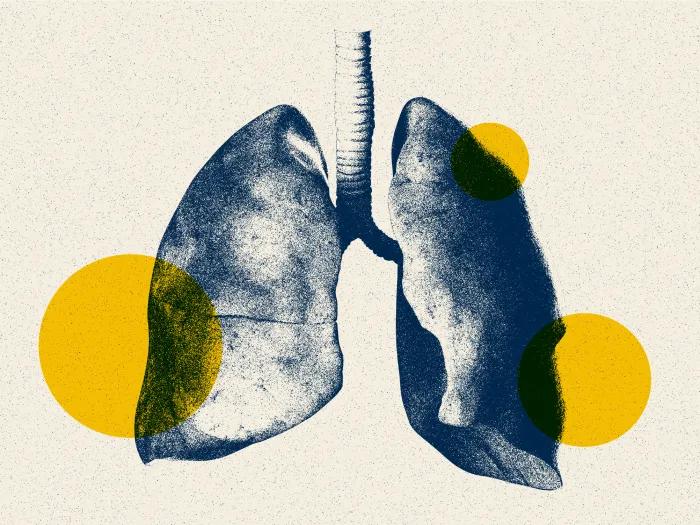
COPD (chronic obstructive pulmonary disease) is a common preventable and treatable disease of the lungs. Patients with COPD have airflow obstruction that is caused either by destruction of the air sacs that exchange gas in the lungs (emphysema) and/or inflammation of the airways (chronic bronchitis). The most common cause of COPD is smoking, but other risk factors include second-hand smoke exposure, working in a dusty environment and genetic factors.
Appointment Information
To schedule an appointment to discuss COPD, emphysema or any other lung or breathing condition, call us at 734-763-7668.
What are the symptoms of COPD?
- Chronic cough, often with mucus
- Shortness of breath that worsens with activity
- Wheezing
- Chest tightness
- Fatigue
How is COPD diagnosed?
During your first visit, we will collect a thorough history and conduct a comprehensive exam. A breathing test (spirometry) where we measure your lung capacity as you blow through a tube attached to a machine will also be performed. Spirometry is required to make a diagnosis of COPD. Other tests, such as a chest x-ray or CT exam, may also be needed to confirm diagnosis or rule out other medical conditions.
How is COPD treated?
While there is currently no cure for COPD, a combination of drugs and lifestyle changes can help manage the symptoms. Treatments include:
- A smoking cessation program can help smokers quit.
- Our Pulmonary Rehabilitation Program provides education and methods to improve breathing.
- Bronchodilators and inhaled corticosteroids are inhaled medicines that can open the airways, ease shortness of breath, and can reduce the frequency of “flare-ups” of breathing trouble that patients with COPD frequently experience.
- A yearly flu vaccine helps to prevent lung infections, and a pneumococcal vaccine (pneumonia shot) can help prevent pneumonia/meningitis caused by strep.
- Oxygen may be helpful for some patients if your oxygen levels are low.
- A small proportion of patients can be treated with surgical procedures, including lung volume reduction surgery or even lung transplantation.
Zephyr® Valve: A New Treatment
For patients with severe COPD or emphysema, a new treatment option known as the Zephyr® Endobrachial Valve System has proved successful in improving lung function, exercise capacity and quality of life. During this minimally invasive procedure, a doctor uses a bronchoscope (a thin tube with a camera), to place tiny valves in the airways of the lungs. These valves allow healthy portions of the lungs to expand, lifting pressure off the diaphragm to enhance breathing.
U-M Health is one of only a few hospitals in Michigan to offer this treatment option for patients with COPD or emphysema.
Patient Resources
For more information about the Zephyr Valve, view or download the Zephyr Endobronchial Valve System PDF.
Locations
-
Pulmonary Clinic | Taubman Center 1500 E Medical Center Dr
Floor 3 Reception C
Ann Arbor, MI 48109-5361Get Directions
Doctors

Michael J Coffey, MD
Associate Professor
Pulmonary Diseases, Critical Care Medicine, Internal Medicine

Meilan King Han, MD, MS
Professor
Pulmonary Diseases, Critical Care Medicine, Internal Medicine

Wassim Walid Labaki, MD
Assistant Professor
Pulmonary Diseases, Internal Medicine

Michael William Sjoding, MD, MSc
Associate Professor
Pulmonary Diseases, Internal Medicine, Critical Care Medicine
News & Stories

A gene discovery that changed cystic fibrosis care, and genetic research, forever
Surviving sepsis: New guidelines harness life saving evidence for treating adults

Child survivors of critical illness are missing out on timely follow up care

U-M Health’s Ann Arbor hospitals recognized as No. 1 in Michigan, among best in nation by U.S. News & World Report
Removal of ventilator breathing tube is delayed for some patients, posing health risks