Labral Tear (SLAP)
Labral Tear (SLAP)
A shoulder labral tear is an injury to the ring of cartilage in the shoulder joint. Two of the most common tears are the SLAP (Superior Labral tear form Anterior to Posterior) tear and the Bankart tear. Some kinds of labral tears - especially a Bankart lesion - can increase the potential for shoulder dislocations.
Fortunately, if you have - or suspect you have - a labral tear in your shoulder, the surgeons at the University of Michigan Department of Orthopaedic Surgery can help. As experts in the diagnosis and treatment of labral tears, we can recommend different treatments before recommending surgery. And, if you need surgery, rest assured that our team of skilled surgeons are nationally known for their expertise in shoulder surgery. Our primary goal is to improve your quality of life.
Our Approach
As part of the University of Michigan Comprehensive Musculoskeletal Center, we collaborate with multiple disciplines, including:
- Emergency Medicine
- Family Medicine
- Pediatrics
- Physical Therapy
- Rehabilitation
- Radiology
- Rheumatology
Our integrated, multidisciplinary approach to patient care enables us to develop an individualized plan for your treatment. Our goal is to improve the quality of your life.
Appointment Information
Our staff will be glad to talk with you about your options and how we can help. Please call:
MedSport, 877-877-9333, or 734-930-7400
Physical Medicine and Rehabilitation (PMR), 734-936-7175
What are the symptoms of a shoulder labral tear?
Symptoms of a labral tear depend on where the tear is located and may include:
- A dull throbbing ache in the shoulder joint
- Difficulty sleeping due to shoulder discomfort
- "Catching" of the shoulder joint with movement
- Pain with specific activities
- Dislocations of the shoulder
- Pain can be brought on by strenuous exertion or even household chores.
- Athletes may notice a loss of strength or a significant decrease in the ability to throw.
How is a shoulder labral tear diagnosed?
It is difficult to diagnose a labral tear because it mimics other conditions, such as arthritis, rotator cuff disorders, tendonitis, a shoulder that isn't stable or a compressed nerve. To better understand the extent of your injury, we will: Take a complete health history and conduct a physical examination to assess your tear, pinpoint the location, and check your range of motion, as well as consider any other medical conditions that might be related to your tear.
We will take X-rays of the affected area to evaluate for any problems with the bones in your shoulder. Possibly order a CT scan, MRI, and/or bone scan, if needed, to further evaluate your tear and check for additional injuries. Possibly perform arthroscopic surgery to get a better look.
The doctor may actually be able to repair the labrum at this time.
How is a labral tear treated?
We typically like to try a non-surgical approach first.
We will probably see if pain medication and/or physical therapy and rehabilitation can take care of the problem. Rehabilitation may include exercises to strengthen your rotator cuff muscles and to gently stretch the back of your shoulder. Your doctor or therapist will show you how to do the exercises.
If neither medication or physical therapy and rehabilitation work, we will look at a surgical alternative such as:
- Arthroscopic surgery - The doctor will use a small camera to get a close look at your injury and may even be able to repair the labrum at the same time.
Locations
-
Back & Pain Center | Northville Health Center 39901 Traditions Dr
Floor 1
Northville, MI 48168-9493Get Directions -
Brighton Center for Specialty Care 7500 Challis Road
Brighton, MI 48116Get Directions -
Nephrology Lupus Clinic | Taubman Center 1500 E Medical Center Dr
Floor 3 Reception A
Ann Arbor, MI 48109-5361Get Directions -
Orthopaedic Sports Medicine Program | Domino's Farms 24 Frank Lloyd Wright Dr Ste 1000
Lobby A
Ann Arbor, MI 48105-9484Get Directions -
Orthopaedic Surgery Clinic | Northville Health Center 39901 Traditions Dr
Floor 1
Northville, MI 48168-9493Get Directions -
Pediatric Rheumatology Clinic | Northville Health Center 39901 Traditions Dr
Floor 2
Northville, MI 48168-9493Get Directions -
Physical Medicine & Rehabilitation Clinic | Burlington Building 325 E Eisenhower Pkwy Ste 100
Ann Arbor, MI 48108-3364Get Directions -
Rheumatology Clinic | Northville Health Center 39901 Traditions Dr
Floor 1
Northville, MI 48168-9493Get Directions
Doctors
Andrea Lynn Aagesen, DO
Clinical Assistant Professor
Physical Medicine & Rehabilitation, Sports Medicine
Asheesh Bedi, MD
Professor
Orthopedic Surgery, Sports Medicine
James Ely Carpenter, MD, M.H.S.A.
Professor
Orthopedic Surgery, Sports Medicine
Eileen Aidan Crawford, MD
Clinical Associate Professor
Orthopedic Surgery, Sports Medicine
John Andrew Grant, MD
Clinical Associate Professor
Orthopedic Surgery, Sports Medicine
Ann Therese Laidlaw, MD
Clinical Assistant Professor
Physical Medicine & Rehabilitation, Electrodiagnostic Medicine, Sports Medicine
Bruce Scott Miller, MD
Professor
Orthopedic Surgery, Sports Medicine

David Parker Patterson, MD
Clinical Assistant Professor
Orthopedic Surgery, Sports Medicine
Providers
Brian Keith Downie, PA-C
Physician Assistant
Physician Assistant
Kelsey Lauren Johnson, PA-C
Physician Assistant
Physician Assistant
Jennifer Lynn Kreinbrink-Greer, PA-C
Physician Assistant
Physician Assistant
Robert Anthony Lehrer, PA-C
Physician Assistant
Physician Assistant
Michael Walsh Morand, PA-C
Physician Assistant
Physician Assistant
Margaret Anne Schick, PA-C
Physician Assistant
Physician Assistant
Jessica Barndt Tavormina, PA-C
Physician Assistant
Physician Assistant
News & Stories
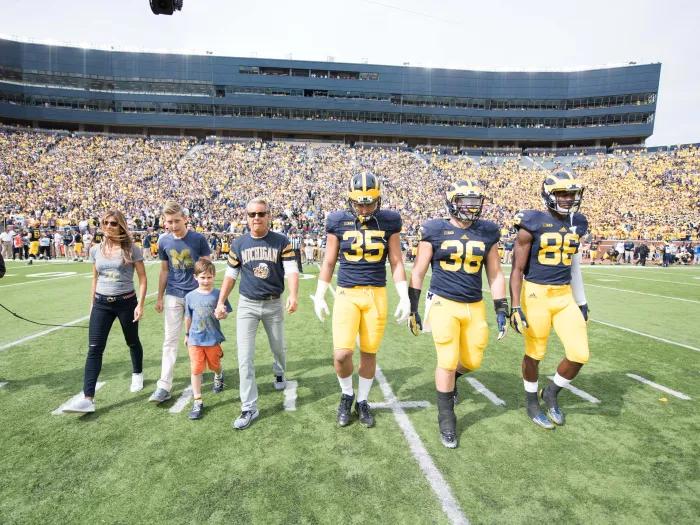
Gift launches new sports medicine institute at Michigan Medicine
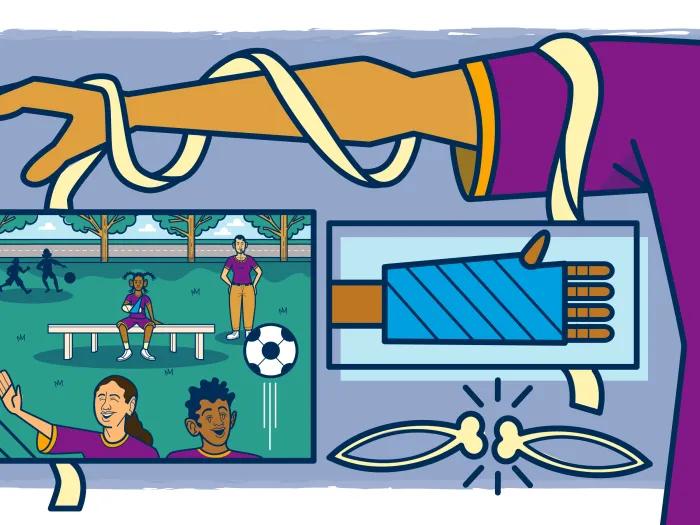
Properly treating, and recovering, from pediatric sports injuries
Live donor cartilage allows musician to return to the stage
More and more young female athletes sidelined with ACL injuries
Unleashing 'the beast'