
health lab Articles

Health Lab
Many primary care providers and patients wary of discussing firearms
Screening primary care patients for gun ownership has been recommended especially for people with mental health issues. A Michigan Medicinestudy shows wariness by providers and patients.

Health Lab
Gene links exercise endurance, cold tolerance and cellular maintenance in flies
A study in PNAS identifies a protein that, when missing, makes exercising in the cold that much harder—that is, at least in fruit flies.

Health Lab
The surprising origin of a deadly hospital infection
Surprising findings from a Michigan Medicine study in Nature Medicine suggest that the burden of C. diff infection may be less a matter of hospital transmission and more a result of characteristics associated with the patients themselves.

Health Lab
Immunotherapy saves woman with stage 4 colon cancer
A Michigan Medicine expert describes immunotherapy as “the future of cancer treatment” for those who qualify.

Health Lab
High rate of mental health problems and political extremism found in those who bought firearms during COVID pandemic
Firearm purchases rose during the pandemic and a survey shows high rates of mental health issues and political extremism among those who bought guns during 2020 and 2021.

Health Lab
Language barriers in cancer care
Research from experts at Michigan Medicine shows that significant language-based disparities exist in patients’ access to cancer care services, and it’s well before their first appointment with a doctor.

Health Lab
Genetic mutation linked to adrenal tumor and hypertension
Research from the Department of Molecular & Integrative Physiology at Michigan Medicine identifies a previously unknown genetic mutation that causes the disease called primary aldosteronism in certain populations.

Health Lab
7 things to know about dental care during your pregnancy
A Michigan Medicine OB-GYN explains seven things you should know about dental care during pregnancy.

Health Lab
Nearly one-fifth of older adults travel 50-plus miles to see a neurologist
A Michigan Medicine study finds older Americans with complex neurologic conditions travel may travel great distances for care, many of whom live in rural areas or regions with a limited number of specialists.
Health Lab
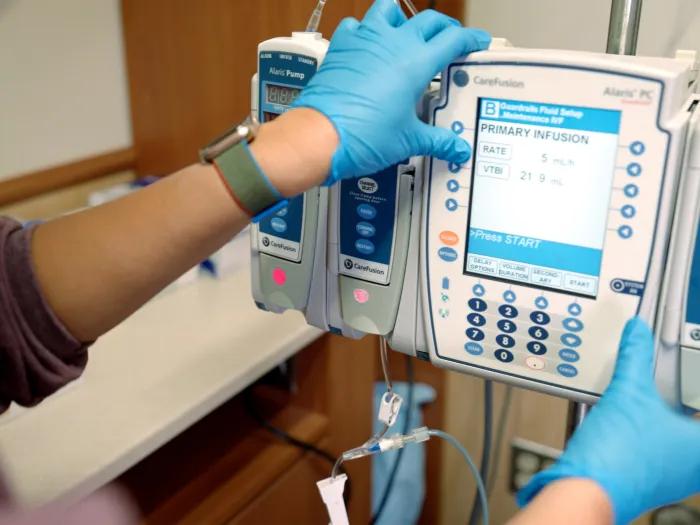
10 tips for cancer patients heading into their first infusion treatment
Cancer survivors who received treatment at the University of Michigan Health Rogel Cancer Center and infusion nurses demystify the experience by providing 10 helpful things to know ahead of time.

Health Lab
Older adults with digestive diseases experience higher rates of loneliness, depression
Michigan Medicine gastroenterologists and hepatologists find older adults with digestive diseases experience higher rates of loneliness, depression and lower perceived health

Health Lab
Whole-body MRIs aren't as beneficial as they seem
While it's tempting to know what's going on inside your entire body, a clinical perspective piece, written by a radiologist at the University of Michigan, discusses some of the harms of imaging low risk patients, such as overdiagnosis, overtreatment and their related complications

Health Lab
Dog diversity unveiled by international DNA database
A new paper, published in the journal Genome Biology, outlines what the Dog10K project discovered after sequencing the genomes of close to 2,000 samples from 321 different breed dogs, wild dogs, coyotes, and wolves, and comparing them to one reference sample—that of a German Shepherd named Mischka.

Health Lab
Sensitive parenting and preschool attendance may promote academic resilience in late preterm infants
Michigan Medicine research tracks academic trajectories of late preterm infants from infancy to kindergarten and identifies developmental risks and how to best promote resilience

Health Lab
Early findings suggest clinical and lab-based approach critical to tracking head and neck cancer recurrence
Early findings of two studies from the University of Michigan Rogel Cancer Center shed light on new ways to anticipate recurrence in HPV-positive head and neck cancer sooner. The papers, published in Cancer and Oral Oncology, offer clinical and technological perspectives on how to measure if recurrence is happening earlier than current blood tests allow, and provide a framework for a new, more sensitive blood test that could help in this monitoring.
