U-M researcher receives Cancer Grand Challenges funding to crack the dark proteome of cancer
The research will probe uncharacterized proteins to help advances in cancer development, diagnosis and treatment
8:00 AM
Author |

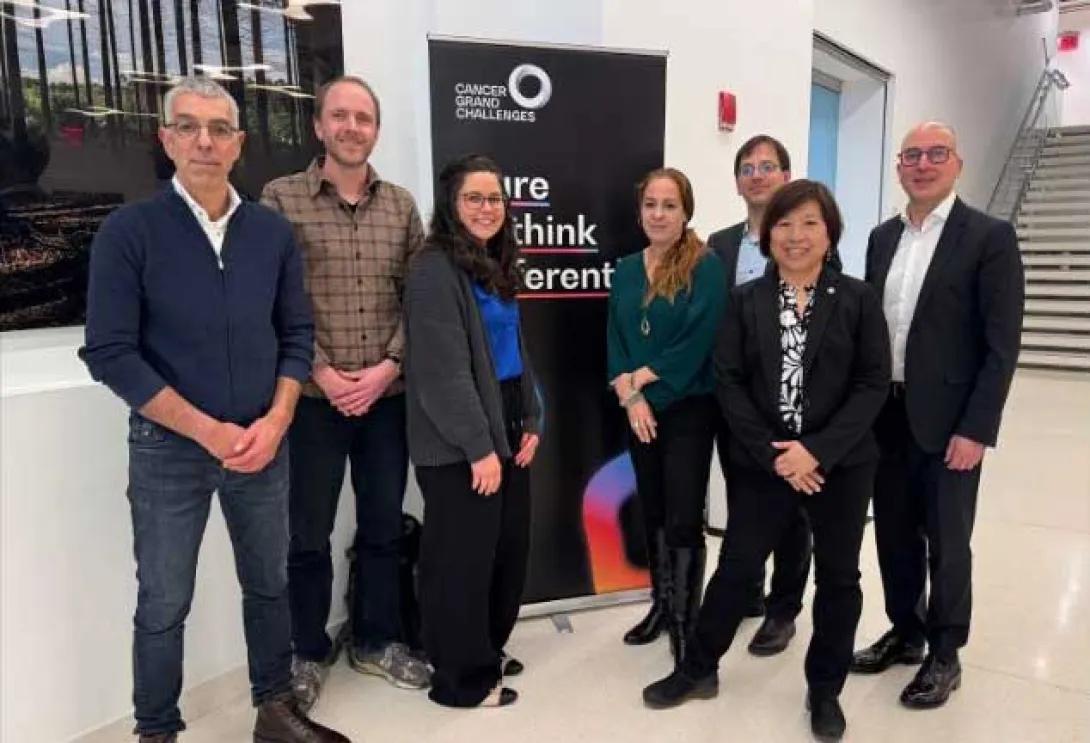
A global, interdisciplinary team of researchers, called ILLUMINE, has been selected to receive a Cancer Grand Challenges award of up to $25 million over approximately five years to tackle the challenge of the dark proteome.
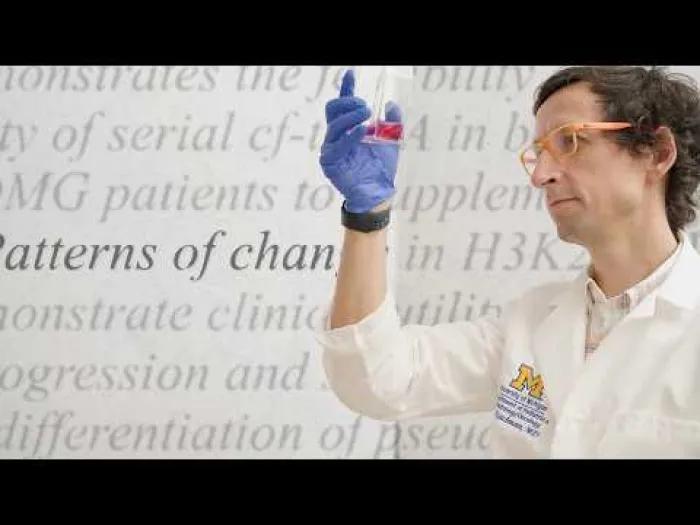
John Prensner, MD, PhD, Pediatric Neuro-oncologist at University of Michigan Health C.S. Mott Children’s Hospital and Assistant Professor of Pediatrics and Biological Chemistry will be part of the initiative.
Cancer Grand Challenges is a global research initiative that identifies the toughest challenges in cancer research. With awards of up to $25 million, it empowers a global community of world-class, interdisciplinary research teams to come together and take them on.
Founded in 2020 by the two largest funders of cancer research in the world—Cancer Research UK and the National Cancer Institute in the US—Cancer Grand Challenges aims to deliver the progress against cancer.
For this award, Prensner will work with a team of researchers across 8 institutions in the Netherlands, U.S. and Israel to understand the ‘Dark Proteome’ of cancer. This emerging area of research focuses on undiscovered and uncharacterized proteins that are produced by alternative DNA and RNA processing.
Understanding Dark Proteins can help researchers develop advances in cancer development, diagnosis and treatment. Prensner and his team have previously shown that Dark Proteins enable cancer cell survival and represent a new angle for the development of cancer therapeutics.
The new funding from Cancer Grand Challenges will enable the team to construct an atlas of Dark Proteins across acute myeloid leukemia, ovarian, lung, pancreatic, pediatric brain cancer and study the potential for these to be developed into emerging therapies, including immunotherapies and small molecule therapeutics.
“I am honored to be given this opportunity to work at the leading edge of cancer science with fantastic researchers from around the world,” says Prensner. “The Cancer Grand Challenges initiative reflects a critical large-scale vision needed to make major insights that will help patients. I expect that, through this collaborative work, we will be able to determine the key potential of the Dark Proteome for patients.”
“ILLUMINE is funded by Cancer Research UK, the National Cancer Institute, Cancer Research Institute and KiKa (Children Cancer Free Foundation) through Cancer Grand Challenges.”
Media Contact

Public Relations
Department of Communication at Michigan Medicine
In This Story

John Prensner, MD, PhD
Assistant Professor
Featured News & Stories

Talent show brings joy to kids at children’s hospital

U-M alumni return from Central Asia to seek treatment for their child at Mott

Block Out Cancer: From a crisis abroad to answers at Mott

Advancements and trends in lung transplantation
Path forward for glioblastoma treatment