
More articles about: Diabetes

Health Lab
Supplementing with peptides: Good for extra pep or a needless step?
Health Lab talks to Jorge Ruas, Ph.D., of the U-M Department of Pharmacology, about peptides, how they work and whether supplementing them lends any benefit.

Health Lab
A unique patient case inspiring research
Mallory Mattison serves as the inspiration behind critical medical research that’s supporting other patients like her with lipodystrophy syndromes

Health Lab
New hope for early diabetes detection
The research offers an actionable monitoring method that may guide the administration of current and emerging therapeutics more effectively than the current diagnostics that only assess disease risk or detect disease after destruction of insulin producing cells.

News Release
Six U-M medical research teams picked for virtual science tournament
The March Madness of science, called STAT Madness, brings attention to scientific research at U-M and around the nation; six U-M-led teams have made it to this year's tournament run by a health news organization.

Health Lab
Researchers uncover why a rare disease resulting in abnormal fat loss can also lead to diabetes
With help of patients with FPLD2, a research team has finally found some answers to why familial partial lipodystrophy can lead to diabetes and metabolic disease.

Well-Being at Michigan Medicine
Purpose as a Foundation for Well-Being in Health Care
*Content warning: While well-being and purpose is the main topic, the following conversation does contain material related to the loss of a child and mental health that some might find distressing. Listener discretion is advised.
Dr. Vic Strecher of U-M Public Health joins host Dr. Elizabeth Harry to explore why purpose is a powerful driver of well-being, resilience and professional fulfillment. Strecher shares personal reflections, groundbreaking research and practical strategies—including the SPACE framework (sleep, presence, activity, creativity and eating)—to help clinicians and organizations reconnect with their “why.” From preventing burnout to managing energy and attention, this conversation highlights how aligning personal and organizational purpose can transform health care work and support lasting well-being.

Health Lab
Using genetic testing, doctors help patient find answers for her diabetes
For 30 years Autumn Caris thought she had type 1 diabetes. After learning about MODY, a rare and often misdiagnosed type of diabetes, she finally got answers at U-M.

Health Lab
Podiatry clinic helps patient with recurring foot ulcer
Marcia Sherman, a patient with diabetes, dealt with a recurring foot ulcer for more than two years before having surgery that cured her wound.

Health Lab
Helping patients with diabetic foot disease
Diabetes-related foot complications are the most common cause of non-traumatic amputations in the United States. The Michigan Lower Extremity Services clinic at the University of Michigan Health is a multidisciplinary diabetic foot clinic that offers a comprehensive approach to managing diabetic foot disease.

Health Lab
Metformin may reduce Afib after ablation in adults with obesity
Taking the diabetes medication metformin may reduce episodes of atrial fibrillation, or Afib, in people with obesity. Preliminary findings were presented as late-breaking science at the 2025 American Heart Association Scientific Sessions.

Health Lab Podcast
Better health benefits linked to better job numbers
The recent study shows the biggest job gains were seen among low income adults with serious health problems whose health improved over time.
Health Lab Podcast
Chronic health conditions and food insecurity in kids
A recent Michigan Medicine-led study finds a link between chronic illness and higher food insecurity rates for children, even after accounting for income and other factors.
Health Lab
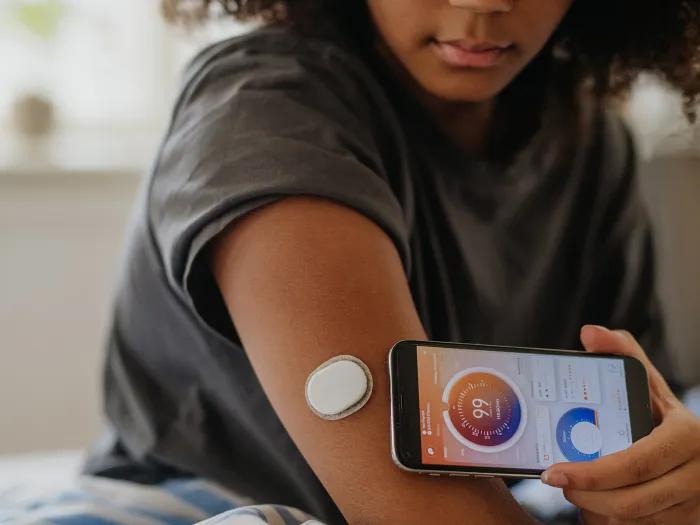
Diabetic teens with high blood sugar have higher neuropathy risk in adulthood
Poor blood sugar control in adolescence increases the risk of painful future complications for people with type 1 diabetes, research suggests. Participants with the greatest increase in HbA1c levels from childhood to adolescence not only retained higher blood sugar levels in adulthood, but they also had a greater risk for neuropathy.

Health Lab
Children with chronic conditions may face higher risk of food insecurity
Food insecurity is more common among children with a chronic medical condition than those without one, a new study suggests.

Health Lab
Brain neurons are responsible for day-to-day control of blood sugar
University of Michigan researchers have shown that a specific population of neurons in the hypothalamus help the brain maintain blood glucose levels under normal circumstances.
